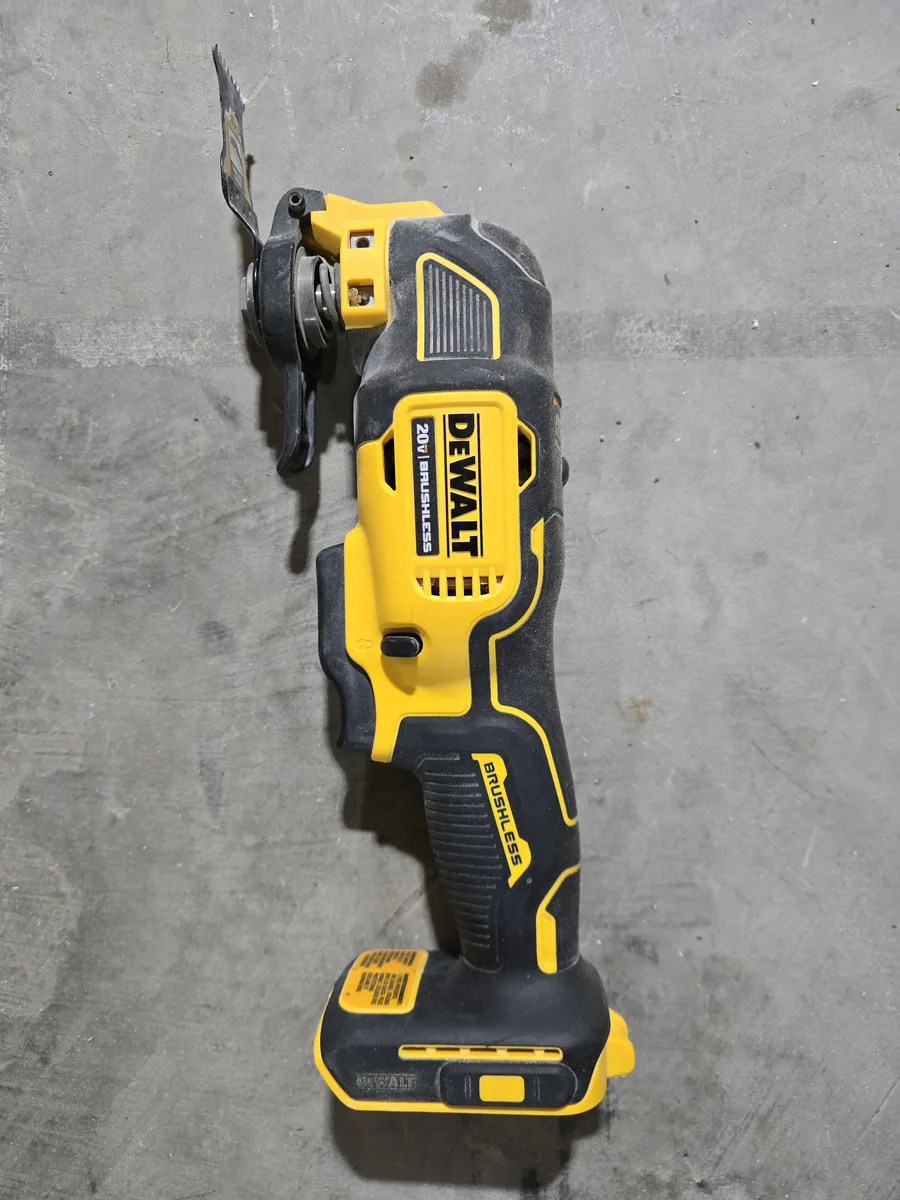
If I could only keep one power tool besides a drill, it would be my oscillating multi-tool. No question.
I bought the DeWalt DCS354B 20V Brushless a few years ago and it has become the tool I reach for more than anything else in the garage. Cutting drywall for an outlet box, trimming door frames for new flooring, scraping old caulk, sanding in tight corners, cutting a rusted bolt — this one tool does all of it.
It’s not the best at any single thing. A circular saw cuts straighter. A belt sander sands faster. A dedicated scraper scrapes more aggressively. But nothing else does all of those things in one compact, cordless package that fits into spaces where no other tool can reach.
What an Oscillating Multi-Tool Actually Does
If you’ve never used one, the concept is simple. The tool vibrates its attachment back and forth at high speed — it oscillates instead of spinning. This tiny, rapid back-and-forth motion cuts, sands, scrapes, or grinds depending on what blade or attachment you put on it.
Why does that matter? Because oscillating tools can do things other tools physically can’t:
- Flush cuts against a surface. Need to trim a door frame so new flooring slides underneath? An oscillating tool cuts flush against the floor. Try doing that with a circular saw.
- Plunge cuts into a wall. Need to cut a hole in drywall for an electrical box? Push the blade straight into the wall and cut your shape. No need to drill a starter hole.
- Tight spaces. The compact head fits between studs, behind pipes, and into corners where nothing else reaches.
- Precision. The small blade and controlled oscillation gives you accuracy that bigger saws can’t match.
Why the DeWalt DCS354B
I went with the DeWalt 20V Brushless for a few reasons:
Battery platform. I already own DeWalt 20V batteries for my drill and impact driver. The oscillating tool runs on the same batteries, so I didn’t need to buy new ones. If you’re already invested in a battery platform (Milwaukee, Ryobi, Makita), buy the oscillating tool from that brand. Mixing battery platforms is expensive.
Brushless motor. Brushless motors are more efficient, run cooler, and last significantly longer than brushed motors. They also squeeze more runtime out of each battery charge. When you’re halfway through a cut in a tight spot, the last thing you want is a dying battery.
Variable speed. A dial on the top lets you adjust the oscillation speed. Slower speeds for delicate work like sanding or scraping, higher speeds for aggressive cuts through wood or drywall. This matters more than you’d think — full speed on a scraping job will gouge the surface underneath.
Quick-change system. Swap blades in seconds by flipping a lever. No hex wrench, no fumbling with a bolt. When you’re switching between cutting and sanding multiple times in a project, this saves real time.
I’ve had mine for years and it still runs like new. The brushless motor and DeWalt build quality have held up through dozens of projects. It’s the one tool I never hesitate to recommend.
The Blades That Actually Matter
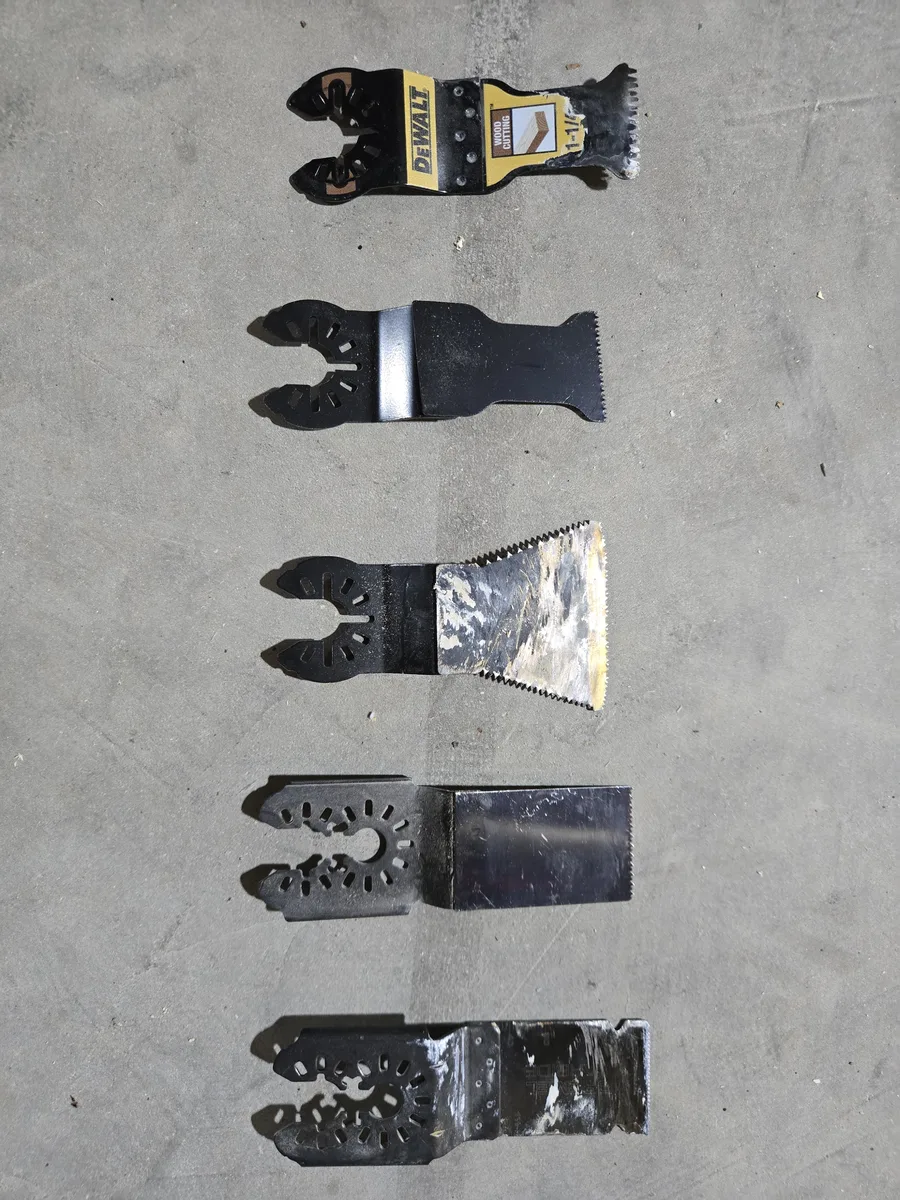
Here’s the thing about oscillating tools: the tool itself is only half the equation. The blades and attachments are what make it useful. And there are a lot of blade options out there.
After years of use, here are the attachments I actually reach for:
Wood-Cutting Blade
The most-used blade in the set. Cuts drywall, wood, PVC, and most soft materials. This is what you’ll use for trimming door frames, cutting holes for outlet boxes, and general-purpose cuts around the house. You’ll go through these faster than any other blade — buy extras.
Bi-Metal Blade
Same shape as the wood blade but with hardened teeth that can cut through nails, screws, and thin metal. Invaluable when you hit a nail while cutting through wood (which happens constantly in renovation work). Also great for cutting old pipes, brackets, and metal strapping.
Scraper Blade
A flat, rigid blade for removing old caulk, adhesive, paint, thin-set mortar, and anything stuck to a surface. I’ve used this to scrape old caulk from bathtub edges, remove adhesive residue from floors, and clean up dried construction adhesive. Way faster than doing it by hand.
Sanding Pad
A triangular pad that accepts hook-and-loop sandpaper. The pointed tip gets into corners and tight spots that no other sander can reach. I use this for finishing work after cuts — smoothing rough edges, sanding between coats of paint in corners, and detail work on furniture.
Wide Blade
A wider version of the wood-cutting blade for longer, straighter cuts. Better for cutting flooring, larger drywall sections, or anywhere you need a cleaner line over a longer distance.
Starter Set vs. Full Kit
You have two good options for blades:
Start small with the DeWalt 5-piece starter kit. It includes one wood blade, one bi-metal blade, a scraper, a sanding pad, and sandpaper. This covers the basics and lets you figure out which blades you use most before buying more.
Go all-in with the PECHAM 37-piece universal set. This is a ridiculous amount of blades for the price — wood, metal, scraping, and sanding attachments for nearly every project type. The individual blades won’t last as long as DeWalt-branded ones, but at this price you can afford to burn through them. Universal fit means they work with any oscillating tool, not just DeWalt.
My recommendation: start with the DeWalt 5-piece kit to learn the tool, then grab the larger set when you want variety. The name-brand blades in the starter kit will last longer and cut cleaner, which matters when you’re still learning how much pressure to apply and what speed to use.
Real Projects I’ve Used It For
To give you an idea of how versatile this tool is, here’s a partial list of what mine has done:
- Trimmed door frames for new LVP flooring throughout the house — the flush-cut capability is the only way to do this cleanly
- Cut drywall for new electrical boxes, garage storage rail mounting, and patching holes
- Scraped old caulk from bathtub, shower, and window frames before re-caulking
- Cut rusted bolts on outdoor furniture and deck hardware
- Sanded corners that my orbital sander couldn’t reach
- Cut PVC pipe in tight spots behind the washing machine where a saw wouldn’t fit
- Removed old grout between bathroom tiles before re-grouting
- Trimmed shims flush against walls after shimming door frames
Every one of those jobs would have been significantly harder — or impossible — without the oscillating tool. Some of them (like flush-cutting door frames) have literally no other good option.
Tips for Getting the Most Out of It
- Let the tool do the work. Don’t press hard — the oscillation does the cutting. Pressing too hard slows the blade down and makes worse cuts. Light, steady pressure.
- Match the speed to the material. Lower speed for scraping and sanding, higher speed for cutting. Full speed on a scraper will gouge whatever’s underneath.
- Replace blades before they’re toast. A dull blade makes you push harder, which heats up the tool and makes rough cuts. Blades are cheap — swap them out when they start to struggle.
- Use the right blade for the material. A wood blade hitting a nail will dull instantly. If you’re cutting through old construction where there might be nails, use a bi-metal blade from the start.
- Plunge-cut carefully. You can push a blade straight into drywall, but start at an angle and let the blade work its way in. Plunging straight down at full speed can crack the drywall around the cut.
The Bottom Line
The DeWalt DCS354B is the only oscillating tool I’ve ever owned, and I’ve never needed to look at another one. Brushless motor, cordless convenience, and it runs on the 20V batteries I already have.
If you’re invested in a different battery platform, buy that brand’s oscillating tool instead — they all work the same way and use the same universal blades. The important thing is having one in your garage. Once you do, you’ll wonder how you ever got by without it.
Start with the tool and a basic blade kit. You’ll figure out what additional blades you need as your projects demand them. That’s the beauty of this tool — it grows with you.
If you’re building out a home toolkit, the other essentials I’d pair with an oscillating tool are a cordless drill and a good tape measure. And after making all those cuts, you’ll want a shop vacuum to clean up the mess.
Frequently Asked Questions
What does an oscillating multi-tool do?
An oscillating multi-tool vibrates its blade or attachment back and forth at high speed instead of spinning like a drill or rotating like a saw. This oscillating motion lets it cut, sand, scrape, and grind in tight spaces where other tools can't reach. It's one of the most versatile power tools you can own.
What blades do I need for an oscillating tool?
For most homeowners, the wood-cutting blade and the scraper blade will handle 90% of your projects. Add a bi-metal blade for cutting nails or screws in wood, and a sanding pad for finishing work. Start with a small starter kit and add specialty blades as you need them.
Is brushless worth it for an oscillating tool?
Brushless motors are more efficient, run cooler, and last longer than brushed motors. They also deliver more power per battery charge. The DeWalt 20V Brushless runs noticeably longer on a single charge than brushed models, which matters when you're in the middle of a cut.
Are oscillating tool blades universal?
Most modern oscillating tools use a universal quick-change system (also called Starlock or OIS). This means blades from brands like DeWalt, Bosch, Milwaukee, Ryobi, and aftermarket sets all fit the same tool. You're not locked into one brand for blades, which keeps costs down.
What's the difference between an oscillating tool and a reciprocating saw?
An oscillating tool excels at precision cuts and tight spaces — cutting a hole in drywall, trimming a door frame for new flooring, removing grout, or sanding corners. A reciprocating saw (Sawzall) is for demolition and rough cuts — tearing out walls, cutting pipes, or pruning large branches. They're complementary tools, not substitutes.
Products Mentioned in This Article

DeWalt DCS354B 20V MAX Brushless Oscillating Multi-Tool (Tool Only)
20V MAX cordless oscillating multi-tool with brushless motor, variable speed control, and quick-change accessory system. Tool only — uses any DeWalt 20V battery.
- Brushless motor — more power, longer runtime, longer lifespan
- Variable speed dial for different materials
- Quick-change system — swap blades in seconds without tools
- Runs on DeWalt 20V MAX battery platform
- Compact size gets into tight spaces
- Tool only — battery and charger sold separately
- Premium price compared to brushed models

DeWalt Oscillating Tool Accessory Kit (5-Piece)
Starter accessory set with wood-cutting blade, bi-metal blade, sanding pad, sandpaper, and scraper. Good entry point to cover basic projects.
- Covers the basics — wood blade, bi-metal blade, sanding pad, scraper
- DeWalt quality blades last longer than cheap aftermarket
- Good starter set to learn what blades you use most
- Universal fit works with any oscillating tool
- Only 5 pieces — you'll outgrow it quickly

PECHAM 37-Piece Universal Oscillating Tool Blade Set
37-piece universal oscillating blade set with wood-cutting, bi-metal, scraping, and sanding attachments. Compatible with DeWalt, Milwaukee, Ryobi, and all major brands.
- 37 pieces covers nearly every project type
- Universal quick-release fit for all major brands
- Fraction of the cost of buying name-brand blades individually
- Includes wood, metal, scraping, and sanding attachments
- Aftermarket blades won't last as long as name-brand
- Some specialty blades you may never use
Prices shown were retrieved from Amazon on Oct 8, 2026, 2:37 PM UTC. Product prices and availability are accurate as of the date/time indicated and are subject to change. Any price and availability information displayed on Amazon at the time of purchase will apply to the purchase of this product.