I have three cats — Billy, Xena, and Mr. Kitty — and I also have furniture I’d like to keep in one piece. For a while, those two things felt mutually exclusive. If you’re trying to figure out how to keep cats off furniture without losing your mind or your couch, I’ve spent real time testing what actually works in a three-cat household, and I’m going to give it to you straight.
The short version: sprays don’t work (at least not for my three), and a water bottle will come back to bite you. What does work is a combination of deterrents cats genuinely hate and better alternatives that make your furniture less interesting. Let me walk you through the whole thing.
The Two Things Cats Hate (Build Your Strategy Around This)
Before you buy anything or try any tricks, you need to understand the foundation of all of this. Cats have two strong sensory aversions that you can actually use:
1. Sticky surfaces on their paws. Cats are extremely particular about paw texture. If they step on something sticky, they back off immediately and remember it. This is why double-sided tape is so effective — it’s not painful, it’s just deeply unpleasant to them.
2. Loud, crinkly, unexpected textures. Aluminum foil is the classic example. The sound and feel of foil under their paws sends them running. Same principle applies to crinkly mats or certain plastic textures.
Once I figured out those two things, my whole approach shifted. Instead of trying to train Billy out of scratching my sectional through sheer willpower (not happening), I started designing an environment where the furniture felt bad and something nearby felt great. That combination — deterrence plus redirection — is the actual strategy. Everything else is just a specific tool inside that framework.
What Actually Worked — Ranked by Effectiveness
1. Cat Trees: The Single Best Investment
I know cat trees sound obvious, but most people buy the wrong one and then wonder why their cat ignores it. I’ve gone through a few, so let me tell you what’s actually worth your money.
The core problem is that my cats are big. Billy and Mr. Kitty are both in the 14-16 lb range, and when they launch themselves at something, it needs to not tip over. A wobbly cat tree gets used exactly once and then ignored.
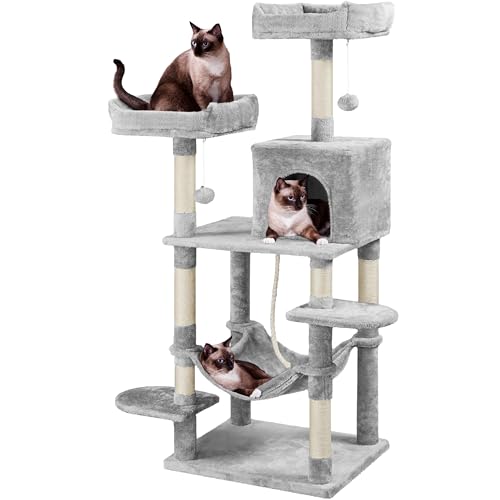
The Heybly HCT026G Heavy Duty Cat Tree Check price on Amazon is the one I’d recommend first for large cats. It has an extra-large base for stability, multiple levels, a hammock, sisal posts, and it doesn’t shimmy when a big cat jumps on it. That stability matters more than it sounds — cats learn fast whether something is safe to leap onto.
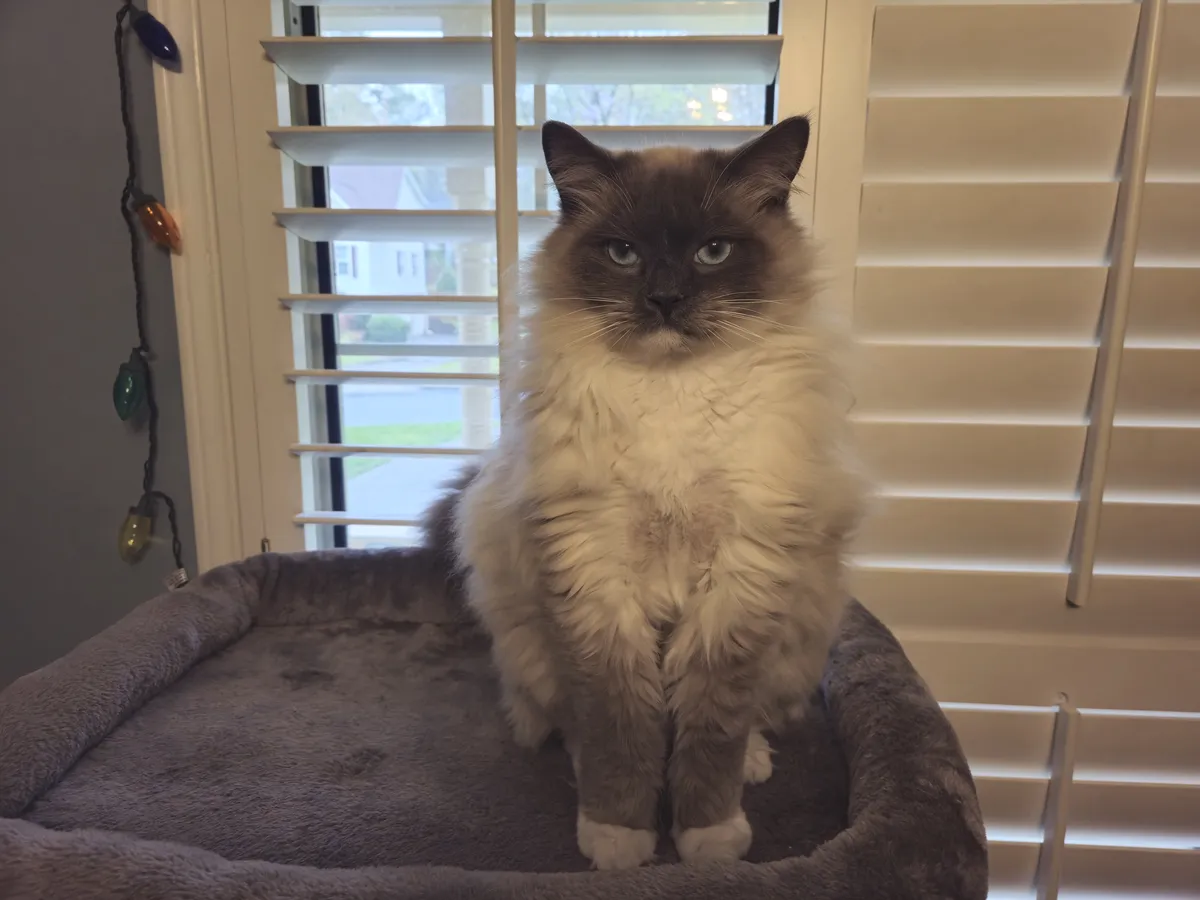
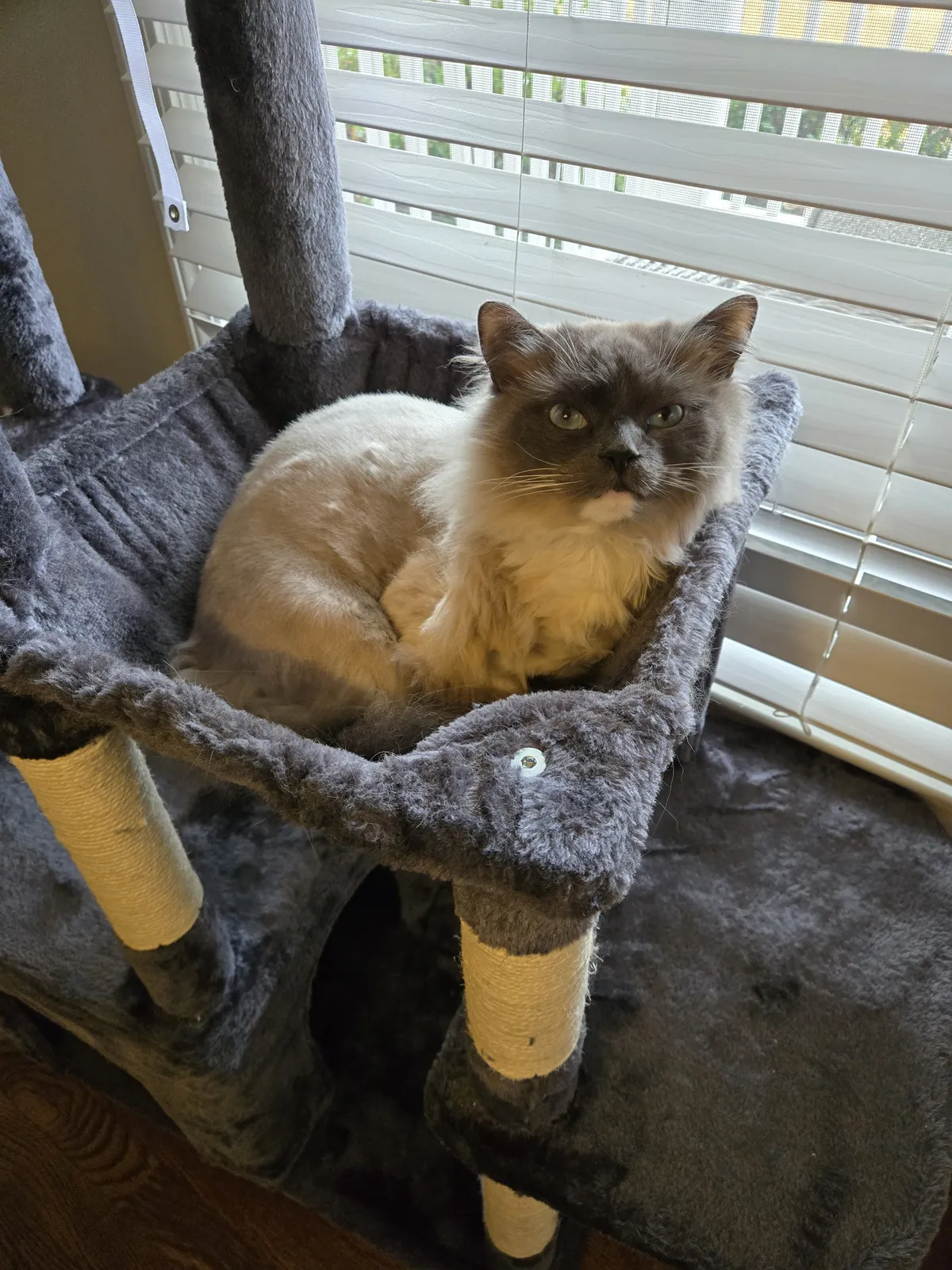
For a more budget-friendly multi-level option, the Yaheetech Multi-Level Cat Tree Check price on Amazon holds up well and has sisal scratching posts integrated into the design. It’s not as heavy-duty as the Heybly, so if your cats are under 12 lbs it’s probably fine, but I wouldn’t trust it with my three.
The Hey-brother MPJ011G Check price on Amazon is a larger condo-style tree with two enclosed plush condos and wide perches. Xena practically lives in one of the condos now. The enclosed spaces seem to appeal to her — she wanted somewhere to hide and survey her kingdom simultaneously.
The catch with all cat trees: placement matters enormously. Put them near the furniture your cats are already targeting, not in some corner they never visit. I made that mistake with the first tree I bought — stuck it in the spare bedroom, cats never touched it. Moved it next to the couch, problem largely solved within a week.
2. The SmartCat Tall Scratching Post
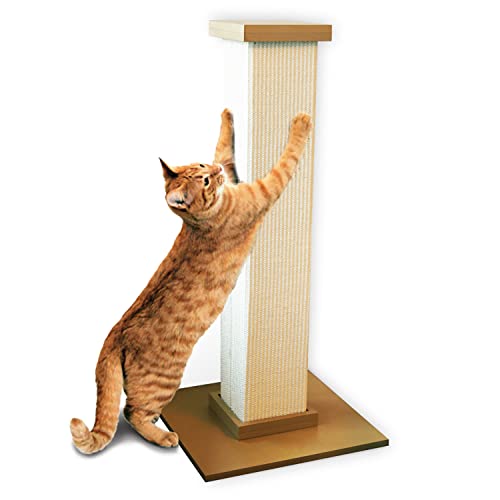
This one deserves its own section because I’ve had mine for years and it still looks new. The SmartCat Pioneer Pet Ultimate Scratching Post Check price on Amazon is the one scratching post I’d call genuinely excellent.
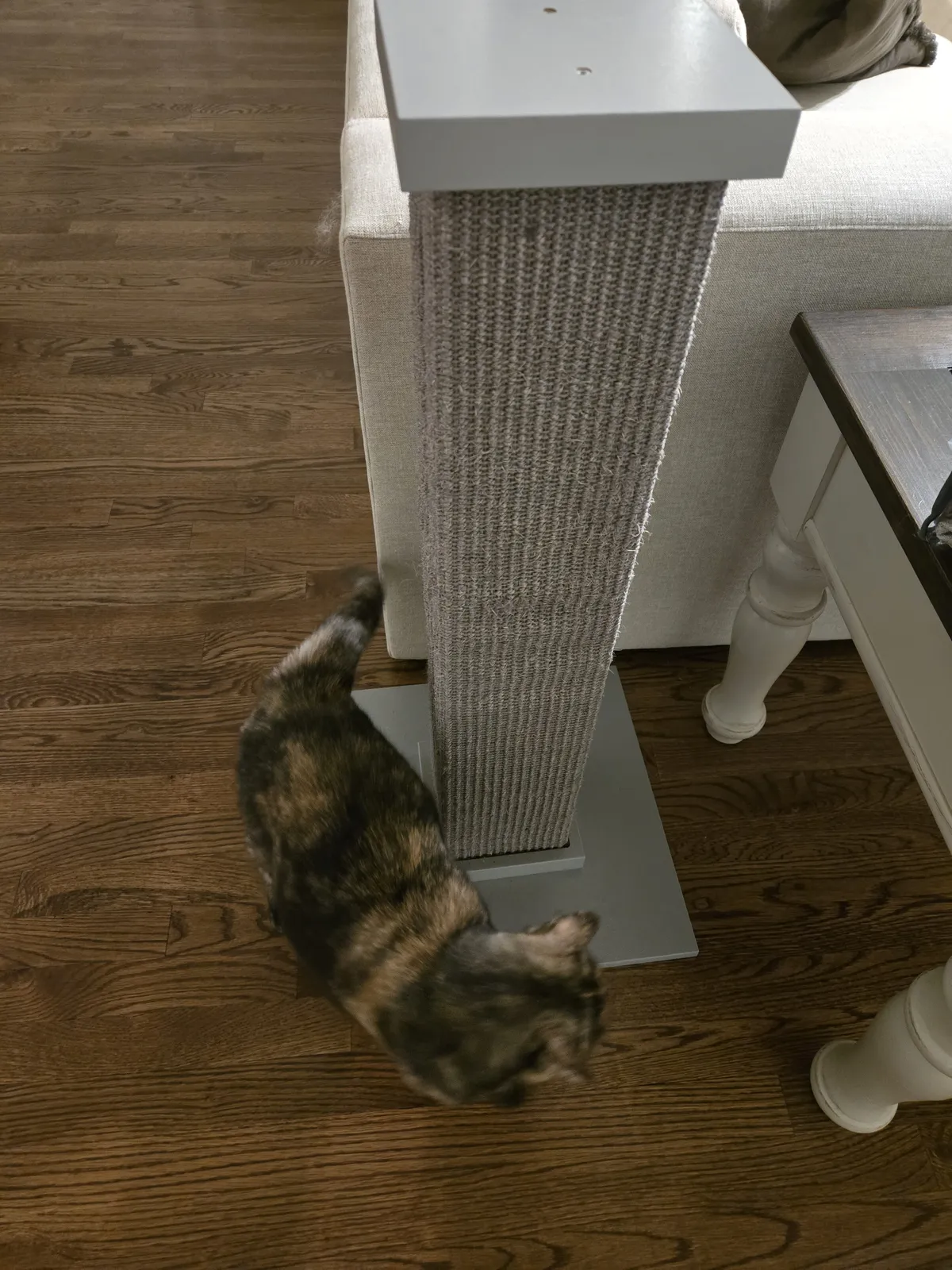
Most scratching posts are too short. That’s the real reason cats ignore them and go back to your couch. Cats want to stretch their full body length while they scratch — it’s partly exercise, partly a stretch, partly territory marking. If the post only comes up to their shoulder, it doesn’t satisfy that urge. The SmartCat post is 32 inches tall, which is enough for even a large cat to fully extend. It’s also stable enough that it doesn’t rock when they lean into it hard.
If I had to pick just one thing to recommend to someone trying to stop their cat from scratching furniture, this post would be it. Place it directly next to wherever they’re currently scratching. Move it gradually over a few weeks once they’re using it consistently.
3. Double-Sided Sticky Sheets
This is my favorite deterrent tool because it’s invisible, cheap, and extremely effective. The Birllaid Clear Double-Sided Adhesive Tape Sheets Check price on Amazon are what I use. You press them onto the corners of your couch, the back of the cushions, wherever your cats are jumping up or scratching.
A cat lands on it once, feels that sticky texture, and backs off. Mine figured it out within a day or two. The sheets are clear so they’re not too ugly, and they don’t leave residue on fabric if you’re using them short-term while training.
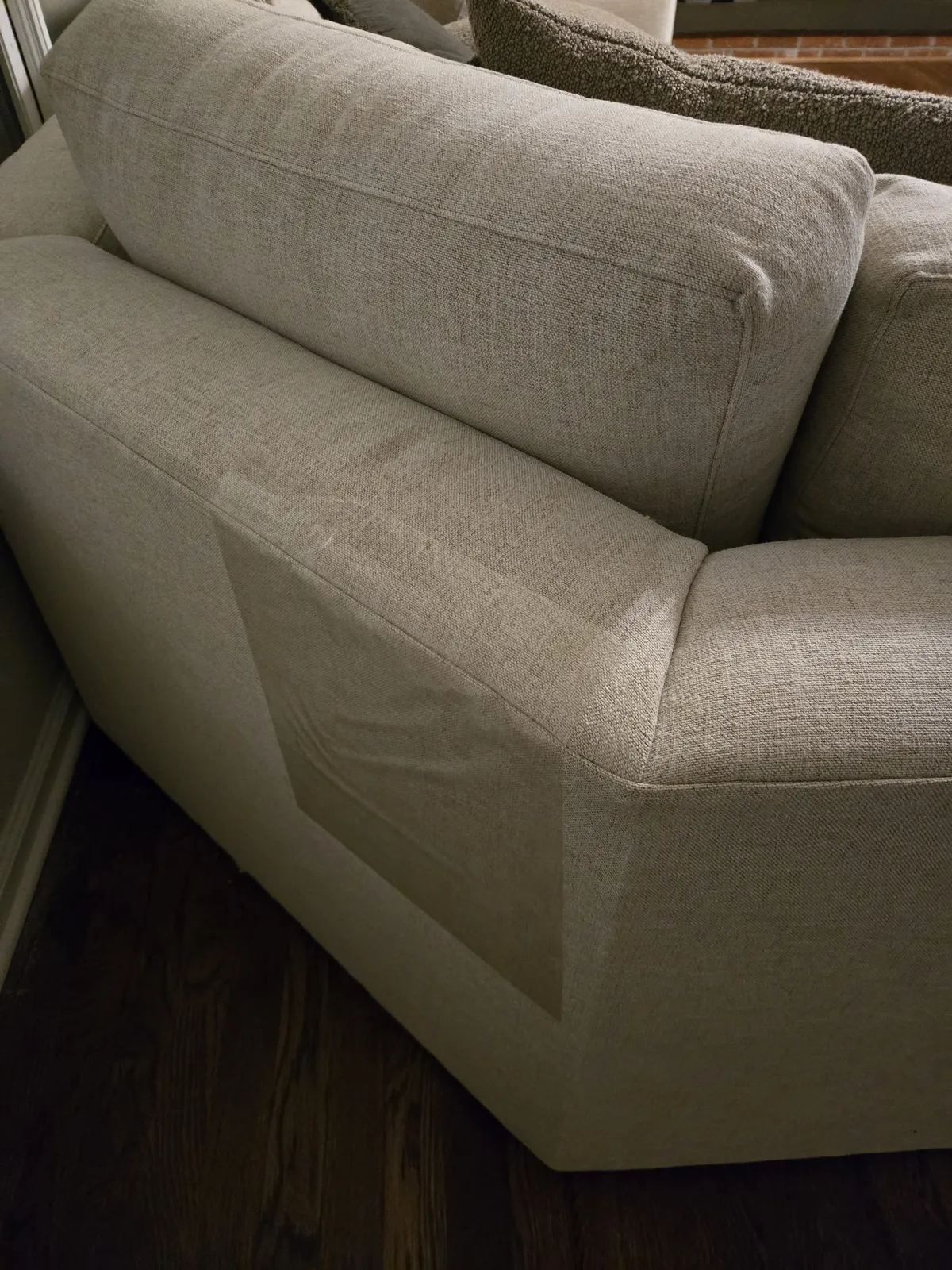 For outdoor or patio furniture, this is also a solid option — same principle applies whether it’s an indoor sectional or outdoor lawn chairs.
The limitation: you need to replace them periodically as they lose their stickiness, and they’re not a permanent solution. Think of them as training tools. Use them for a few weeks while you’re also establishing the better alternatives (the cat tree, the scratching post), then phase them out.
4. Aluminum Foil
Free, immediately effective, and deeply unglamorous. I put small sheets of aluminum foil on the chairs Billy kept claiming in the kitchen. He hated it — the crinkle sound when he’d start to jump up made him retreat every time.
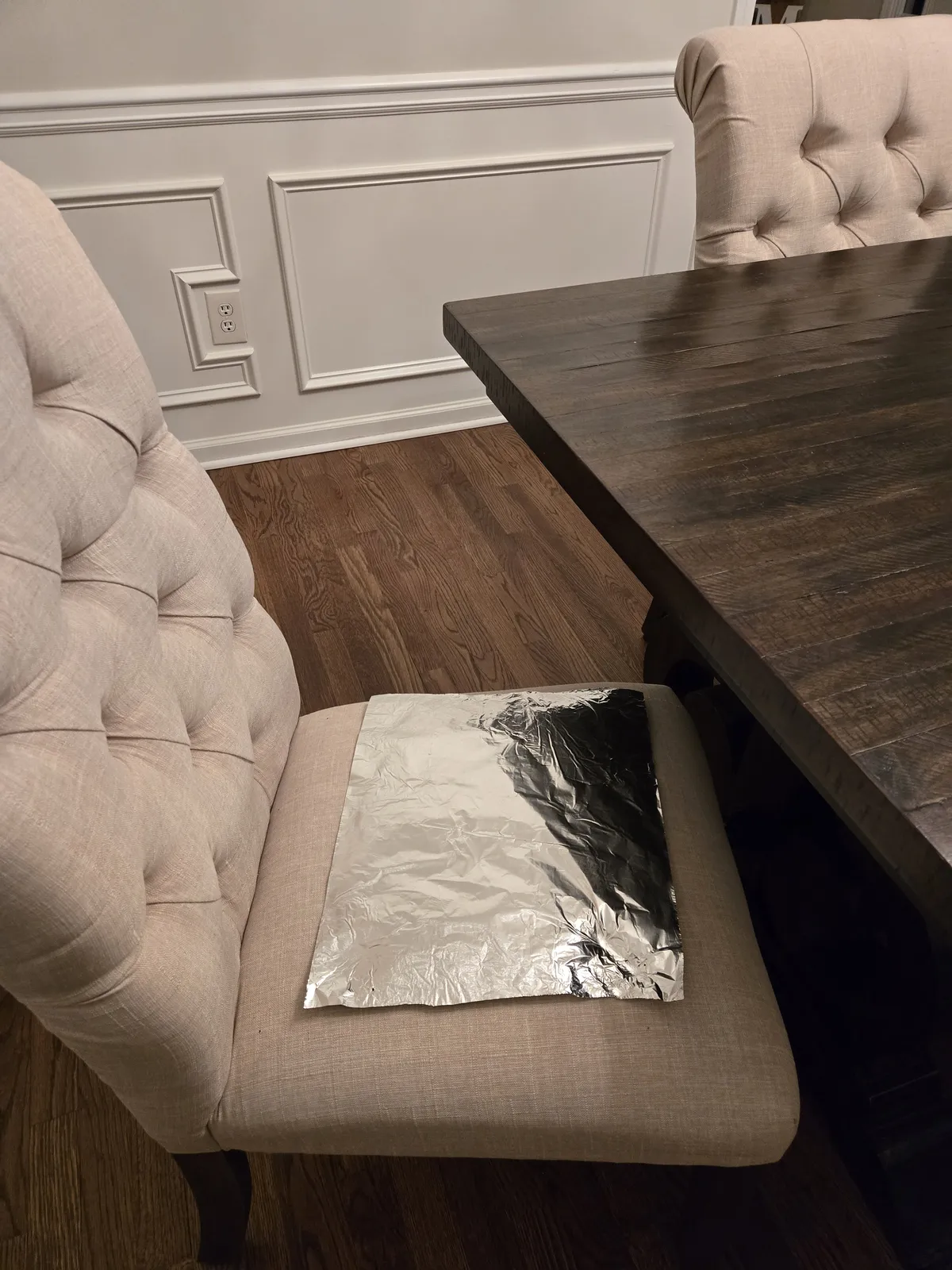
The obvious downside is that your chairs look ridiculous. It’s a temporary measure, not a long-term solution. But it works fast while you’re waiting for the cat tree to arrive or while you’re in the middle of training. For outdoor furniture, foil is actually a decent short-term fix too — cats exploring your patio furniture will hit the foil, hate it, and often find somewhere else to lounge.
5. Decoy Blankets and Designated Cat Spots
Here’s one most people don’t think about: sometimes cats get on your furniture because they want to be near you and they want a soft surface. If you give them both things in one spot, they’ll often take the easy option.
I have a couple of cheap fleece blankets draped over specific chairs that are essentially the “cat chairs.” The cats are allowed there. The other furniture is where I use the deterrents.
This sounds overly simple, but having a clear designated spot for them — especially one with their scent already on it — reduces the appeal of the off-limits furniture significantly. Xena has a dedicated cat bed near the window that she prefers to basically everything else now. If you have long-haired cats, keeping up with a regular grooming routine also helps — less loose fur on the furniture means less reason to obsess over where they sit.
This sounds overly simple, but having a clear designated spot for them — especially one with their scent already on it — reduces the appeal of the off-limits furniture significantly. Xena has a dedicated cat bed near the window that she prefers to basically everything else now. If you have long-haired cats, keeping up with a regular grooming routine also helps — less loose fur on the furniture means less reason to obsess over where they sit.
6. More Things to Scratch Besides Your Furniture
The more scratching options you give your cats, the less interesting your couch becomes. I keep two types around and they serve different purposes.
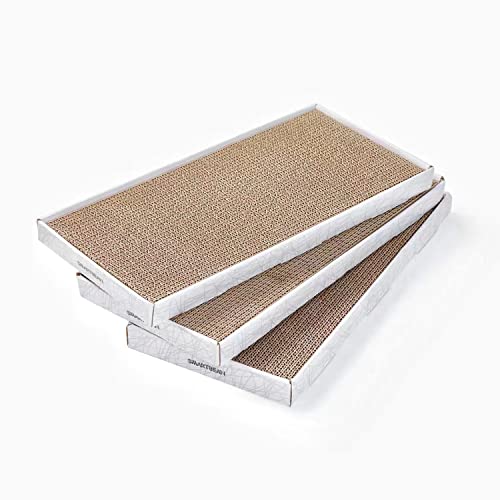
Cardboard scratch pads are great for floor-level scratching and lounging. The Smartbean 3-Pack Cardboard Scratcher Pads Check price on Amazon are the ones I use — double-sided design so they last longer, and the high-density cardboard doesn’t shred everywhere like cheaper versions. My cats also treat them like lounging pads, which is a bonus — a cat sprawled on a cardboard pad on the floor is a cat not on your couch.
A sturdy standalone scratching post is worth adding if you have larger cats. The Amazon Basics Large Cat Scratching Post Check price on Amazon is a solid option — it’s tall, has a wide base, and doesn’t wobble when a big cat leans into it with their full weight. That last part matters a lot. If a scratching post tips or rocks when your cat puts pressure on it, they won’t use it again. This one is sturdy enough that Billy can stretch all the way up and really dig in without it moving.
Position both near whatever furniture you’re trying to protect. The goal is to make the alternative obviously available right when the cat gets the urge to scratch.
What Didn’t Work
Deterrent sprays. I tried several. Billy and Xena ignored them completely. Mr. Kitty seemed to find one of them mildly offensive for about three days and then got over it. I know some people swear by sprays, but in my experience, the effect is short-lived and inconsistent. Save your money.
The water bottle. I want to be direct about this one: I recommend against it. Yes, technically it works in the moment — cats don’t like getting spritzed. But what happens is they learn that you are the source of the unpleasantness, not the furniture. You end up with cats who are skittish around you and still get on the furniture the second you leave the room. It damages trust without solving the problem. The deterrent methods above work even when you’re not there — which is really what you need.
Product Comparison
| Product | Type | Rating | Best For |
|---|---|---|---|
| Heybly HCT026G Cat Tree | Cat tree | ★★★★½ | Large cats, heavy use |
| Yaheetech Multi-Level Cat Tree | Cat tree | ★★★½ | Medium cats, budget buy |
| Hey-brother MPJ011G | Cat tree/condo | ★★★★ | Cats who like enclosed spaces |
| SmartCat Ultimate Scratching Post | Scratching post | ★★★★½ | Vertical scratching redirect |
| Birllaid Sticky Sheets | Deterrent | ★★★★½ | Couch corners, training period |
| Smartbean Cardboard Scratch Pads | Scratch surface | ★★★★ | Floor-level scratching, lounging |
| Amazon Basics Scratching Post | Scratching post | ★★★★ | Large cats, sturdy vertical scratch |
Frequently Asked Questions
Does aluminum foil actually keep cats off furniture?
Yes — it works immediately for most cats. The crinkle sound and unfamiliar texture send them running. I used it on kitchen chairs and Billy retreated every time. The downside is it looks ridiculous, so treat it as a temporary training tool while you set up better alternatives like cat trees and scratching posts.
Why doesn’t the spray bottle work for keeping cats off furniture?
The spray bottle teaches cats that you are the source of the unpleasantness, not the furniture. They learn to stay off furniture when you’re watching and jump right back up when you leave. It damages your relationship with your cat without solving the problem. Passive deterrents like sticky sheets work even when you’re not there.
How do I keep cats off outdoor patio furniture?
Sticky sheets and aluminum foil work well on outdoor furniture since cats won’t expect the texture. For neighborhood strays, foil is especially effective because they’re not familiar with your furniture and the sensory deterrent is usually enough on the first encounter. For your own outdoor cats, providing an alternative like a designated outdoor cat bed works too.
What is the best scratching post to stop cats from scratching furniture?
The SmartCat Pioneer Pet Ultimate Scratching Post is my top pick. Most scratching posts fail because they’re too short — cats want to fully extend while scratching. At 32 inches tall, the SmartCat is tall enough for even large cats. Place it directly next to whatever furniture they’re currently scratching and move it gradually once they’re using it.
Bottom Line
After testing all of this with Billy, Xena, and Mr. Kitty, here’s how I’d summarize it:
If you only do one thing, get the SmartCat tall scratching post and put it directly next to the furniture they’re currently destroying. That alone will redirect a meaningful percentage of the scratching behavior.
If you want a more complete solution, pair the scratching post with sticky sheets on the furniture surfaces you want to protect, and add a cat tree near wherever your cats like to hang out. That combination covers both the deterrence side and the redirection side, which is what actually produces lasting results.
For outdoor and patio furniture specifically, sticky sheets and aluminum foil are your best quick options since you can’t really put a cat tree on a deck. If neighborhood cats are your issue rather than your own, the foil trick works well — they’re not used to your outdoor furniture and the sensory deterrent is usually enough to redirect them elsewhere.
For large cats like mine, prioritize stability in whatever cat tree you buy. A wobbly tree is a useless tree.
If the litter box situation is part of the problem, a hidden litter box cabinet can help — happier bathroom setup often means less territorial behavior on furniture. For outdoor or stray cats causing furniture issues, a heated outdoor cat shelter can redirect them away from your patio furniture entirely. And make sure your cats are drinking enough — a stainless steel water fountain keeps water fresh and moving, which cats prefer over a still bowl.
Figuring out how to keep cats off furniture isn’t about finding a magic spray or outsmarting your cats. It’s about making the furniture less appealing and something else more appealing — at the same time. Once I committed to that two-part approach, my cats largely sorted themselves out. The furniture survived. So did my relationship with all three of them, which is more than I can say for my brief water bottle phase.
Products Mentioned in This Article

Heybly HCT026G Heavy Duty Cat Tree
Heavy-duty cat tree with an extra-large base, multiple levels, hammock, and sisal posts built for big cats.
- Extra-large base provides real stability for 14-16 lb cats
- Multiple levels, hammock, and sisal posts in one unit
- Doesn't shimmy when a big cat jumps on it
- Placement near targeted furniture is critical or cats ignore it
- Takes up significant floor space
Yaheetech Multi-Level Cat Tree
Budget-friendly multi-level cat tree with integrated sisal scratching posts.
- Most affordable multi-level option
- Sisal scratching posts integrated into the design
- Good for medium-sized cats under 12 lbs
- Not heavy-duty enough for large cats over 12 lbs
- Less stable than the Heybly for aggressive jumpers

Hey-brother MPJ011G Cat Tree
Large condo-style cat tree with two enclosed plush condos and wide perches for cats that love hiding.
- Two enclosed plush condos appeal to cats that like to hide
- Wide perches for comfortable lounging
- Great for cats that want to survey their territory from an enclosed spot
- Condo-style takes up more space than a simple tree
- Enclosed condos can accumulate fur and need regular cleaning
SmartCat Pioneer Pet Ultimate Scratching Post
Tall 32-inch scratching post that lets cats fully extend while scratching — the single best furniture saver.
- 32 inches tall — enough for even large cats to fully stretch
- Stable enough that it doesn't rock when cats lean into it hard
- Has lasted years and still looks new
- More expensive than basic scratching posts
- Only one scratching surface — no platforms or perches

Birllaid Clear Double-Sided Adhesive Tape Sheets
Clear sticky sheets that press onto furniture — cats land on them once, feel the texture, and back off.
- Invisible and cheap
- Extremely effective — cats figure it out within a day or two
- No residue left on fabric when used short-term
- Works on both indoor and outdoor furniture
- Needs replacing periodically as stickiness fades
- Not a permanent solution — best used as a training tool
Smartbean 3-Pack Cardboard Scratcher Pads
Double-sided high-density cardboard scratch pads that also double as cat lounging pads.
- Double-sided design so they last longer
- High-density cardboard doesn't shred everywhere like cheap versions
- Cats use them as lounging pads too — a cat on the pad is a cat off the couch
- Eventually wear down and need replacing
- Cardboard bits can still shed over time
Amazon Basics Large Cat Scratching Post
Tall standalone scratching post with a wide base sturdy enough for big cats to lean into.
- Tall enough for large cats to stretch up fully
- Wide base stays stable when big cats put their full weight on it
- Affordable
- Basic design — no platforms, perches, or other features
- Sisal may loosen after extended heavy use
Prices shown were retrieved from Amazon on Oct 8, 2026, 2:37 PM UTC. Product prices and availability are accurate as of the date/time indicated and are subject to change. Any price and availability information displayed on Amazon at the time of purchase will apply to the purchase of this product.