If you’ve ever hung something on a wall and had it pull out of the drywall three days later, you used the wrong anchor. Or no anchor at all.
Drywall is soft, crumbly, and terrible at holding weight on its own. A bare screw in drywall holds maybe 10 lbs before it rips out. But the right anchor in the right situation can hold over 100 lbs — even without hitting a stud.
The problem is there are a dozen types of anchors, and most people either grab whatever’s cheapest at the hardware store or skip anchors entirely and hope for the best. I’ve hung everything from towel bars to heavy-duty garage storage rails across multiple houses, and I’ve learned which anchors actually hold up and which ones end up in a pile on the floor with a chunk of drywall attached.
Here’s every type ranked from weakest to strongest — including real pull-test data from Family Handyman’s independent testing.
The Drywall Anchor Strength Hierarchy
Before we get into specific products, here’s the big picture. Think of wall mounting strength as a ladder:
| Level | Anchor Type | Holds | Best For |
|---|---|---|---|
| 1 | Plastic expansion anchors | 10-25 lbs | Picture frames, light decor |
| 2 | Self-drilling plastic anchors | 25-45 lbs | Towel hooks, light shelves |
| 3 | Self-drilling metal anchors | 50-75 lbs | Shelves, curtain rods, towel bars |
| 4 | Toggle bolts | 80-265 lbs | TV mounts, heavy shelves, mirrors |
| 5 | Lag bolts into studs | 200-500+ lbs | Anything you never want to move |
The further down this list you go, the more weight you can hang — but also the bigger the hole and the more work to install. The key is matching the anchor to the job. You don’t need a toggle bolt for a picture frame, and you definitely don’t want a plastic anchor holding your TV.
These are the cheap ribbed plastic sleeves that come bundled with curtain rods and towel bars. You drill a hole, push the anchor in, and drive a screw into it. The plastic expands against the drywall as the screw tightens.
These are the cheap ribbed plastic sleeves that come bundled with curtain rods and towel bars. You drill a hole, push the anchor in, and drive a screw into it. The plastic expands against the drywall as the screw tightens.
The reality: They work for very light items — under 15 lbs in practice. The problem is the expansion force is weak and concentrated in a small area of drywall. Add any weight that pulls outward (like a loaded shelf) and they slowly work loose.
If something came with plastic expansion anchors in the box, I generally throw them away and use something better. They’re the “it was free” option, not the “it actually works” option.
Level 2: Self-Drilling Plastic Anchors (25-45 lbs)
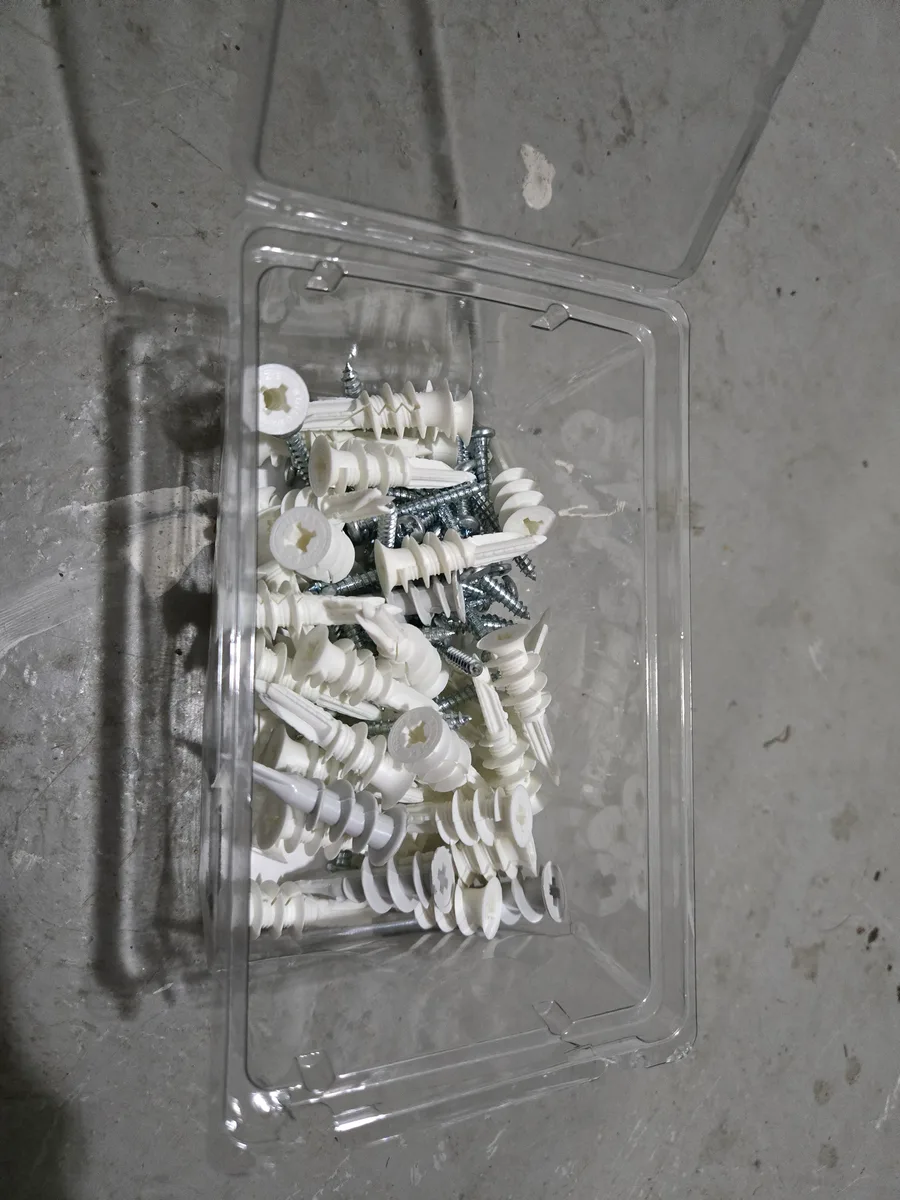
These are the screw-shaped plastic anchors that are supposed to twist directly into drywall. The TOGGLER SnapSkru is the best version of this type — they’re made from glass-filled nylon instead of cheap plastic, and they hold up to 45 lbs.
My honest experience: The “self-drilling” claim is generous. In practice, I always pre-drill a small pilot hole first. Trying to drive them in without one risks cracking the drywall or the anchor going in crooked. Once you pre-drill, they go in fine and hold well for medium-duty jobs.
These are what I keep a box of in the garage for anything under 30 lbs — towel bars, small shelves, coat hooks, outlet cover replacements. The 100-pack TOGGLER SnapSkru is the better value if you’re doing multiple projects. I’ve gone through two boxes across two houses.
Level 3: Self-Drilling Metal Anchors (50-75 lbs)
This is where things get serious. Zinc self-drilling metal anchors are a massive step up from plastic. The key difference: you can actually hammer these into drywall without pre-drilling, and they hold significantly more weight.
The metal threads bite into drywall much more aggressively than plastic, and the zinc construction won’t flex or deform under load like plastic does. In the Family Handyman pull test, metal self-drilling anchors consistently exceeded their ratings.
When to use these: Anything in the 20-60 lb range where you can’t hit a stud. Curtain rods, bathroom shelving, medium mirrors, floating shelves. They’re the sweet spot of strength vs. ease of installation.
Level 4: Toggle Bolts (80-265 lbs)
Toggle bolts are the heavy hitters. Instead of gripping the drywall from inside the hole, they pass through the wall and spread a metal bar or channel behind the drywall. This distributes the load across a much larger area.
The test data speaks for itself. Family Handyman tested the TOGGLER SnapToggle at its rated 80 lbs — it held 180 lbs before failing. That’s more than double the rating. Other toggle bolt results from their test:
| Anchor | Rated | Actually Held |
|---|---|---|
| TOGGLER SnapToggle | 80 lbs | 180 lbs |
| Cobra DrillerToggle | 90 lbs | 140 lbs |
| Pop Toggle | 60 lbs | 130 lbs |
Every toggle bolt they tested exceeded its rating. Manufacturers are conservative with their numbers, which means the real-world safety margin is huge.
When to use these: TV mounts, heavy floating shelves, large mirrors, wall-mounted cabinets — anything over 50 lbs where you can’t hit a stud. The TOGGLER SnapToggle is my pick because the metal channel stays in the wall even if you remove the bolt, so you can reuse the same hole.
The only downside is you need to drill a 1/2-inch hole, which feels aggressive if you’ve never done it. But that’s the trade-off for holding a 65-inch TV on drywall.
They’re the go-to when you can’t find a stud where you need one.
Level 5: The Final Boss — Lag Bolts Into Studs
If toggle bolts are the heavy hitters, lag bolts into studs are the final boss. Nothing you can buy at a hardware store will create a stronger wall mount.
A single 3/8-inch lag bolt driven into a stud can hold several hundred pounds. Use four of them and you can mount a 70-inch TV that won’t budge — I’ve used the same BNUOK 3/8” lag bolts to install three TV wall mounts in my house, and they don’t move. For garage rail systems like Rubbermaid FastTrack, the rail’s mounting holes are smaller than 3/8” — those need construction screws sized to fit, but the same “into the stud” principle applies.
How to do it right:
- Find your studs. Use a quality stud finder — don’t guess. Lag bolts only work if you actually hit the stud.
- Drive it with a socket wrench or impact driver. Lag bolts are big — a regular screwdriver won’t cut it.
- Use a washer. The washer distributes the load on the surface and prevents the bolt head from pulling through.
- Drive it with a socket wrench or impact driver. Lag bolts are big — a regular screwdriver won’t cut it.
When to use these: TV mounts (the safest option), garage storage systems, pull-up bars, heavy shelving, wall-mounted bike racks — anything you want permanently secure. If you can hit a stud, always choose a lag bolt over a drywall anchor. There’s no comparison in strength.
How to Pick the Right One
Still not sure which anchor you need? Here’s the quick decision tree:
How heavy is the item?
- Under 15 lbs (picture frame, small decor): Any anchor works, even cheap plastic. Or just use a nail.
- 15-45 lbs (towel bar, light shelf, curtain rod): Self-drilling plastic or metal anchors. Metal if you want extra confidence.
- 45-100 lbs (heavy shelf, large mirror, small TV): Toggle bolts. Don’t risk it with anything less.
- Over 100 lbs (large TV, garage storage, cabinets): Lag bolts into studs. Find the stud and don’t take shortcuts.
Can you hit a stud?
If yes — use a lag bolt and skip the anchors entirely. A stud is always stronger than drywall. If you’re not sure where your studs are, a good stud finder pays for itself on the first project.
If no — use the strongest anchor that matches your weight range from the chart above.
Pro Tip: Stop Buying the Cheap Anchors That Come in the Box
Almost every shelf, curtain rod, and towel bar comes with a few plastic expansion anchors in the hardware bag. Throw them away. They’re the cheapest possible option the manufacturer could include, and they’re the reason people think drywall can’t hold anything.
Spend a few dollars on a box of zinc self-drilling metal anchors and a pack of TOGGLER SnapToggles and keep both in your garage. You’ll have the right anchor for any project without making a trip to the hardware store.
Strength data referenced from Family Handyman’s independent drywall anchor pull test.
Frequently Asked Questions
What is the strongest drywall anchor?
In a Family Handyman pull test, the TOGGLER SnapToggle held 180 lbs in half-inch drywall — more than double its 80 lb rating. Toggle bolts are the strongest drywall anchors available, typically holding 100-265 lbs depending on the model.
How much weight can drywall hold without an anchor?
A single drywall screw without an anchor holds about 5-10 lbs at most. Drywall is soft and crumbly — the screw has nothing solid to grip. For anything heavier than a small picture frame, you need an anchor or a stud.
What drywall anchors should I use for a TV mount?
For a TV mount, use toggle bolts rated for at least 80 lbs each, or better yet, find the studs and lag bolt directly into them. Most TV mounts use 4 bolts, so four toggle bolts give you 320+ lbs of capacity. But studs are always the safer choice for something that expensive.
Can I hammer drywall anchors into the wall?
Self-drilling metal anchors can be tapped into drywall with a hammer and then tightened with a screwdriver. No pre-drilling needed. They're rated for 50-75 lbs and work great for shelves, towel bars, and curtain rods.
How do I screw directly into a stud?
Use a stud finder to locate the stud, then drill a pilot hole slightly smaller than your lag bolt. Drive the lag bolt in with a socket wrench or impact driver. A single 3/8-inch lag bolt in a stud can hold several hundred pounds. This is the strongest possible wall mounting method.
Products Mentioned in This Article
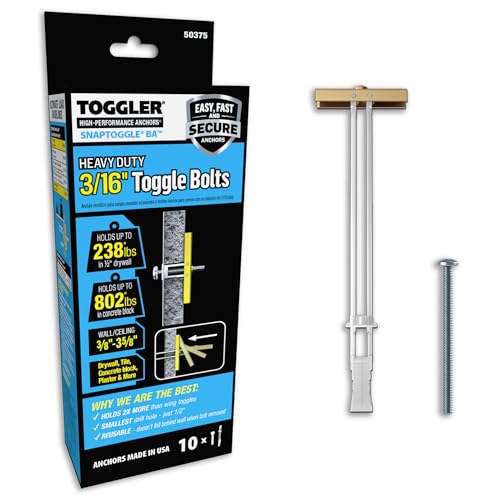
TOGGLER SnapToggle BA Toggle Bolts (6-Pack)
Heavy-duty toggle bolts rated for 80 lbs that actually held 180 lbs in independent testing. The strongest drywall anchor you can buy.
- Held 180 lbs in Family Handyman pull test — double the 80 lb rating
- Spreads load across a wide area behind the drywall
- Metal channel stays in wall if you remove the bolt — reusable
- Perfect for TV mounts, heavy shelves, and mirrors
- Requires drilling a 1/2-inch hole in the wall
- Overkill for lightweight items like picture frames
- Can't reuse the hole if you remove the anchor
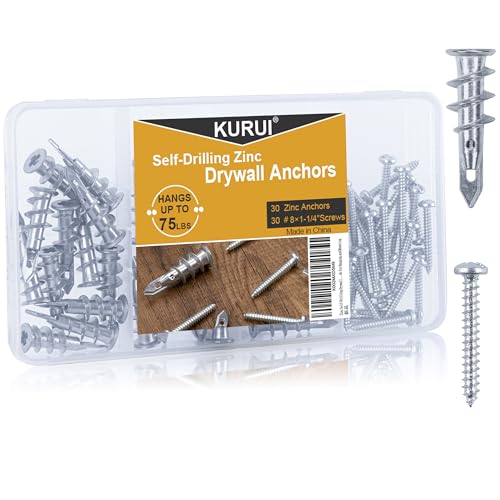
KURUI Zinc Self-Drilling Drywall Anchors (60-Piece Kit)
Zinc self-drilling metal anchors that tap into drywall without pre-drilling. 30 anchors with matching screws included.
- Hammer or screw directly into drywall — no pre-drilling needed
- Zinc metal construction far stronger than plastic anchors
- 75 lb rating per anchor
- 30 anchors + 30 screws included
- Rated for 75 lbs — not enough for very heavy items
- Leaves a larger hole than plastic anchors if removed

TOGGLER SnapSkru Self-Drilling Drywall Anchors (100-Pack)
Self-drilling plastic anchors that install with just a screwdriver. 100-pack for multiple projects.
- Self-drilling — install with just a Phillips screwdriver
- 100-pack is great value for multiple projects
- Glass-filled nylon is stronger than cheap plastic
- Holds up to 45 lbs in 1/2-inch drywall
- Rated for 45 lbs — not for heavy items like TV mounts
- Plastic construction — less durable than metal options

BNUOK 3/8" x 3" Hex Head Lag Bolts with Washers (8-Pack)
8-pack of 3/8-inch by 3-inch hex head lag bolts in 304 stainless steel. Includes flat washers and a 9/16-inch hex driver bit for installation.
- Strongest possible mounting — hundreds of pounds per bolt into a stud
- 304 stainless steel — corrosion resistant for indoor or outdoor use
- Includes 9/16-inch hex driver bit, no separate socket needed
- Flat washers included for proper load distribution
- 3/8" x 3" is the sweet spot for TV mounts, FastTrack rails, and garage storage
- Requires a stud — won't work in hollow drywall
- Single size only — 8-pack of one length, not an assortment
- Smaller pack size means buying multiple if you have a big project
Prices shown were retrieved from Amazon on Oct 8, 2026, 2:37 PM UTC. Product prices and availability are accurate as of the date/time indicated and are subject to change. Any price and availability information displayed on Amazon at the time of purchase will apply to the purchase of this product.