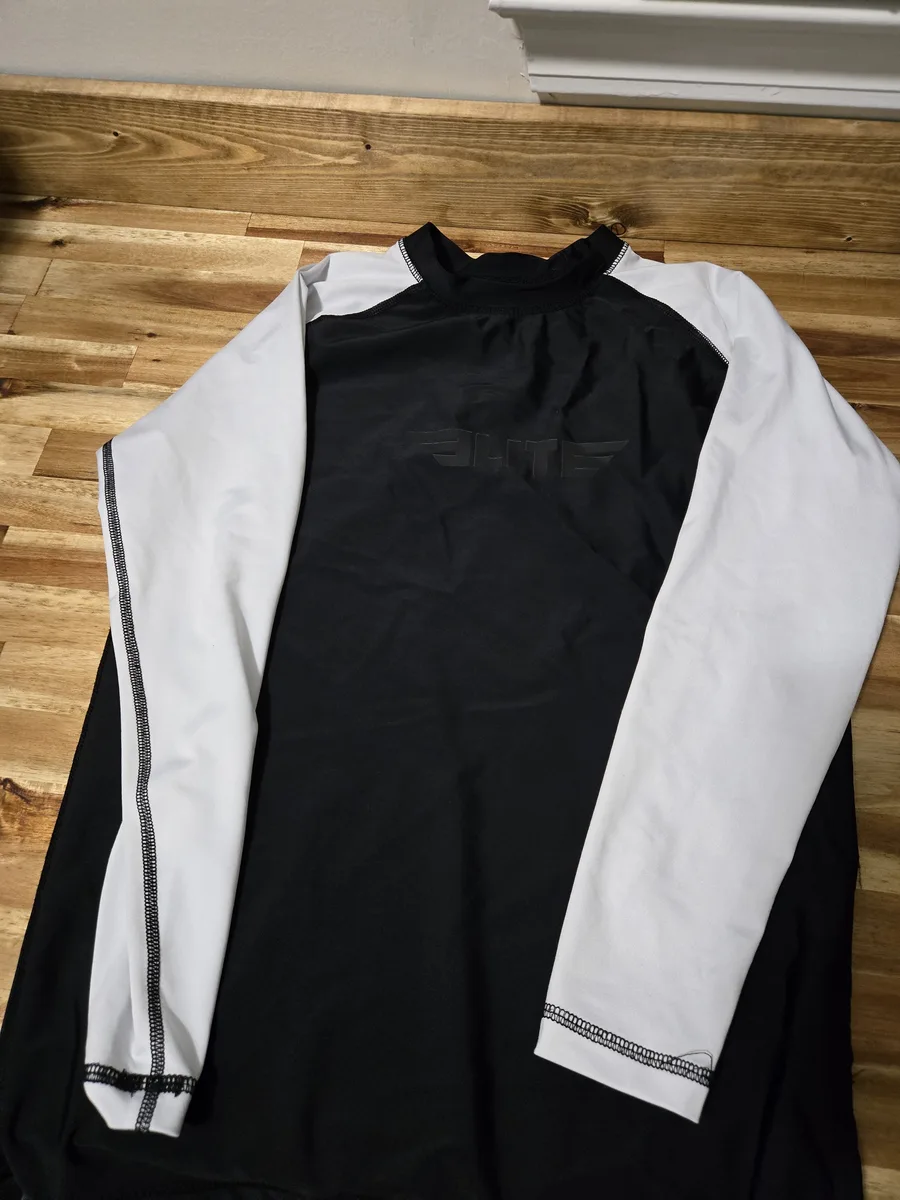
If you’re training no-gi BJJ, your rash guard is the single most important piece of gear you own. More important than your shorts, your spats, your mouthguard — all of it. A good rash guard protects your skin from mat burn and infections, prevents your training partners from grabbing loose fabric, and keeps you comfortable through an hour of getting strangled by people who are weirdly calm about it.
I’ve been training no-gi for over a year now, started as a white belt in my 30s, and I’ve gone through enough rash guards to know which ones hold up and which ones fall apart after a few months of regular washing. Here’s what actually works.
Quick answer: The Sanabul Essentials Long Sleeve Rash Guard ($30) is the best value for most people. If you train 4+ times per week and want something that’ll last longer under heavy use, the Hayabusa Fusion Rash Guard ($60) is worth the upgrade.
What to Look for in a BJJ Rash Guard
Before I get into specific picks, here’s what actually matters when you’re shopping:
Fit: Snug but not suffocating. You should be able to reach overhead, shoot for a double leg, and throw up a triangle without the hem riding up past your waistband. If you can grab a fistful of fabric at your sides, it’s too loose. If you feel like your breathing is restricted during hard rolls, it’s too tight.
Sleeve length: Long sleeve gives you more skin protection. Short sleeve breathes better in the heat. I train in long sleeves 90% of the time — more coverage means less mat burn and less skin-to-skin contact, which is how staph and ringworm spread.
Stitching: This is where cheap rash guards fail first. Flatlock stitching lies flat against your skin and doesn’t chafe. Overlock stitching is raised and will rub you raw during a long session. Every rash guard below uses flatlock.
Material: You want a polyester-spandex blend, usually around 80/20. Pure polyester doesn’t stretch enough. Too much spandex and it bags out after a few washes. The 80/20 sweet spot gives you compression that actually recovers between sessions.
Best Budget Pick: Sanabul Essentials Long Sleeve
Check price on Amazon — $30
This is what I wore for my first six months of training, and it’s still in my rotation. For $30, the Sanabul Essentials is genuinely hard to beat. The compression is solid, the stitching has held up through hundreds of washes, and it comes in enough colors that you won’t look like you’re wearing the same thing every class (even though you probably are).
What I like:
- The compression holds after months of weekly washing
- Flatlock stitching that doesn’t chafe around the collar or armpits
- Multiple color options so you can own three and rotate
- At $30, you can buy two or three for the price of one premium rash guard
What could be better:
- Sizing runs a little small — if you’re between sizes, go up
- The rubber logo on the chest starts peeling after 6+ months
- Not the most breathable fabric when the gym is hot
If you’re just starting BJJ and don’t want to spend $50+ on a rash guard before you know if you’ll stick with it, this is the answer. I cover the full beginner gear setup in my no-gi BJJ gear guide if you need everything from shorts to soap.
Short Sleeve Version
Check price on Amazon — $30
Same construction, same quality, less sleeve. I pull this out during summer open mats when the gym turns into a sauna. The fit and stitching are identical to the long sleeve version.
I’d still recommend starting with long sleeves. You can always push up the sleeves if you’re hot, but you can’t add fabric to short sleeves when the mat burn on your forearms starts stinging. Once you’ve got a good post-training skin care routine established, short sleeves become more practical.
Best Mid-Range Pick: Elite Sports BJJ Rash Guard
Check price on Amazon — $20
The Elite Sports rash guard punches above its price point. The fabric feels noticeably thicker than the Sanabul without being heavy, and the compression recovery is better — meaning it bounces back to its original shape faster after being stretched during rolls.
What I like:
- Thicker fabric that feels more protective
- Better compression retention over time than budget options
- Reinforced stitching in high-stress areas (shoulders, collar)
- Slightly more breathable panel design
What could be better:
- Limited color and design options compared to Sanabul
- The fit is a little looser through the torso on some sizes
This is the sweet spot if you’ve been training for a few months and want something that’ll last longer without jumping to premium pricing. The reinforced shoulder stitching makes a real difference — that’s the area that gets stressed the most when people are gripping and pulling during guillotines and head-and-arm chokes.
Best Premium Pick: Hayabusa Fusion Rash Guard
Check price on Amazon — $60
This is the rash guard you buy when you know you’re in this for the long haul. Hayabusa has been making fight gear for decades, and the quality difference is noticeable the moment you put it on. The fabric is lighter but somehow more compressive, and the stitching is immaculate.
What I like:
- Noticeably lighter and more breathable than budget options
- Superior compression that lasts through hundreds of washes
- Stitching quality is a clear step above everything else on this list
- Doesn’t retain odor the way cheaper fabrics do
What could be better:
- At $60, it’s almost triple the budget picks
- Limited availability in some sizes and colors
- The lighter fabric means slightly less abrasion protection
If you’re training 3-4 times per week, the math actually works out: one Hayabusa that lasts 18+ months costs less than replacing two budget rash guards every 8-10 months. Plus you’re not dealing with the gradual loss of compression that cheaper options develop.
Best Multi-Sport Pick: RDX BJJ Rash Guard
Check price on Amazon — $28
If you cross-train across BJJ, MMA, and other compression-friendly sports, RDX is built for that. The quick-dry fabric works as a base layer for cold training days, holds up for grappling, and doubles for surfing or running — which is rare in this price range. RDX has been making combat sports gear for over a decade and the quality matches the price.
What I like:
- Quick-dry fabric is a genuine advantage for back-to-back training sessions
- Sits between Sanabul and Hayabusa in price ($28) but feels closer to premium fabric quality
- Works for more than just BJJ if you do other sports
- 4.6 stars across hundreds of reviews
What could be better:
- Designs are more functional than fashion-forward — no loud sublimated graphics
- Sizing runs snug; size up if you’re between sizes
- Generic BJJ branding rather than fight-team aesthetics
If you train multiple disciplines and want one rash guard that does it all, RDX gets you there for less than half what you’d spend on the premium pick.
Long Sleeve vs. Short Sleeve: Which Should You Buy?
If you only buy one rash guard, make it long sleeve. Here’s why:
Long sleeve wins for:
- Skin protection from mat burn (forearms get shredded as a white belt)
- Reducing skin-to-skin contact that spreads infections
- Warmth on cold mats during winter months
- Most competitions require long sleeves for no-gi divisions
Short sleeve wins for:
- Hot gyms and summer training
- Slightly more freedom of movement in the arms
- More comfortable for people who run hot
I own three long sleeve rash guards and one short sleeve. That ratio works for me training in a gym that’s cold 8 months of the year. Adjust based on your climate and your gym’s temperature.
How to Make Your Rash Guards Last
The number one killer of rash guards is the dryer. Heat breaks down the spandex fibers that give compression gear its stretch, and once that stretch is gone, it’s gone.
Here’s my washing routine:
- Rinse immediately after training — don’t let sweat sit in the fabric
- Wash cold on a gentle cycle with regular detergent
- Hang dry every time — I throw mine over a door or hanger
- Never use fabric softener — it coats the fibers and traps bacteria
- Vinegar soak once a month — one cup of white vinegar in a sink of cold water for 30 minutes, then wash normally
Following this routine, my Sanabul rash guards have lasted 8+ months and counting with 3x/week training. The guys at my gym who throw theirs in the dryer on high are replacing them every 3-4 months.
Skin Health: Why Your Rash Guard Matters More Than You Think
This isn’t just about comfort. Your rash guard is your first line of defense against the skin infections that are endemic to grappling sports. Ringworm, staph, impetigo — these are real, they’re common, and they’ll keep you off the mats for weeks.
Long sleeves reduce your exposed skin surface area significantly. Combined with proper hygiene — showering immediately after training with antifungal soap, washing your gear after every session — a good rash guard is a key part of staying healthy.
I go deep on skin care, soap recommendations, and the full hygiene protocol in my complete no-gi gear guide. If you’re new to BJJ, read that section. It’s more important than any piece of gear on this page.
For the injury prevention side — keeping your neck, shoulders, and knees healthy so you can actually make it to training — check out our BJJ injury prevention guide.
Product Comparison
| Rash Guard | Price | Rating | Best For |
|---|---|---|---|
| Sanabul Essentials Long Sleeve | $30 | 4.7/5 | Best value, beginners |
| Sanabul Essentials Short Sleeve | $30 | 4.5/5 | Warm weather training |
| Elite Sports Short Sleeve | $20 | 4.7/5 | Best mid-range short sleeve |
| Hayabusa Fusion Long Sleeve | $60 | 4.6/5 | Heavy training, long-term |
| RDX BJJ Rash Guard | $28 | 4.6/5 | Multi-sport crossover |
Frequently Asked Questions
What is the best rash guard for BJJ?
The Sanabul Essentials Long Sleeve is the best overall value at $30. It holds up through months of training and weekly washing without losing compression. If you train frequently and want premium durability, the Hayabusa Fusion at $60 is worth the investment — it lasts significantly longer and feels noticeably better.
Should I get a long sleeve or short sleeve rash guard for BJJ?
Long sleeve for your first few months, no question. It protects more skin from mat burn, reduces skin-to-skin contact that spreads infections like ringworm and staph, and keeps you warmer on cold mats. Switch to short sleeve in summer once your skin care routine is locked in.
How tight should a BJJ rash guard fit?
Snug enough that there’s no loose fabric for your training partner to grab, but not so tight that it restricts your breathing during hard rounds. You should be able to raise your arms overhead without the hem riding up past your waistband. If you’re between sizes, go one size up — a slightly loose rash guard is better than one that gasses you out.
How often should you wash a BJJ rash guard?
After every single training session. No exceptions. Wash cold, hang dry, and never use fabric softener. If your rash guard starts smelling even after washing, soak it in a cup of white vinegar and cold water for 30 minutes before your next wash cycle. Replace any rash guard that you can’t get the smell out of — trapped bacteria is a skin infection waiting to happen.
Can you wear a regular compression shirt for BJJ?
You can, but I wouldn’t. Athletic compression shirts from Nike or Under Armour aren’t designed for the friction and pulling forces of grappling. The stitching is usually overlock instead of flatlock (which means chafing), the fabric isn’t as abrasion-resistant, and they tend to stretch out faster because they’re not built for someone yanking on them.
Bottom Line
- Just starting out? Get two Sanabul long sleeve rash guards ($60 total) so you always have a clean one ready. Pair them with the rest of the starter kit in my beginner gear guide.
- Training regularly and want an upgrade? The Hayabusa Fusion is the best long-term investment at $60.
- On a tight budget? The Elite Sports short sleeve at $20 is the cheapest mid-tier option.
- Cross-training multiple sports? The RDX rash guard at $28 doubles as a base layer for non-grappling sessions too.
- Always go long sleeve first. Add a short sleeve later for hot days.
- Hang dry everything. Your rash guard’s lifespan depends on it.
Now go get choked in something that’ll actually protect your skin while it happens.
Products Mentioned in This Article
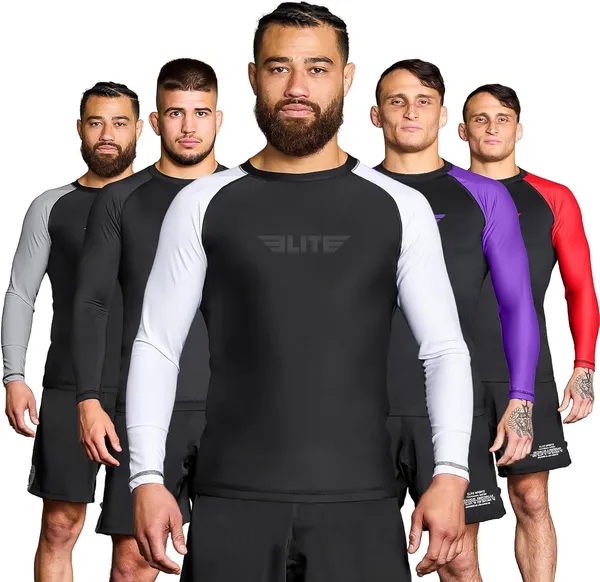
Sanabul Essentials Long Sleeve Compression Rash Guard
Best value BJJ rash guard with solid compression and flatlock stitching that lasts months of regular training.
- Compression holds after months of weekly washing
- Flatlock stitching that doesn't chafe around the collar or armpits
- Multiple color options for easy rotation
- At $30, you can buy two or three for the price of one premium rash guard
- Sizing runs a little small — go up if between sizes
- Rubber logo on the chest starts peeling after 6+ months
- Not the most breathable fabric when the gym is hot
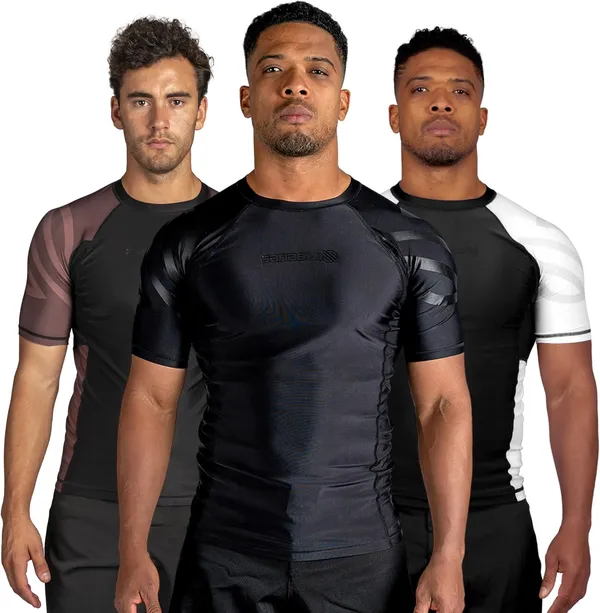
Sanabul Essentials Short Sleeve Compression Rash Guard
Same quality construction as the long sleeve with less coverage for summer and hot gym sessions.
- Identical fit and stitching quality to the long sleeve version
- More breathable for warm weather training
- Good option for summer open mats
- Less skin protection from mat burn and infections
- Not ideal as a first rash guard — long sleeve is better to start
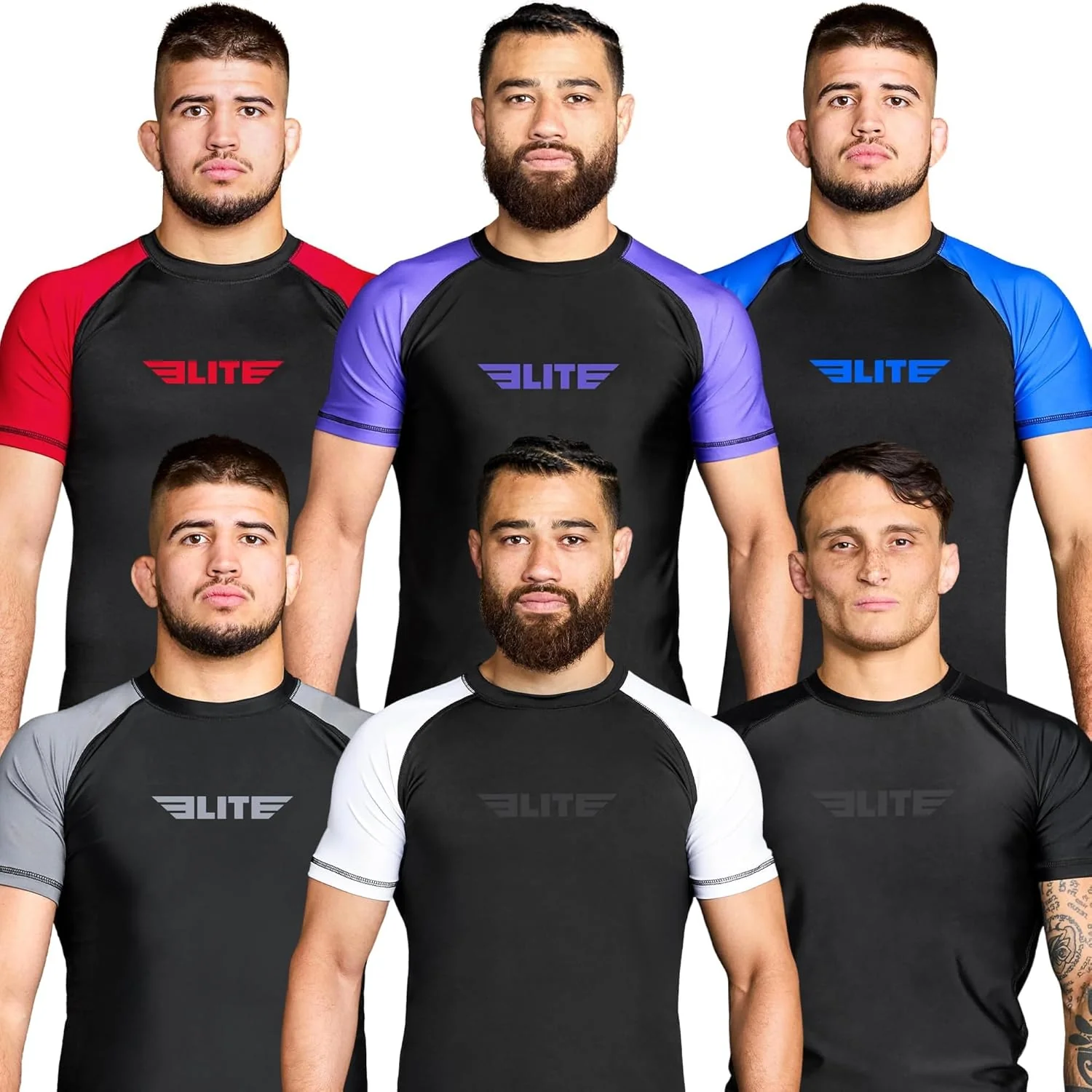
Elite Sports BJJ Rash Guard (Short Sleeve)
Mid-range short sleeve rash guard with thicker fabric and reinforced stitching that punches above its price point.
- Thicker fabric that feels more protective than budget options
- Better compression retention over time
- Reinforced stitching in high-stress areas like shoulders and collar
- Cheapest mid-tier option at $20
- Short sleeve only — less skin protection than long sleeve options
- Limited color and design options compared to Sanabul
- Fit is a little looser through the torso on some sizes
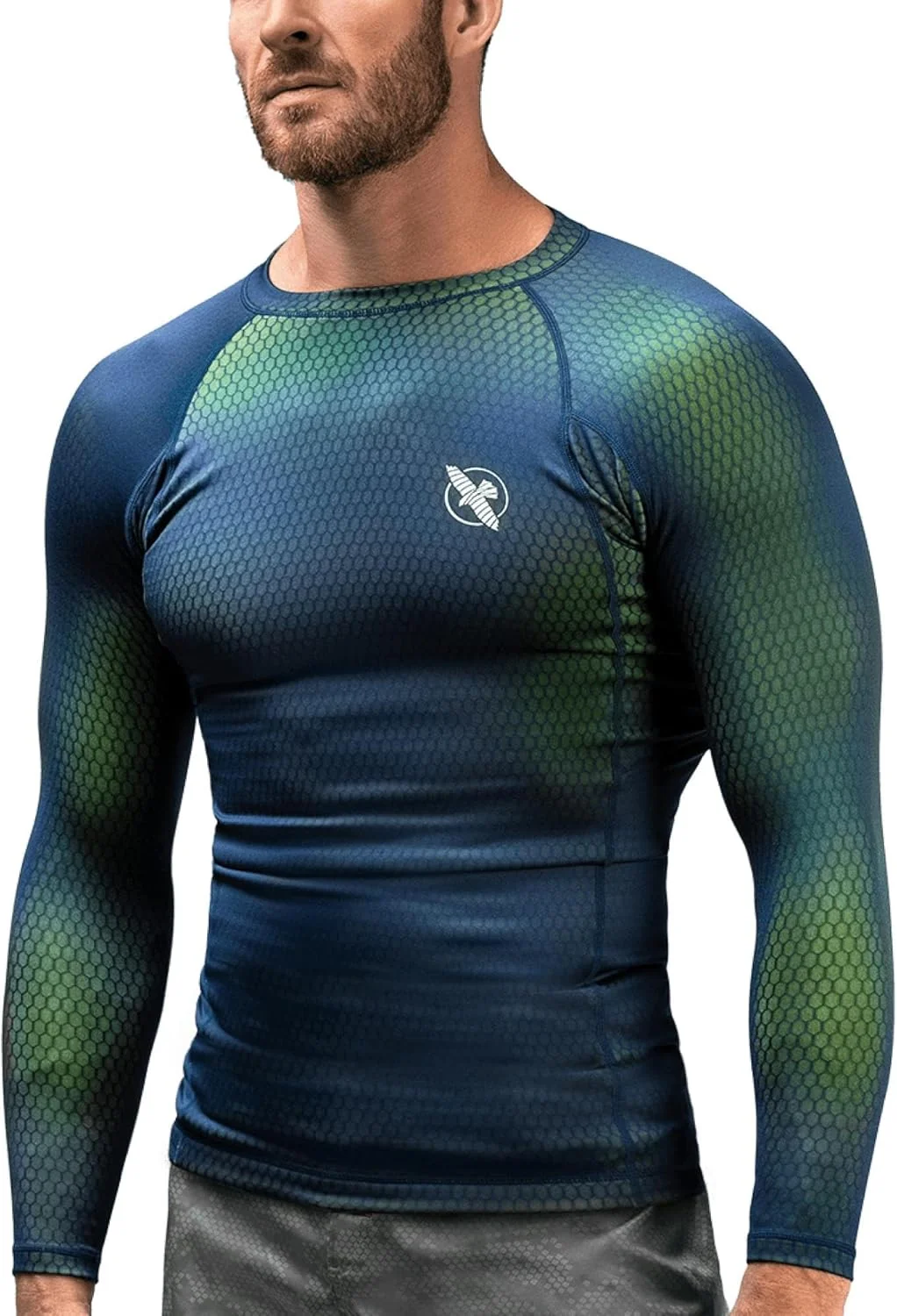
Hayabusa Fusion Long Sleeve BJJ Rash Guard
Premium long sleeve rash guard with superior compression, lighter fabric, and stitching built to last 18+ months of heavy training.
- Noticeably lighter and more breathable than budget options
- Superior compression that lasts through hundreds of washes
- Stitching quality is a clear step above everything else
- Doesn't retain odor the way cheaper fabrics do
- At $60, almost triple the price of budget picks
- Limited availability in some sizes and colors
- Lighter fabric means slightly less abrasion protection
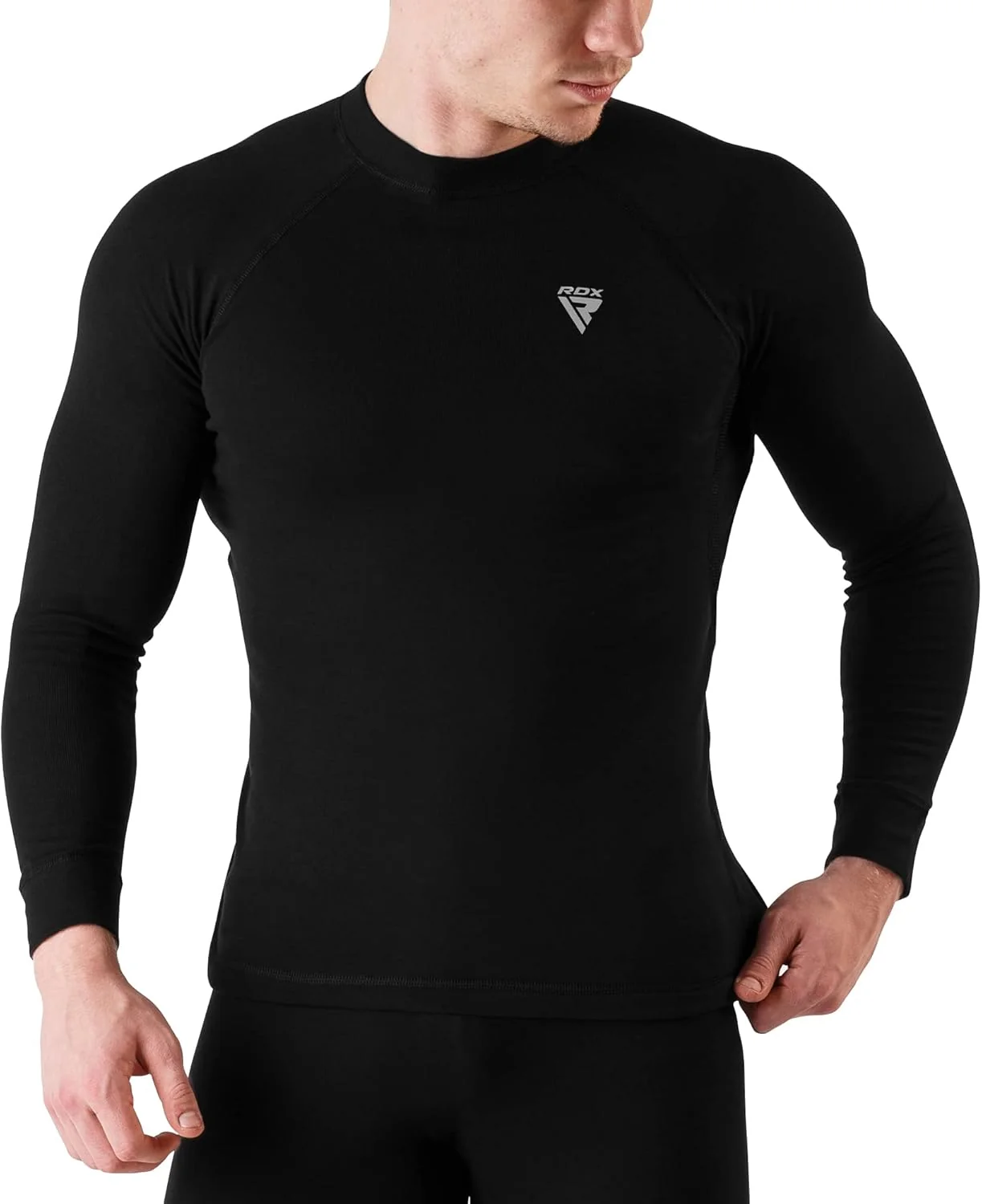
RDX BJJ Compression Rash Guard
Multi-sport compression rash guard built for BJJ, MMA, and other training where quick-dry fabric matters.
- Quick-dry fabric is a real advantage for back-to-back training sessions
- Works for BJJ, MMA, and crossover sports — versatile base layer
- Sits between Sanabul and Hayabusa in price but feels closer to premium fabric quality
- 4.6 stars across hundreds of reviews
- Designs are functional rather than fashion-forward — no loud sublimated graphics
- Sizing runs snug; size up if you're between sizes
- Generic BJJ branding rather than fight-team aesthetics