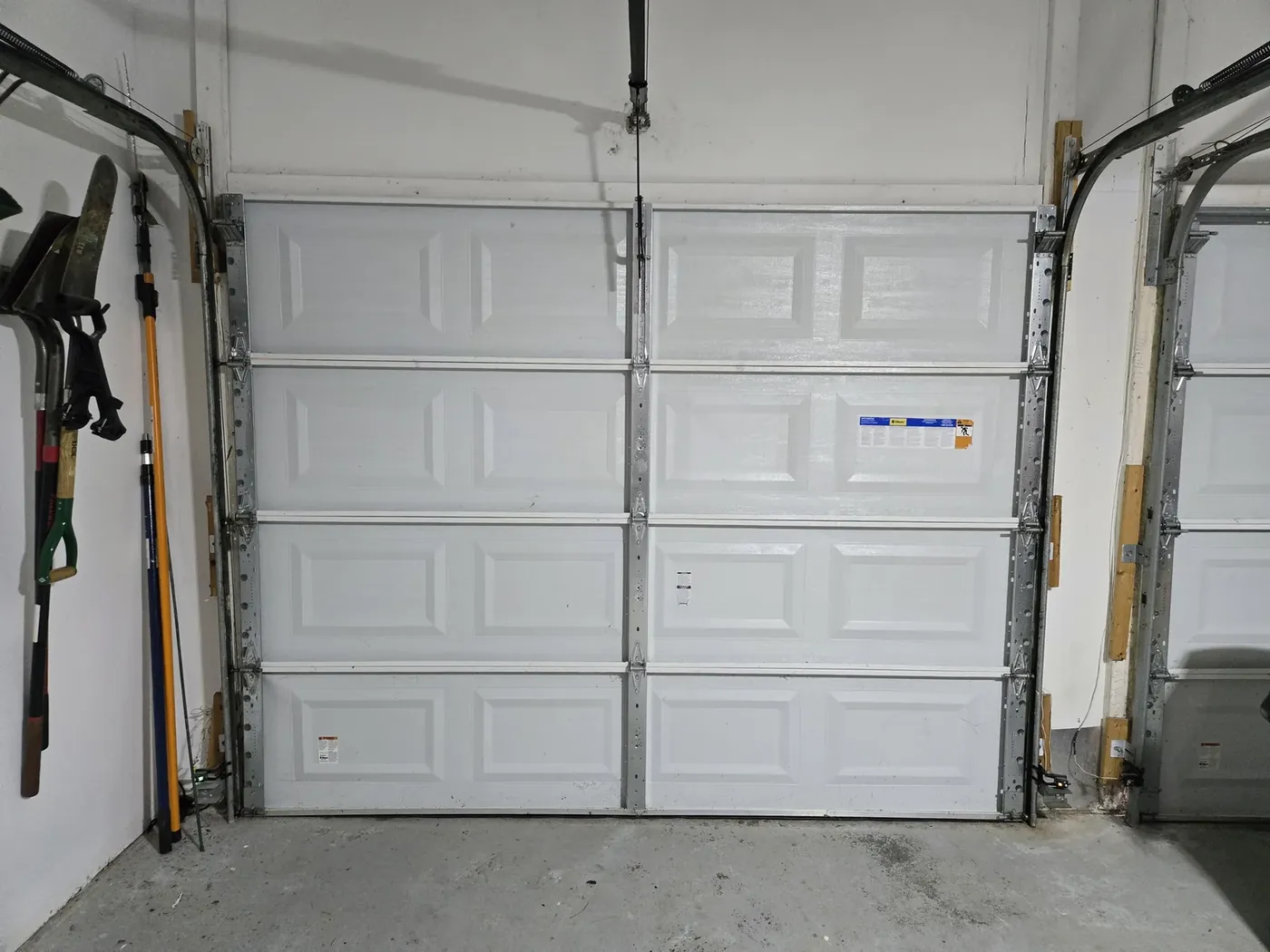
A garage door is the biggest moving thing in your house, it weighs as much as a refrigerator, and most of us never touch it until it starts sounding like a haunted ship. The fix costs about eight dollars and takes ten minutes: silicone spray on every moving joint, and a dry rag for the tracks. Here’s the routine I run on my door twice a year, spring and fall.
What You’ll Need
- A can of silicone spray with a straw — or a dedicated garage door lube, same job
- A rag for the tracks and the drips
- A stepladder to reach the springs and the top hinges
That’s the whole list.
Why Not Regular WD-40?
The blue-and-yellow classic can is a penetrant — brilliant for freeing a rusted bolt, wrong for lubricating a door. It’s thin, it evaporates in days, and it can rinse away the grease that’s already in a roller bearing, leaving the part drier than before. What a garage door wants is a lubricant that goes on wet enough to creep into the joint, then sets up dry enough not to collect a fur coat of dust. That’s silicone (or the lithium-based garage-door cans).
Step 1: Door Down, Opener Unplugged
Close the door and unplug the opener so nobody opens it while your fingers are next to hinge pivots. If you want to be thorough, pull the red release cord and move the door by hand a couple of feet — a healthy door moves smoothly and stays put where you leave it; a door that slams down or flies up has a spring problem, and that’s a pro visit, not a spray can.
Step 2: Hit Every Hinge
Every hinge between panels has one or two pivot points. Straw in, one short burst per pivot, move on. On a 4-panel double door that’s a dozen-plus hinges — it takes three minutes and it’s where most of the squeak lives.
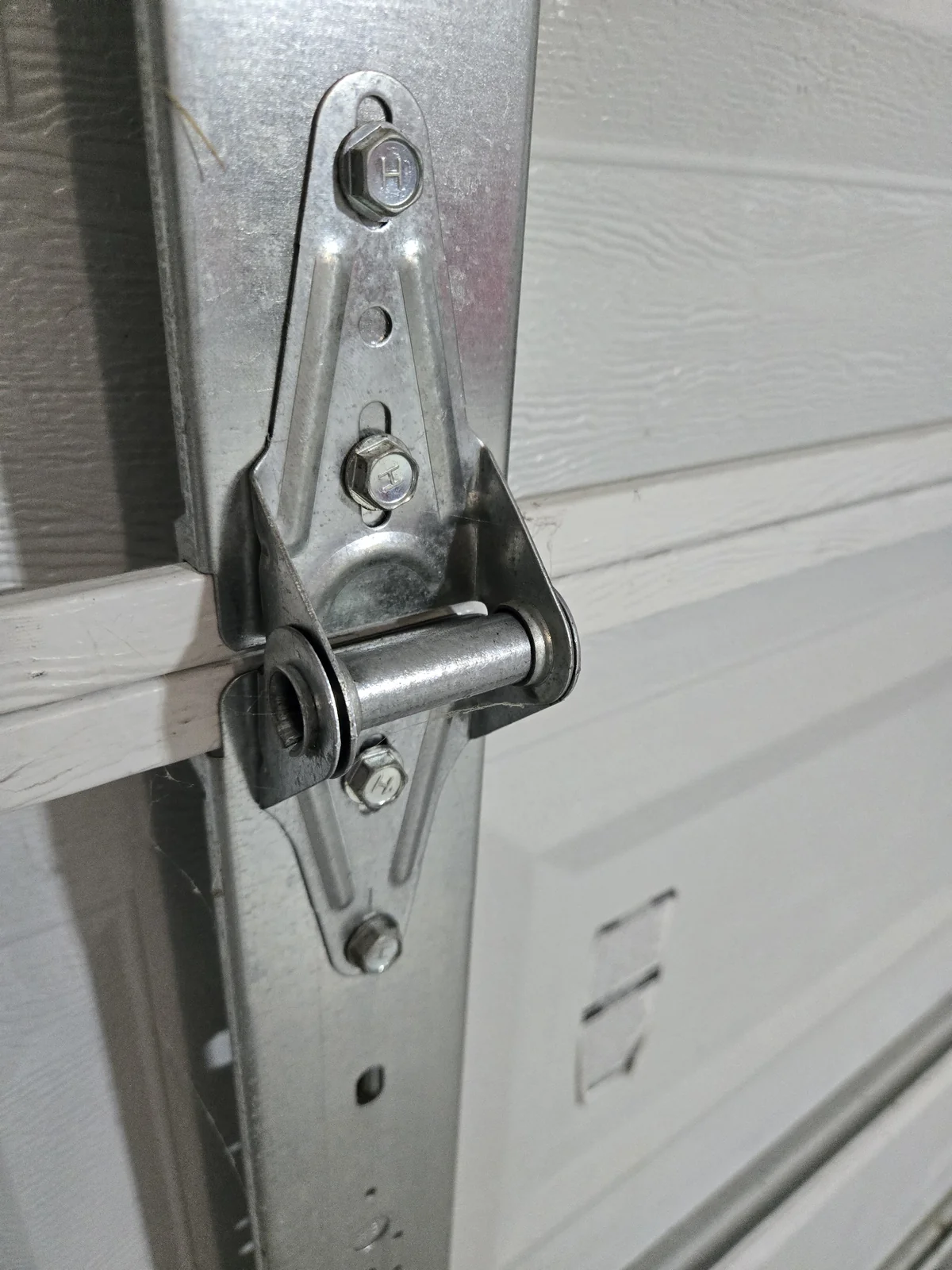
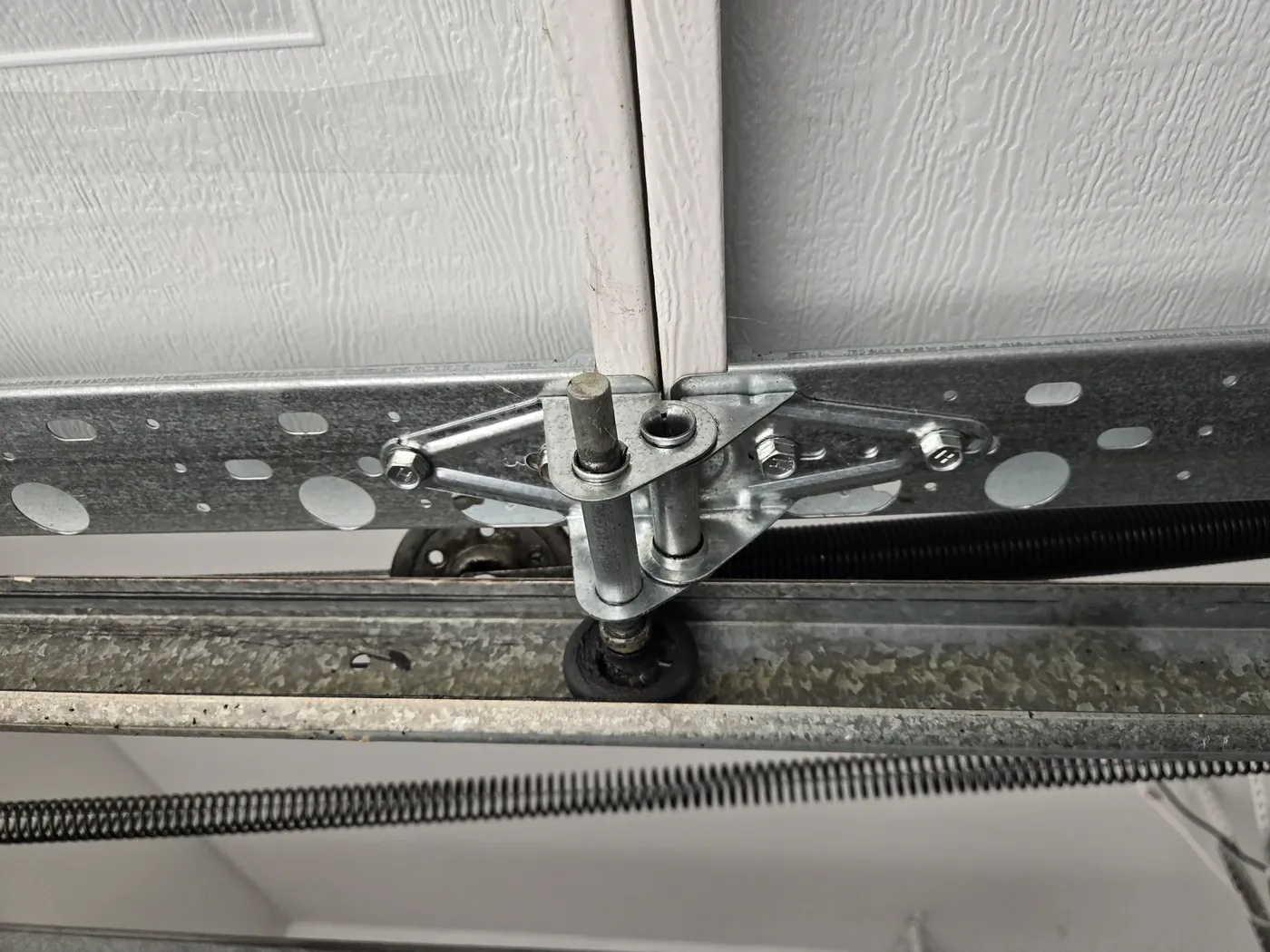
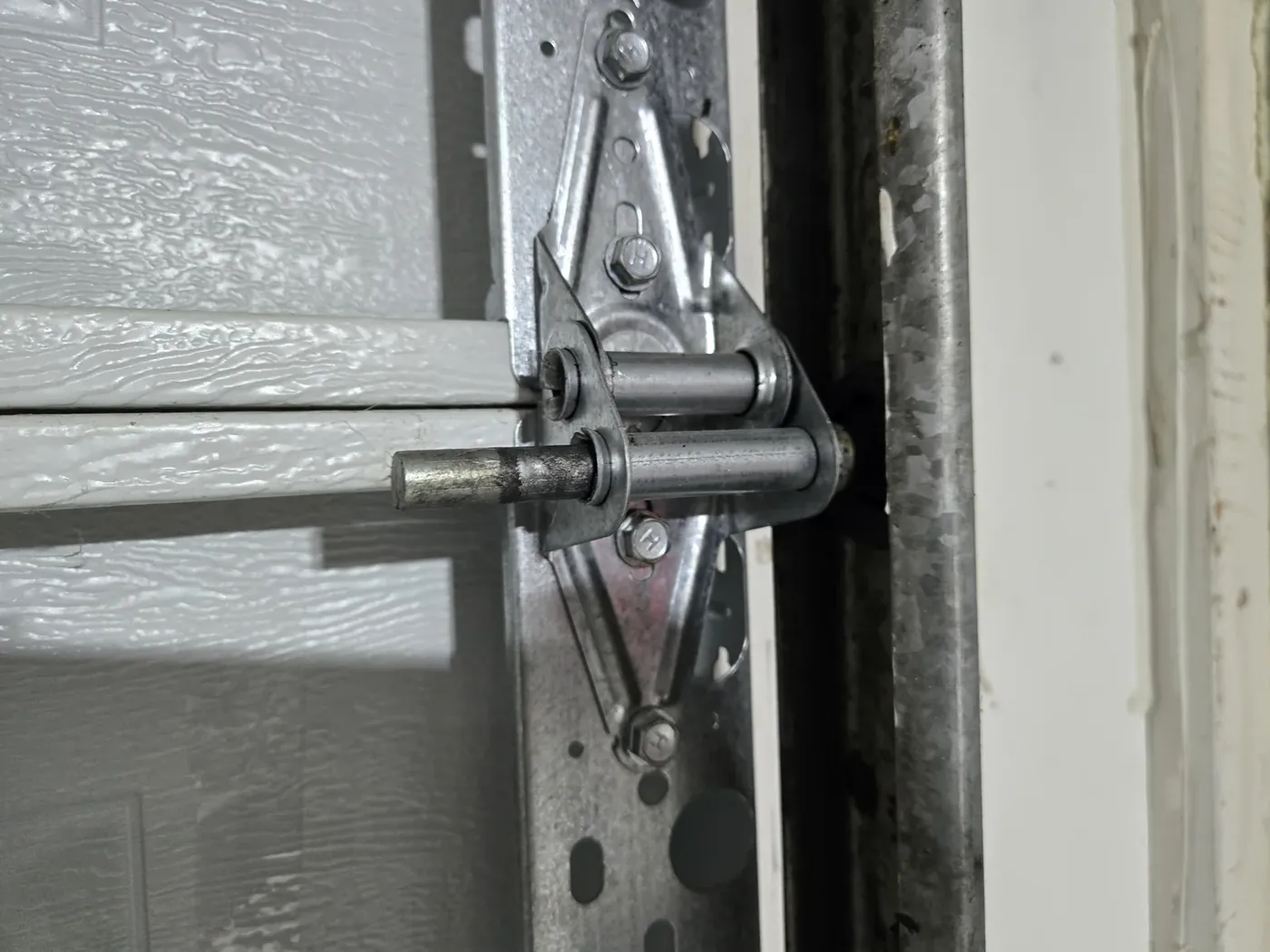
The hinges at the ends of each panel do double duty — they also hold the roller stems:
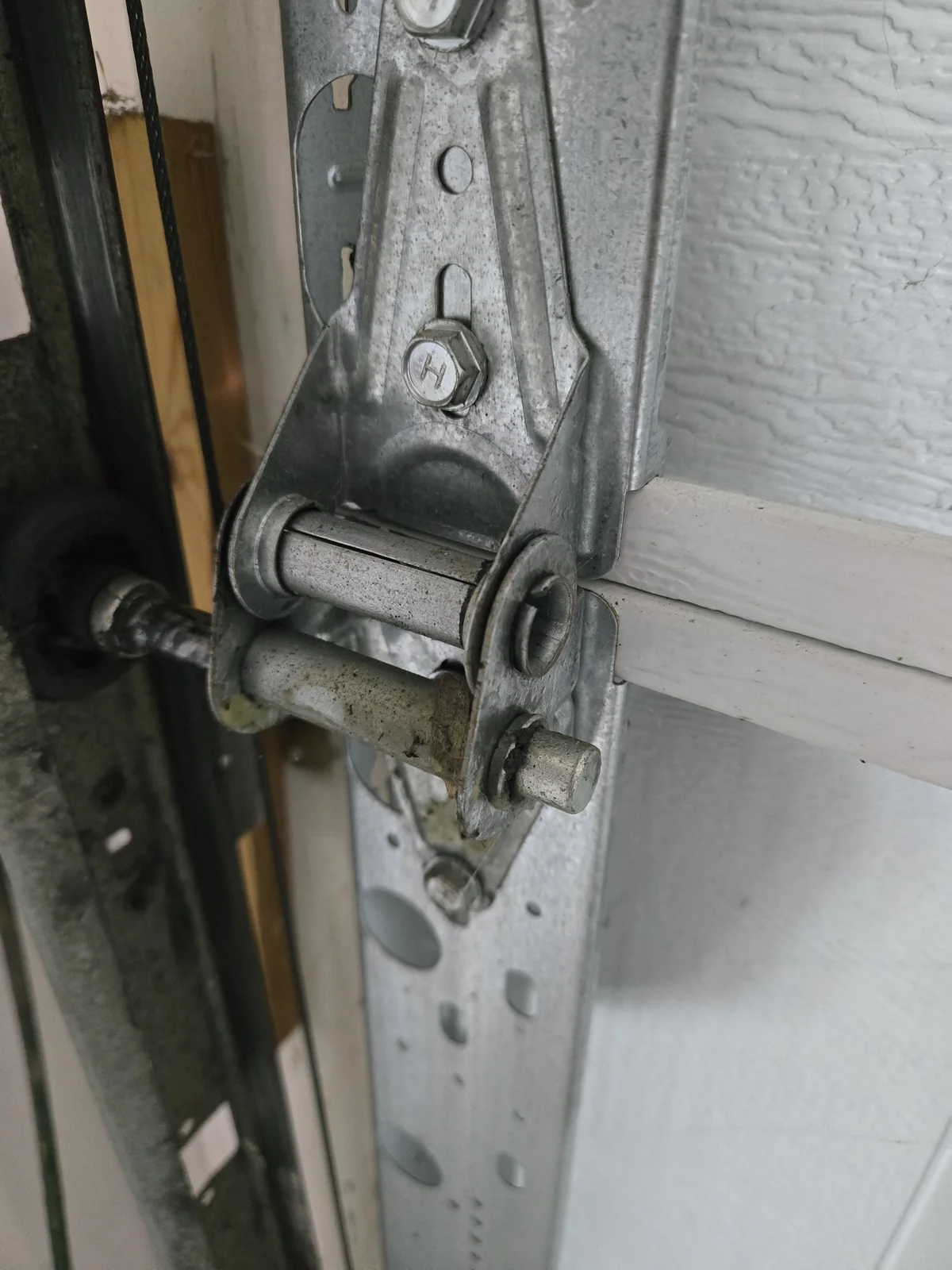
Step 3: Rollers — Bearing Yes, Track No
Spray where the roller stem enters the wheel (that’s the bearing) and give the roller a spin with a finger to work it in. If your rollers are nylon, silicone is safe on them — another reason it’s the right can for this job.
What you do not do is spray the track. Rollers roll on the track; lube in there makes them ski instead, and the film catches every bit of grit the door drags in until the door runs rougher than when you started. Tracks get a wipe with a dry rag, nothing else.
Step 4: Springs, Lock, and Opener Arm
- Torsion springs (the big coil above the door): a light pass along the coil. It quiets the spring’s coils rubbing on each other and slows surface rust. Light means light — dripping springs sling lube on your car.
- The lock and handle, if your door has one: a quick shot in the keyway and the latch.
- The opener arm pivots — the two or three joints where the opener’s drawbar connects to the door and the rail trolley.
Step 5: Run It and Wipe It
Plug the opener back in and run the door through two or three full cycles to work the silicone into every joint. It should already sound noticeably quieter — mine goes from “old ship” to a low hum every fall. Wipe any drips off the door face and the floor, and you’re done for six months.
My door is over twenty years old, and this ten-minute routine twice a year is essentially the only maintenance it’s ever needed:
What This Doesn’t Fix
Lube fixes noise from moving joints. It does not fix:
- A door that’s suddenly heavy or crooked — spring or cable trouble. Those parts store enough energy to break bones; call a garage door company.
- A gap in the torsion spring coil — the spring is broken, same answer.
- Rollers that slide instead of roll after lubrication — worn bearings; the roller needs replacing.
- A racket from the opener itself — that’s the opener’s chain/screw/belt and motor, a different job with different lube (check the opener manual; screw-drive rails take white lithium grease).
While you’re standing there with the door down, it’s also the right moment to look at the weather seal along the bottom and the frame — if daylight shows through anywhere, that’s a gap-sealing job for a can of expanding foam, not the lube can.
Bottom Line
Silicone on every hinge pivot, every roller bearing, the springs, the lock, and the opener arm; dry rag in the tracks; never the classic blue-can WD-40. Ten minutes twice a year and the biggest moving thing in your house goes back to being the quietest. If your garage is also where the yard tools winter, the FastTrack wall system is how mine stay off the floor, and winterizing the mower is the other job worth doing in there before it gets cold.
Frequently Asked Questions
What should I use to lubricate a garage door?
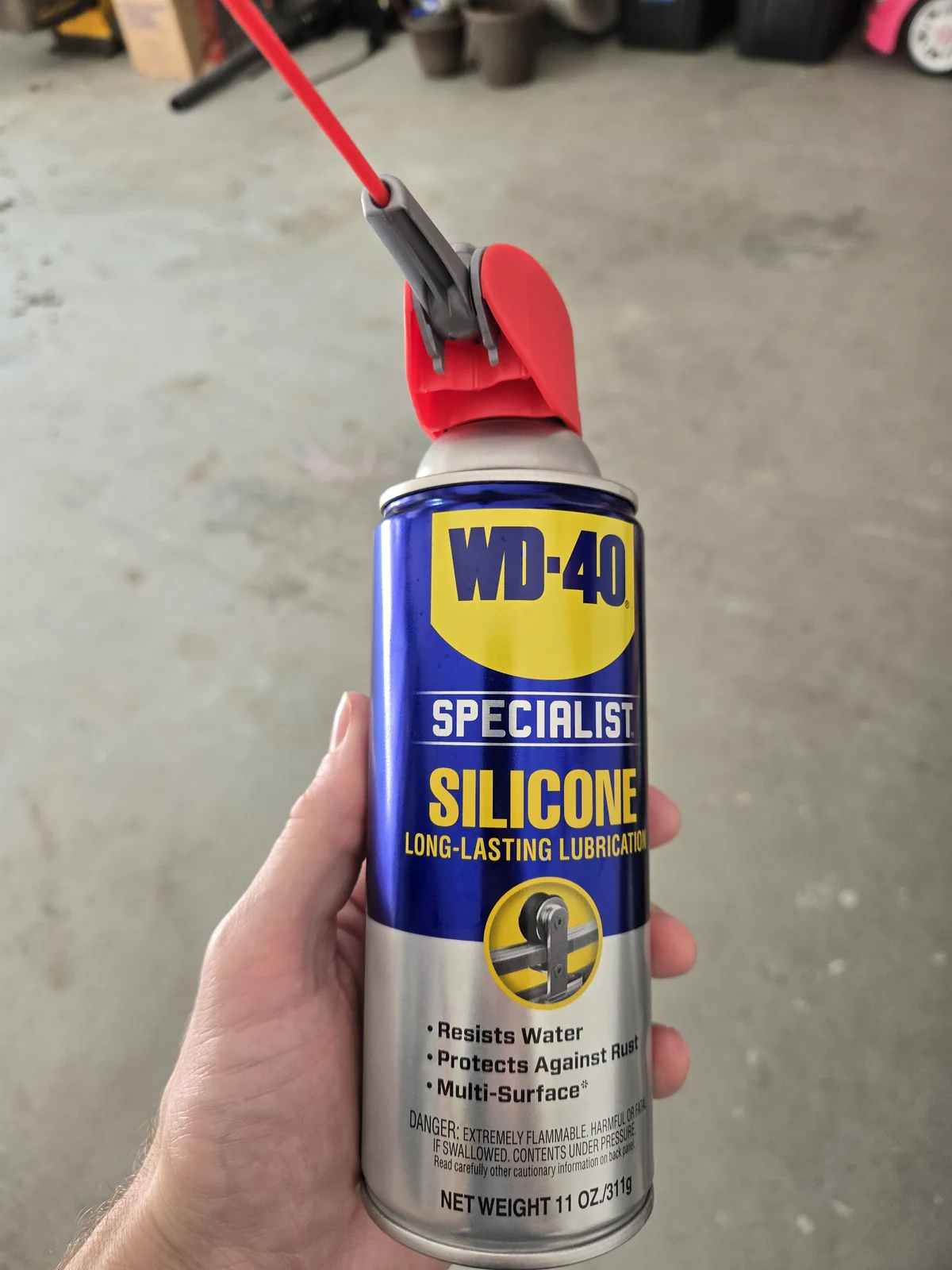
Use a silicone spray or a lithium-based garage door lubricant — something that goes on wet, sets up dry-ish, and doesn't collect dust. Classic WD-40 Multi-Use is the wrong tool here; it's a penetrant and water displacer, it evaporates quickly, and it washes away what grease the parts had. The two standard answers are WD-40 Specialist Silicone (what I use) and 3-IN-ONE Garage Door Lube.
How often should you lubricate a garage door?
Twice a year is plenty for a family garage — I do it spring and fall, and the fall pass matters more because cold thickens whatever grime is on the parts and that's when doors start groaning. A door that gets opened and closed six times a day, or one near salty coastal air, can use a third pass.
What parts of a garage door should be lubricated?
Hinges (each pivot point), the roller bearings — meaning the wheel's bearing, not the part that touches the track — the torsion springs above the door, the lock mechanism, and the opener's arm pivot points. Do NOT lubricate the inside of the tracks. Rollers are supposed to roll on the track, not slide, and lube in the track collects grit and makes the door noisier and jumpier over time. Wipe the tracks clean and dry instead.
Should you lubricate garage door tracks?
Wipe the inside of the track with a dry rag or one lightly dampened with a household cleaner, and leave it dry. If a roller is sliding instead of rolling even after its bearing is lubricated, the roller or its bearing is worn — that's a replacement, not more spray.
When is a noisy garage door not a DIY fix?
Squeaks and groans from hinges and rollers are a lubrication job. A door that's suddenly much heavier, visibly crooked, has a gap in the torsion spring coil, or a frayed cable is a spring/cable problem — those parts are under enough tension to injure you, and they're the one garage-door job I hand to a pro without a second thought.
Products Mentioned in This Article

WD-40 Specialist Silicone Lubricant, Smart Straw, 11 oz
Silicone spray with the flip-up straw — the can in my garage. Goes on wet to creep into hinge pivots and bearings, sets up mostly dry so it doesn't collect dust, and it's safe on the door's rubber bottom seal and any nylon rollers.
- Dry-ish finish that doesn't turn hinges into grit magnets
- Safe on rubber and vinyl — you can hit the weather seal and the roller stems with the same can
- Smart Straw aims into hinge knuckles without disassembling anything
- The Smart Straw tip clogs eventually if you never wipe it — pull the straw down and give it a dry blast after use

3-IN-ONE Garage Door Lubricant, Smart Straw, 11 oz
The purpose-made alternative. I use the WD-40 silicone above, but if you'd rather buy a can that literally says "garage door" on it, this is the standard — same idea, same twice-a-year routine.
- Formulated specifically for hinges, rollers, and springs
- Quick-drying film rated for temperature swings a garage actually sees
- The two-way Smart Straw spray head
- Slightly wetter film than pure silicone — wipe the excess or it drips on the car for a day
Prices shown were retrieved from Amazon on Oct 8, 2026, 2:37 PM UTC. Product prices and availability are accurate as of the date/time indicated and are subject to change. Any price and availability information displayed on Amazon at the time of purchase will apply to the purchase of this product.