Every winter, somebody on your street gets a surprise plumbing bill because a garden hose stayed connected through the first hard freeze. The water trapped in the faucet froze, expanded backward into the pipe behind the wall, and split it — quietly, invisibly, until spring. The prevention is a five-minute job per spigot and less than ten dollars of foam. Even in Atlanta, where winter mostly bluffs, we get a handful of hard-freeze nights every year — exactly the kind that catch people with hoses still attached.
The One Rule: No Hose Through a Freeze
Everything else here is optional by comparison. A connected hose is how outdoor faucets die, because it holds water inside the spigot where it can’t drain. Disconnect every hose before the first hard freeze — that alone prevents most burst-bib disasters.
This is where quick-connect fittings quietly earn their keep. Mine stay on year-round, and the fall disconnect is literally a click:
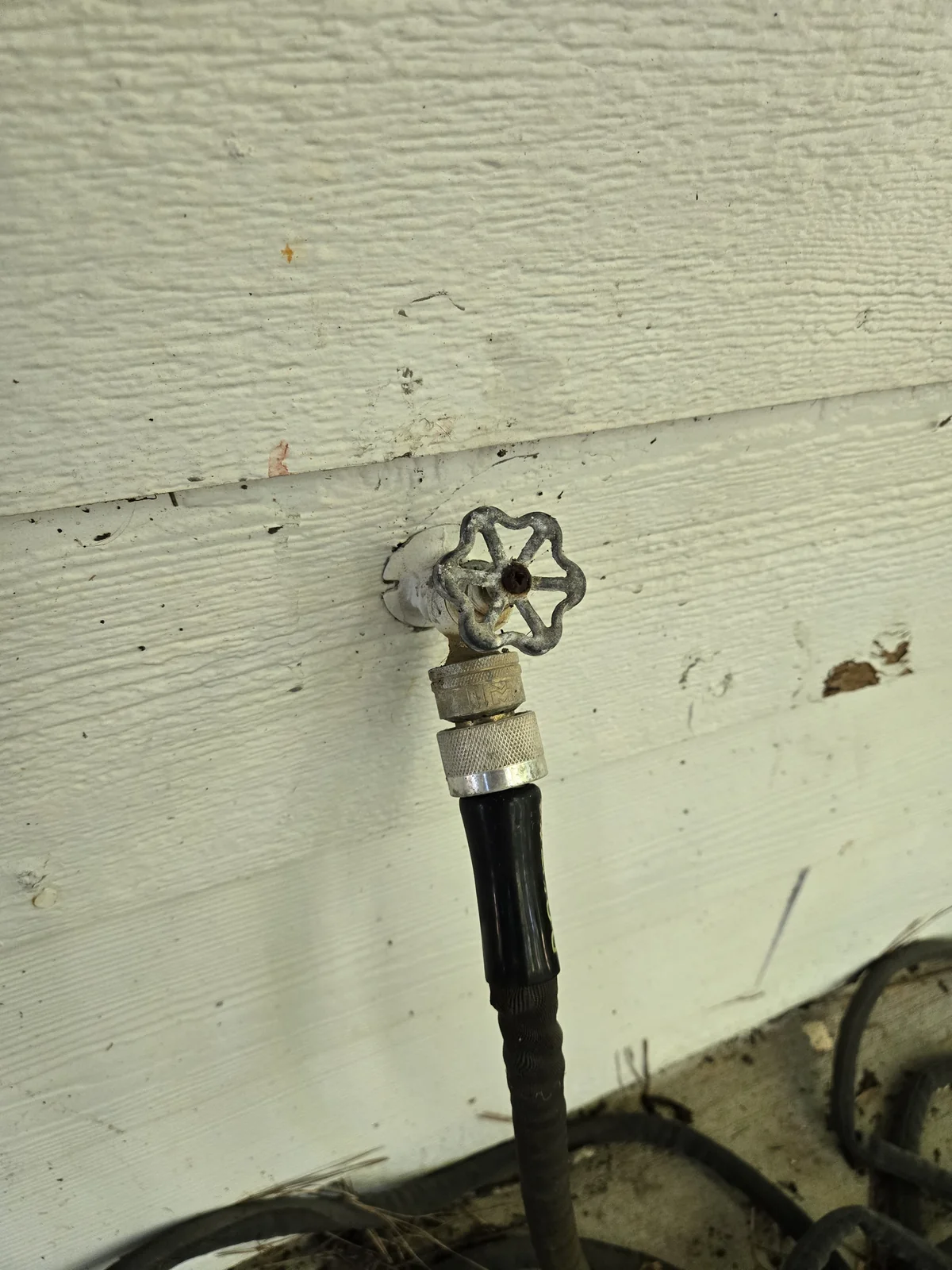
Drain the hose (walk it out straight, let it empty downhill, or stretch it on a slope), coil it, and store it in the garage or shed. Water left inside becomes an ice plug that splits the vinyl.
Step 2: Put a Foam Cover on Each Spigot
A foam faucet cover is a simple thing: a rigid shell full of trapped air that keeps the little bit of house heat around the spigot and blocks the wind that does the real freezing damage.
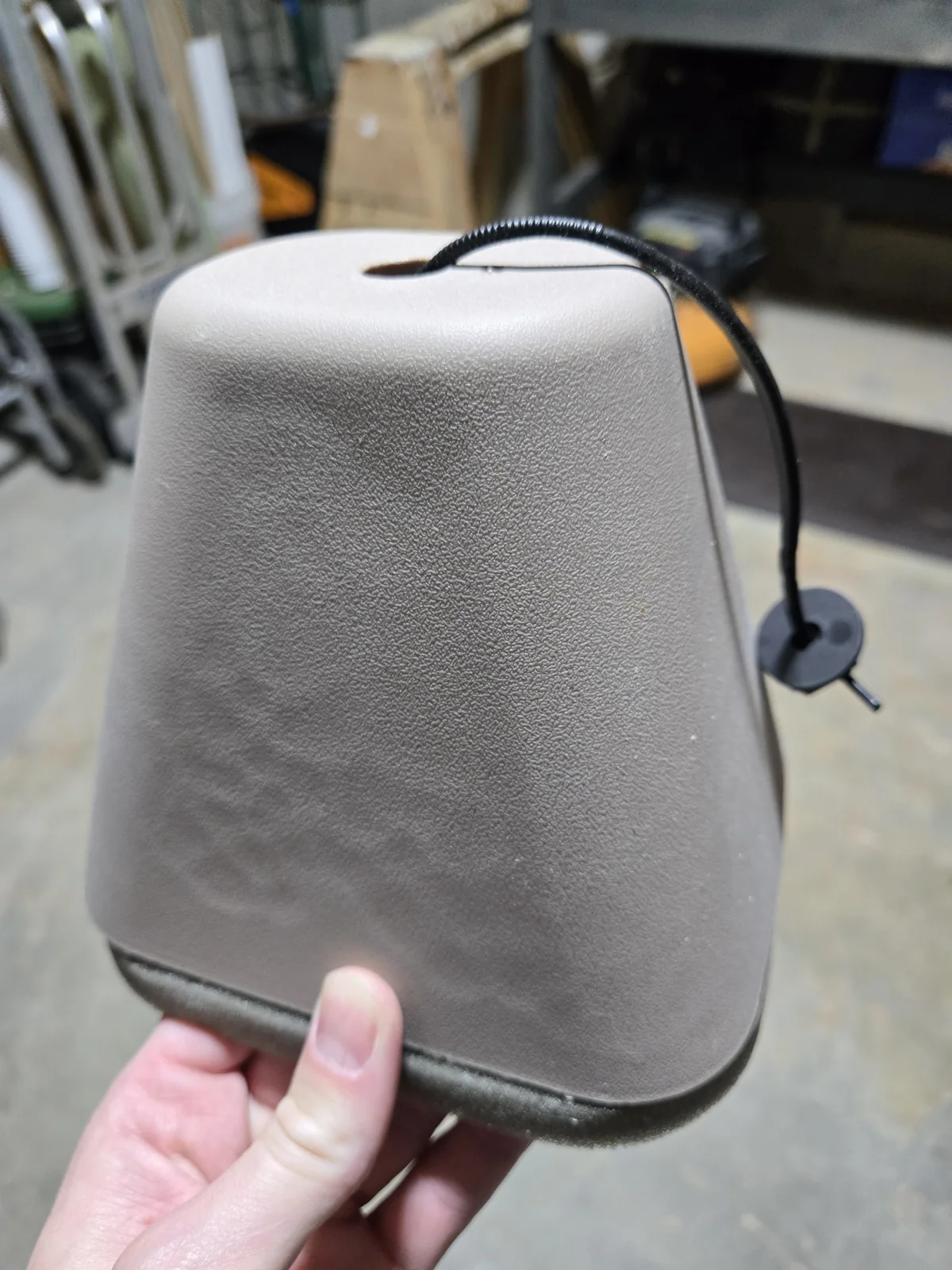
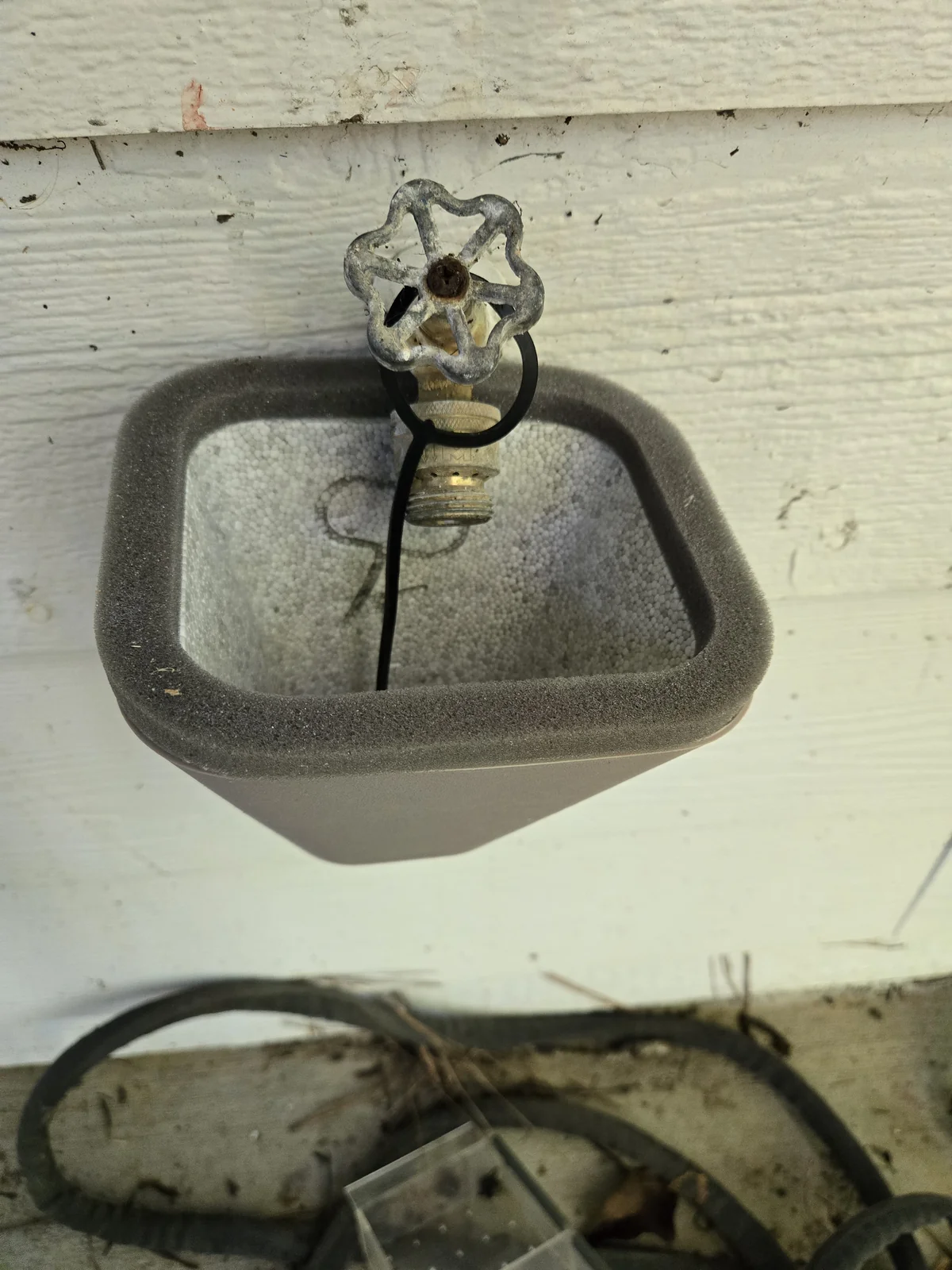
The trick that isn’t obvious the first time: the black cord loop inside goes over the spigot first, then the shell seats against the wall, then you cinch the cord from outside to pull it tight.
Cinched down, the gasket edge seals to the siding and the whole spigot sits in a pocket of still air:
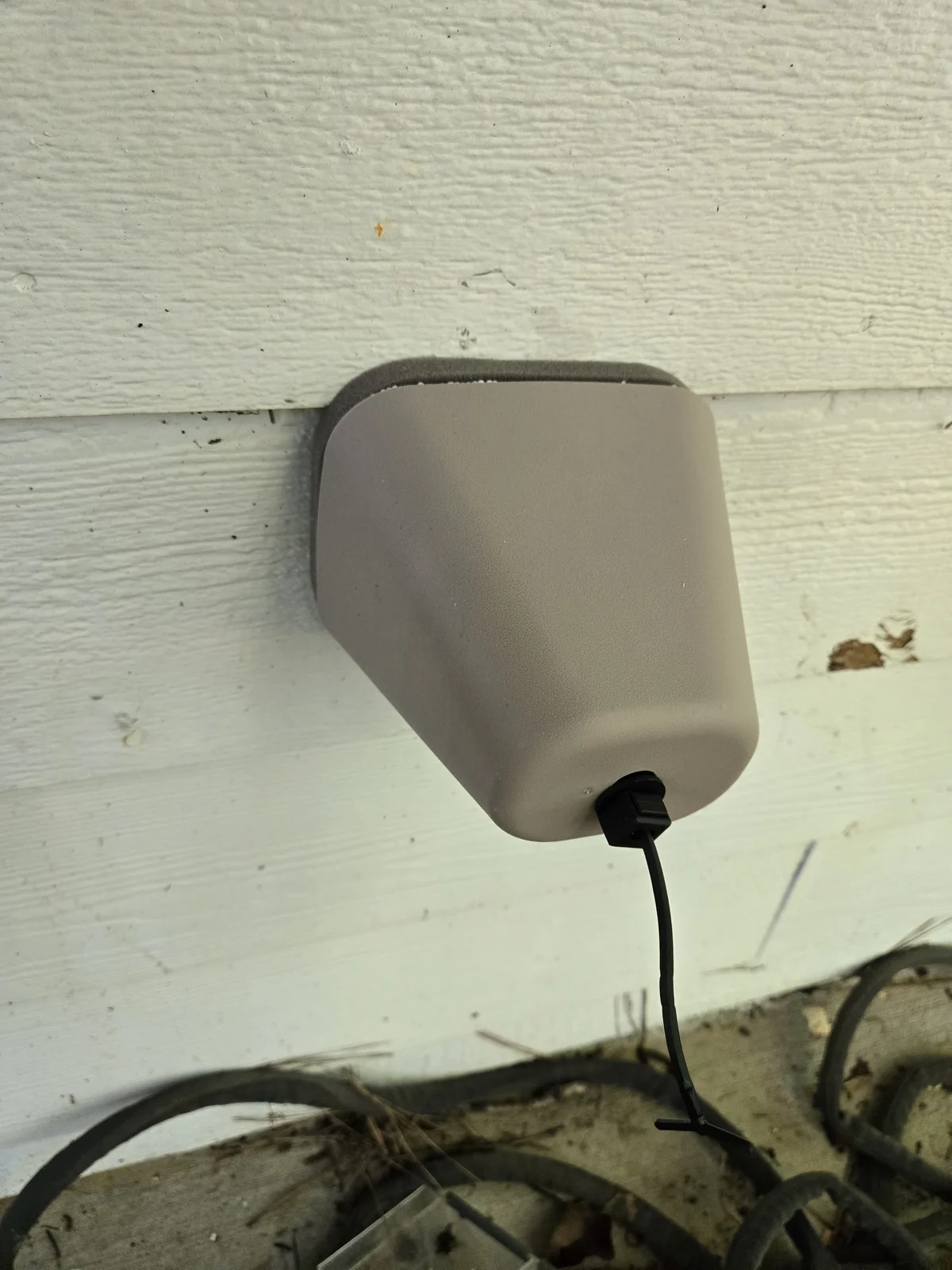
On they go before the first hard freeze — have them ready by mid-November around Atlanta — and they simply stay on until spring. There’s nothing to monitor and nothing they hurt on warm days.
Step 3 (If You Have an Interior Shut-Off): Drain the Line
Some houses have a shut-off valve for each exterior bib inside the basement or crawlspace. If yours does: close it, then open the outside faucet until it stops dripping, and leave the outside handle cracked open for the winter. Now the exposed pipe is empty and the freeze has nothing to work with. If you don’t have interior shut-offs (plenty of houses don’t — mine are a mix, some bibs have one and some don’t), the hose-off + cover routine above is still solid protection on its own.
Frost-free spigots: if your bibs are the frost-proof type, the valve seat is a foot inside the warm wall and the outside barrel drains itself — as long as no hose is attached. The covers become belt-and-suspenders. If you don’t know what type you have, treat them as standard; the covers cost less than the time spent figuring it out.
The Whole Checklist
- Disconnect every hose (five seconds each with quick-connects)
- Drain and store the hoses off the concrete, out of the sun
- Foam cover on every spigot, cinched tight
- Interior shut-offs, if you have them: close, drain, crack the outside handle
- Done until spring — total time, maybe fifteen minutes for the whole house
This is the same fall pass where the yard equipment gets put away — the mower routine is in how to winterize a lawn mower, and the trimmer, blower, and pressure washer get their own shutdown in how to winterize gas yard tools.
Frequently Asked Questions
Do outdoor faucet covers actually work?
Yes, for what they cost they're the best insurance in this whole checklist. A burst pipe behind an exterior wall is a four-figure repair; a foam cover is a few dollars and installs in thirty seconds. They work by trapping the heat that leaks out of the house around the spigot and blocking wind. They will not save a faucet that still has a garden hose attached — disconnecting the hose is the step that actually matters most.
What happens if you leave a hose connected in winter?
Leaving a hose connected traps water inside the faucet and the pipe behind the wall, where it freezes, expands, and splits the pipe — usually discovered the following spring when you turn the water on and hear it spraying inside the wall. Disconnect every hose before the first hard freeze, even if you do nothing else on this list.
Do I need faucet covers if I have frost-free spigots?
A frost-free (frost-proof) spigot has its shut-off valve a foot or more inside the warm wall, so the outside portion holds no water — as long as the hose is disconnected so it can drain. If you know your bibs are frost-free, the cover is belt-and-suspenders. If you're not sure (most older houses aren't), covers are cheap enough that I don't spend energy on the question.
When should outdoor faucet covers go on and come off?
Put them on before the first hard freeze — around Atlanta that means having them ready by mid-November — and just leave them on until spring. They don't hurt anything on a warm week, and taking them on and off with the forecast is how they end up in a drawer during the one cold snap that matters.
What do I do with garden hoses over the winter?
Drain them and store them off the ground, out of the sun — garage, shed, or a deck box. Water left in a coiled hose freezes into an ice plug that splits the vinyl, and the fittings corrode faster wet. Quick-connect fittings make the seasonal disconnect a five-second job instead of a wrestling match with a stuck threaded coupling.
Products Mentioned in This Article

Frost King FC1 Outdoor Foam Faucet Covers (2-Pack)
The standard rigid-foam faucet cover, sold as a two-pack — the same style as the covers on my spigots. Loop the cord over the faucet, seat the foam shell against the wall, cinch it tight.
- Covers both hose bibs on a typical house for under ten bucks
- Thick foam shell with a soft gasket edge that seals against the siding
- Reusable for many winters — mine live in the garage all summer
- The cinch-cord loop takes one try to understand — hook it over the spigot *before* you push the cover on
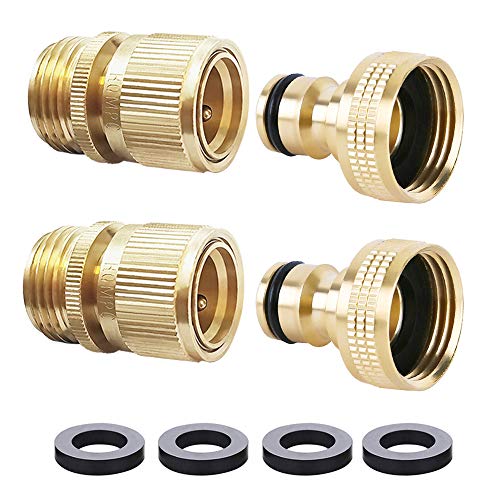
HQMPC Solid Brass Garden Hose Quick Connectors (3/4" GHT)
Solid brass quick-connect fittings like the ones on my bibs. The male half lives on the faucet, the female half on the hose — every seasonal connect and disconnect becomes a five-second click instead of cross-threading a wet coupling.
- Brass, not the pot-metal versions that seize in a season
- Makes the fall hose disconnect (the step that saves pipes) effortless
- Doubles as the summer convenience for moving one hose between spigots
- Adds a couple inches of stack-up at the spigot — tight spots may prefer a low-profile single connector
Prices shown were retrieved from Amazon on Oct 8, 2026, 2:37 PM UTC. Product prices and availability are accurate as of the date/time indicated and are subject to change. Any price and availability information displayed on Amazon at the time of purchase will apply to the purchase of this product.