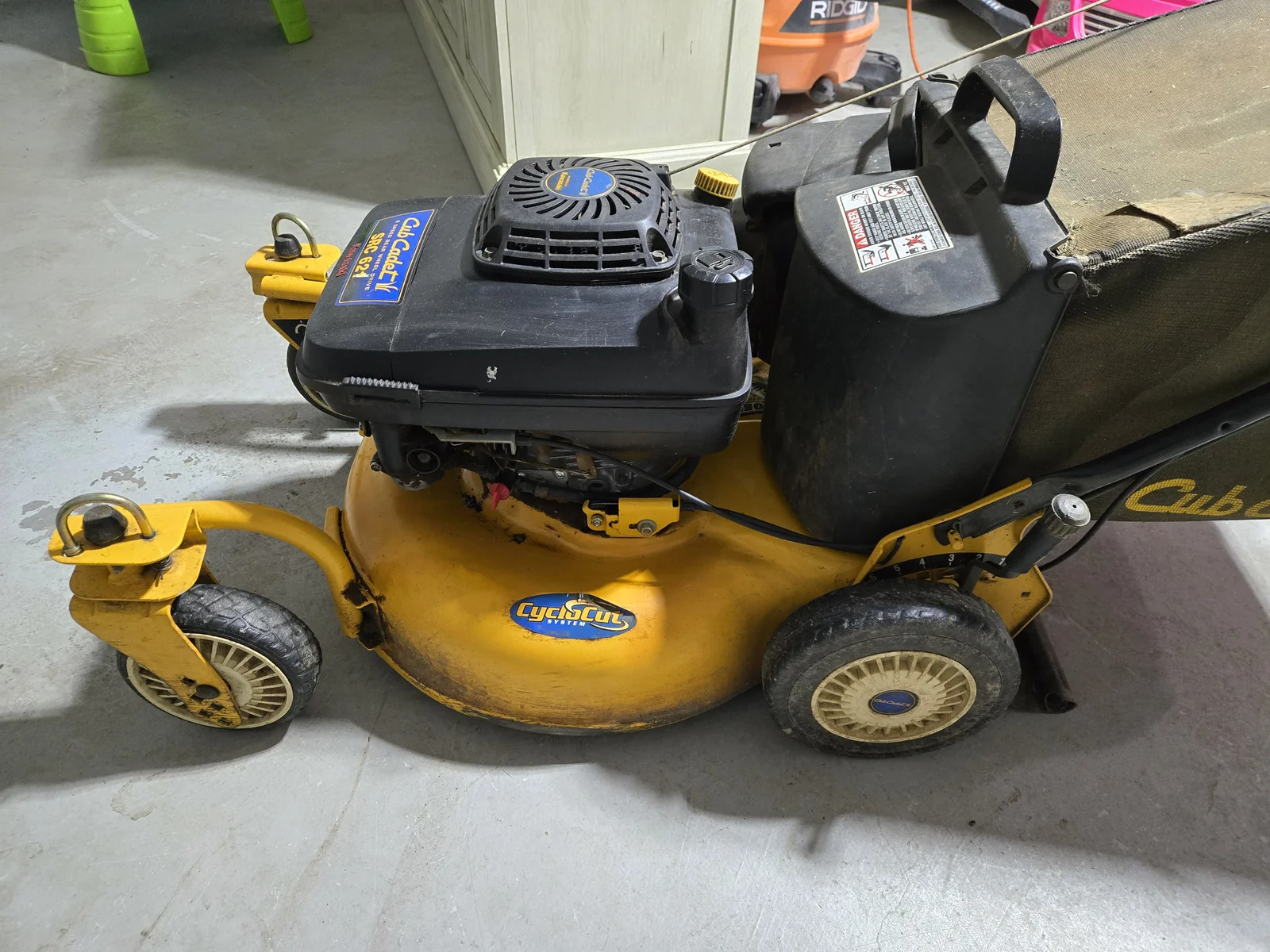
I’ve owned a Cub Cadet SRC621 for several years. It’s a 21-inch self-propelled rear-wheel-drive walk-behind mower with a Kawasaki overhead-valve engine, and it has been worth every penny — but only because I do basic maintenance on it every spring. The mowers that die after 4-5 years are almost always the ones that never got an oil change, never got a fresh spark plug, and ran on a clogged air filter until the engine ate itself.
The full seasonal tune-up takes about 30 minutes once you have the tools. Here’s exactly what I do every spring, in the order I do it.
Quick answer: Drain the oil into a sealed drain pan, refill with fresh SAE 30 using a funnel, pop in a new air filter (model-specific), pull the spark plug with a spark plug socket and gap a new one to your engine spec, and check the blade for damage. Sharpen if it’s still flat, replace if it has deep nicks or bends.
What You’ll Need
Tools:
- A wrench or socket set (3/8” drive)
- Spark plug socket set with gap gauge — most small engines use 5/8” or 3/4” but a multi-size kit covers everything
- Oil drain pan — the sealed kind so you can store across multiple changes
- Funnels — one for oil, one for gas, don’t cross-contaminate
- A scrap board (for blocking the blade — see below)
- Work gloves
- Shop towels
Consumables (model-specific, search for your exact mower):
- Engine oil — SAE 30 or 10W-30 detergent oil for small engines (NOT regular car motor oil unless it specifically says “for small engines”)
- Air filter — match your engine model number, not just the mower model
- Spark plug — match the OEM number from your manual
- Replacement blade (if you’re replacing) — match by mower deck size and blade length
A quick note on parts: I deliberately didn’t link a specific spark plug or air filter because the right part depends on your exact engine model, not just the mower. The Cub Cadet SRC621 went through a few engine variants over its production run. Look up your engine model number (printed on the engine cover) and search for “[engine model] air filter” and “[engine model] spark plug” — Amazon and Home Depot both have decent search by engine model.
Step 1: Drain the Old Oil
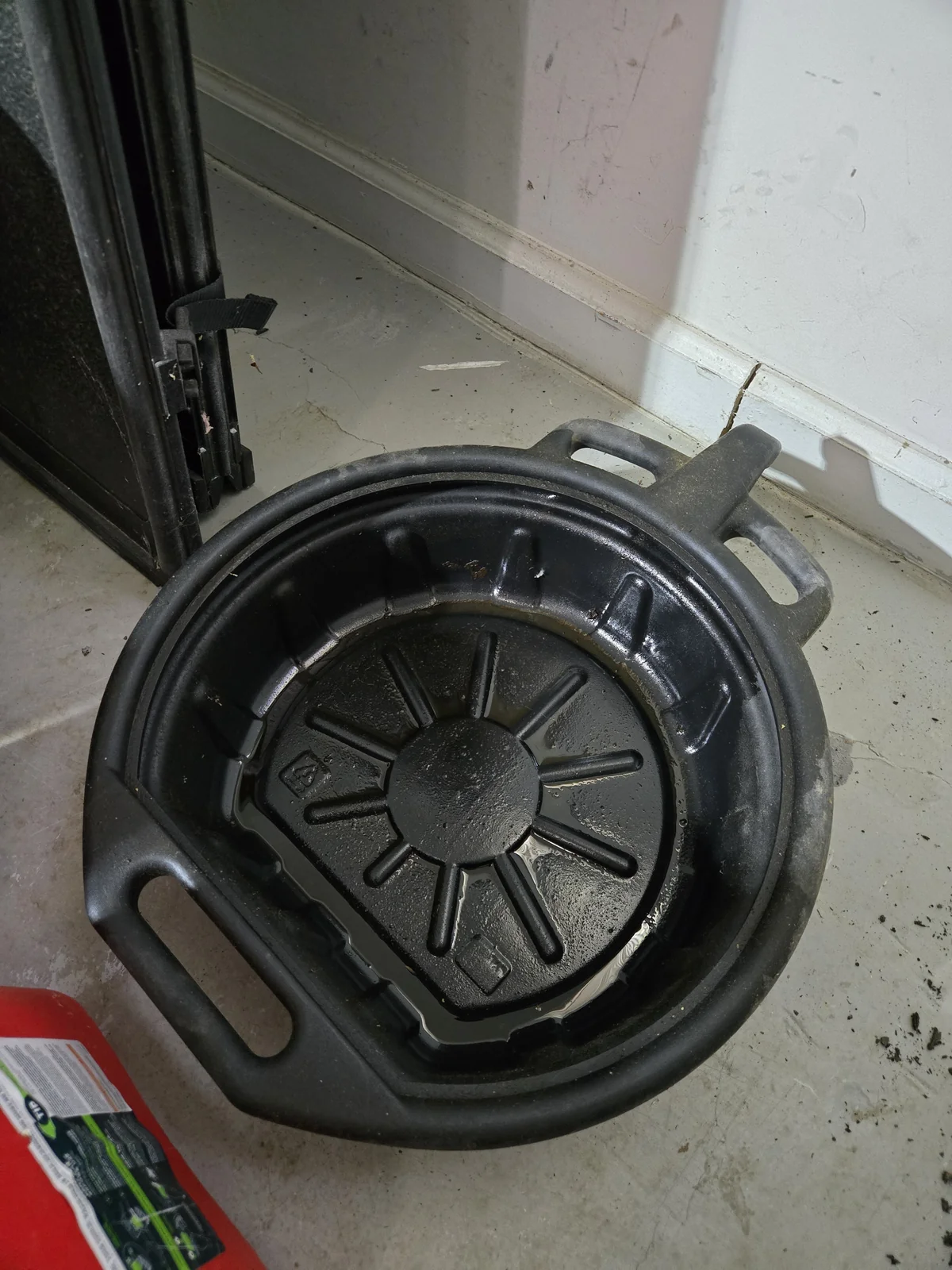
Start the mower and run it for 2-3 minutes to warm up the oil — warm oil drains faster and pulls more sludge out with it. Don’t let it run long enough to get hot to the touch.
Tip the mower with the air filter side up (so oil doesn’t run into the filter housing) and unscrew the oil cap/dipstick. Drain into a pan positioned under the fill port.
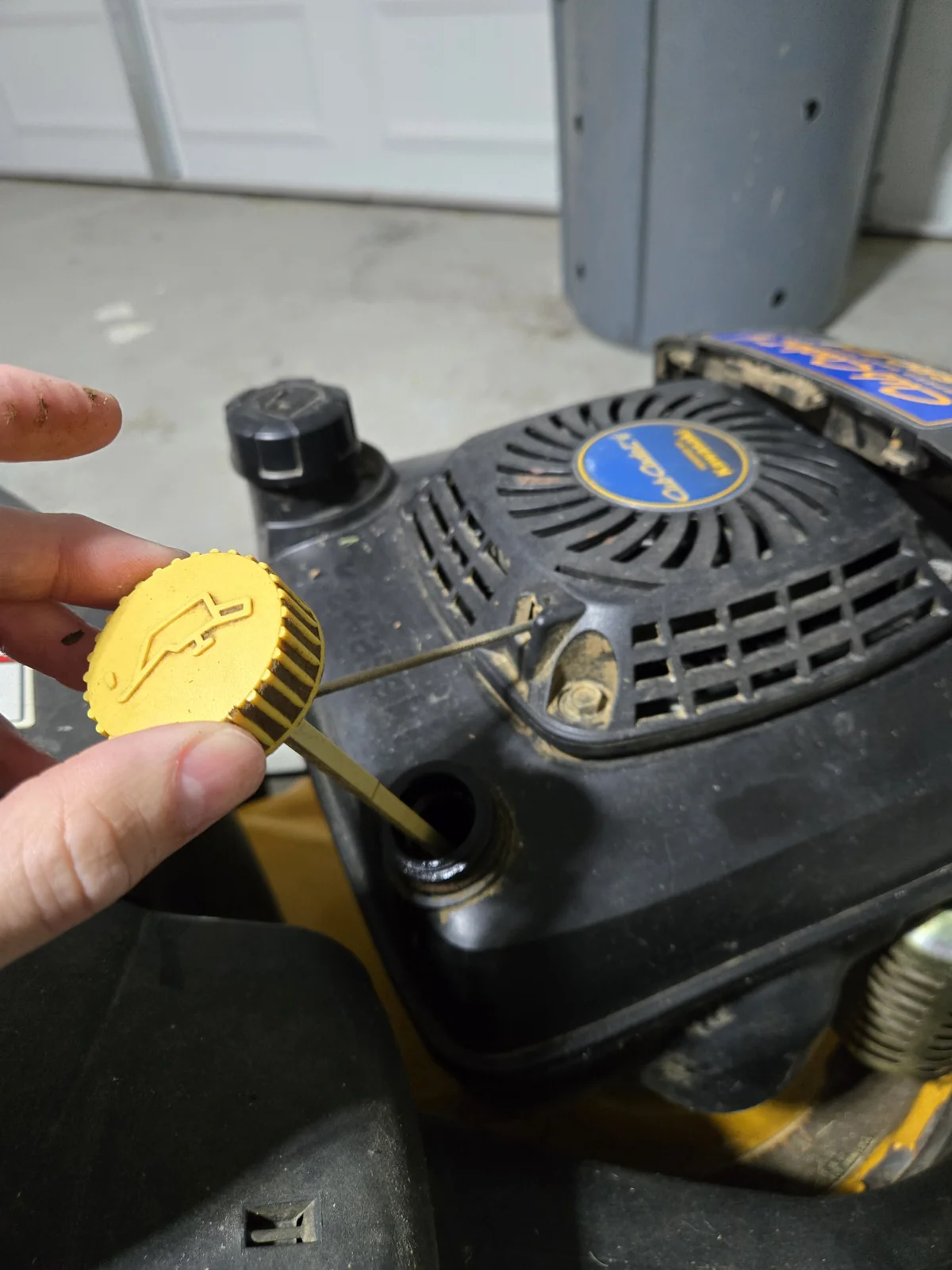
The Cub Cadet SRC621 doesn’t have a separate drain plug — you drain through the fill port by tipping the mower. This is annoying but normal for walk-behind mowers. Let it drip until nothing comes out for 30 seconds.
Upgrade for next time: I’ve been using an open drain pan and pouring the used oil into a recycling jug after every change. The Chapin 78005 12-quart drain pan is the version of this tool I’d buy if I were starting from scratch — low-profile so it fits under the mower without lifting, holds 12 quarts so you can store the used oil across multiple changes, and has built-in carry handles for the disposal trip.
Step 2: Refill with Fresh Oil
Set the mower back upright and pour in fresh SAE 30 (or 10W-30) using a funnel. Most walk-behind OHV engines take 18-20 ounces, but check your manual — overfilling causes smoking, oil-fouled spark plugs, and can damage the engine.
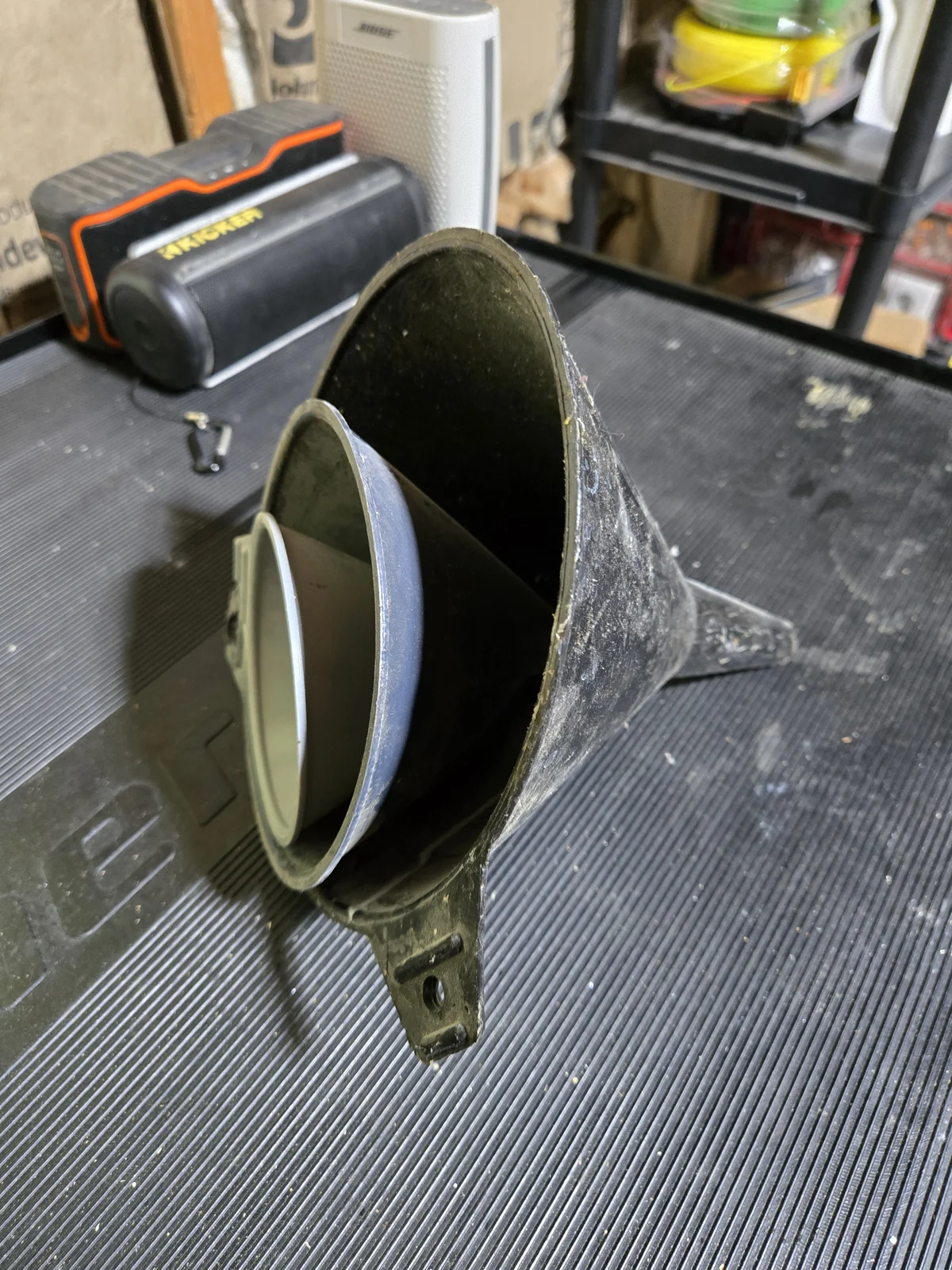
Add oil slowly, then check the dipstick. Wipe it clean, reinsert it fully, pull it out, and read the level. Add more if needed, but stop when you hit the “full” mark — there’s no benefit to going over.
Step 3: Replace the Air Filter
A clogged air filter is one of the top three reasons mowers run rough or won’t start. The filter on the Cub Cadet SRC621 is a paper cartridge in a plastic housing on the side of the engine.
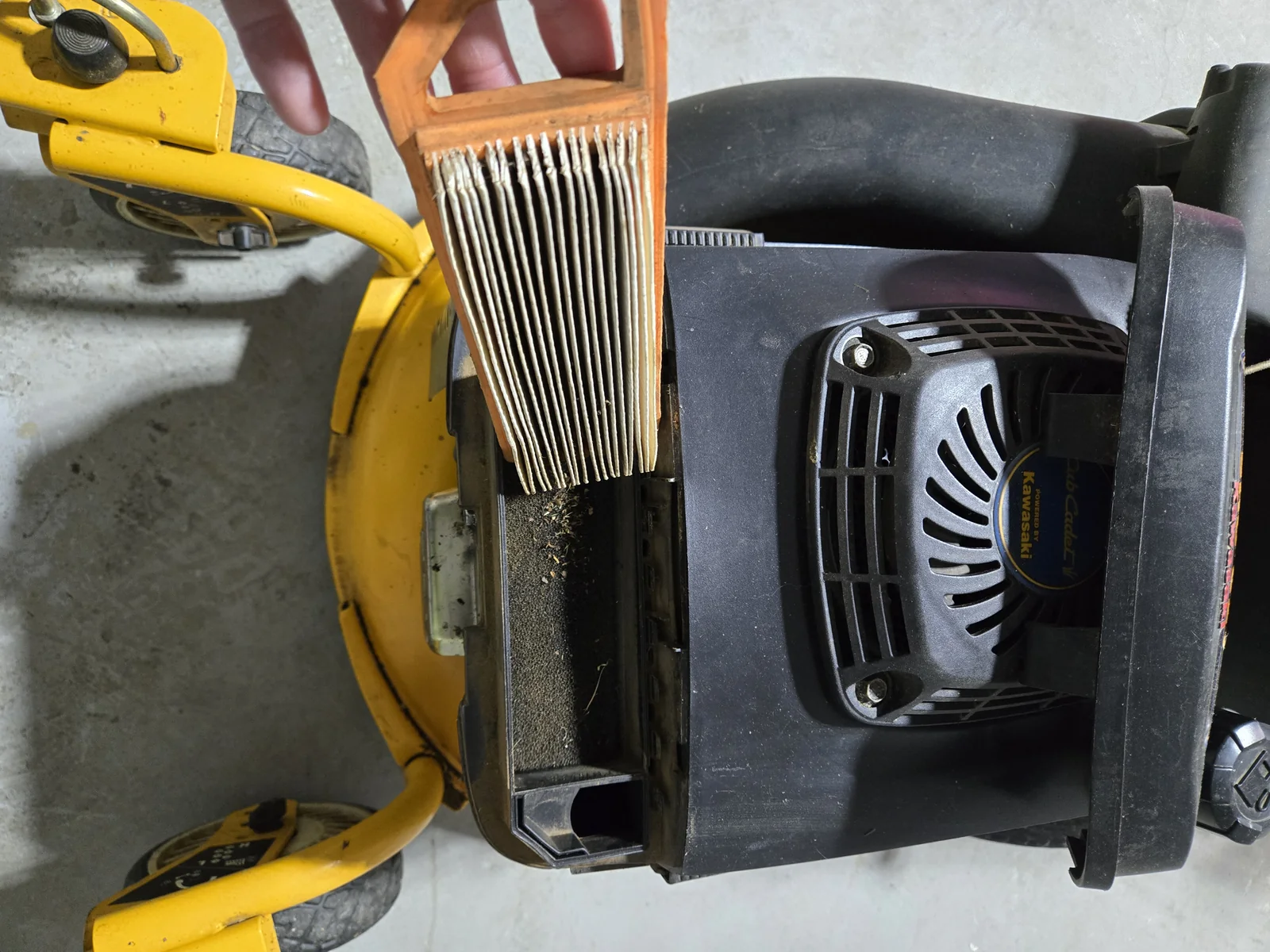
Pop the housing cover off (usually two clips or one screw), pull the old filter out, and inspect it. If it’s gray-brown, packed with grass clippings, or you can see daylight through it from only one side, replace it. If it’s lightly dusty, you can tap it out and reuse for one more season.
Drop the new filter in the same orientation as the old one came out (rubber gasket toward the engine), close the cover, and you’re done. 60 seconds.
Filter on a budget: If your filter is paper-based, you can sometimes vacuum it carefully with a shop vacuum on the suction side and reuse for an additional season. Don’t blow compressed air through it — that drives debris deeper into the filter media and can tear the paper.
Step 4: Replace the Spark Plug
A spark plug should be replaced every 100 hours of run time or every 2-3 seasons, whichever comes first. If you’ve never replaced yours and the mower’s been running for years, replace it now.
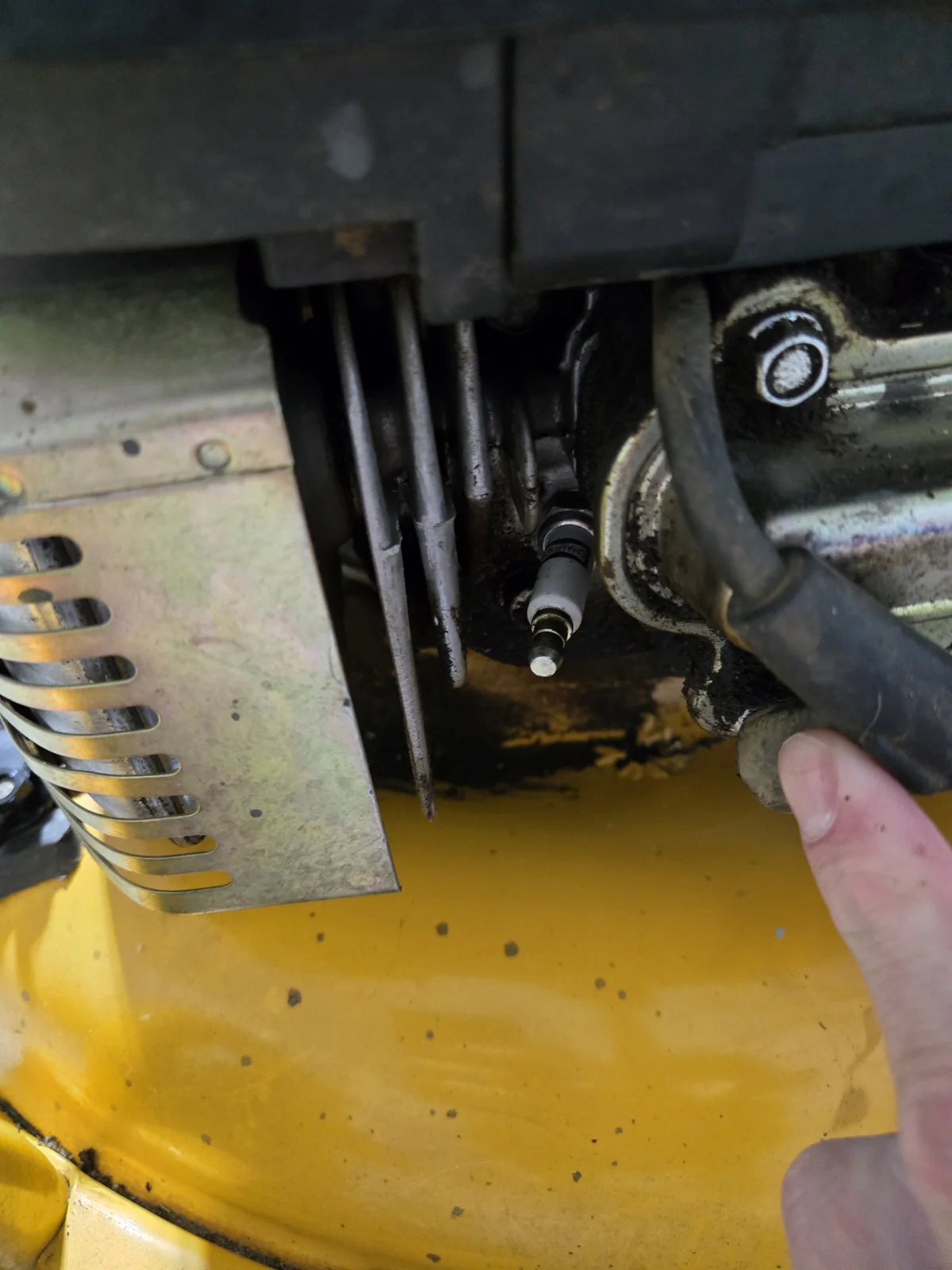
Pull the spark plug wire (the rubber boot that snaps onto the plug) before doing anything else. This prevents the engine from accidentally firing if the blade or pull cord is bumped.
Remove the old plug with the spark plug socket. Most walk-behind small engines take a 5/8” or 3/4” spark plug. The ELEAD kit includes both sizes plus a 6-inch extension bar, which you’ll need because the plug sits down in a recessed well on most engines.
Inspect the old plug. A normal plug has light tan or gray deposits on the electrode. Black sooty deposits = running rich. Wet oil = oil getting past the rings (potential engine problem). White ash = running lean (lean fuel mixture, possibly worth investigating).
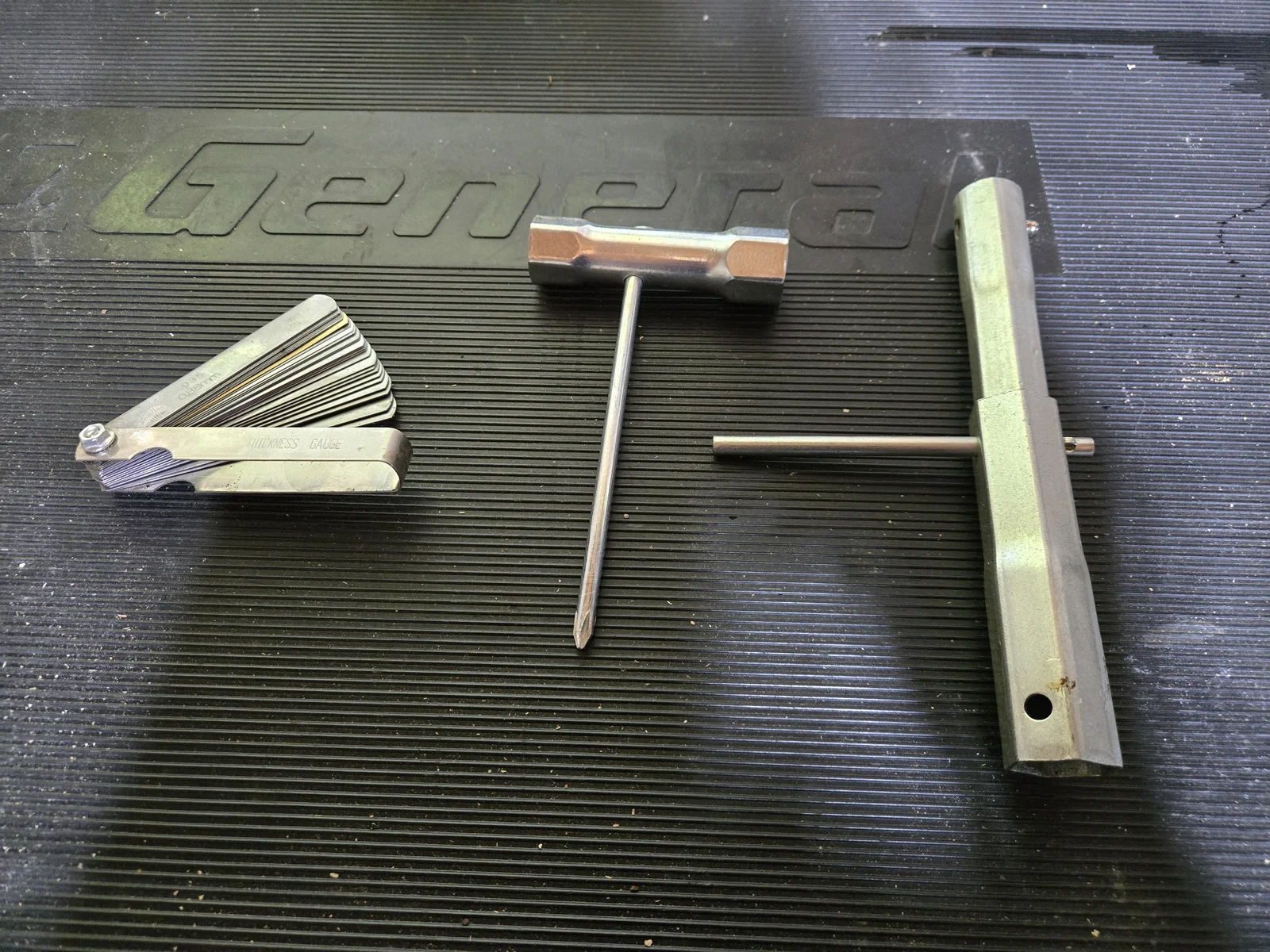
Gap the new plug before installing. Every spark plug ships at a default gap that may not match your engine. Look up the spec in your operator’s manual — most small Kawasaki engines call for 0.030” (0.76mm) but always verify. Use the gap gauge that comes with the kit to check, and bend the side electrode gently if it’s off.
Install the new plug by hand-threading it first (to avoid cross-threading), then snug it down with the socket. Don’t gorilla it — most small engine plugs spec around 15 ft-lbs of torque, which is a firm wrist twist with the spark plug socket, not full body weight.
Reattach the spark plug wire boot until you hear it click.
Step 5: Replace or Sharpen the Blade
This is the part I dread the most because tipping a 60-pound mower onto its side is the workout. But it’s the maintenance step that has the biggest visible impact on lawn quality.
Should you replace or sharpen? Look at the blade:
- Replace if the blade has nicks deeper than 1/8 inch, if it’s bent (sight along the cutting edge), if you’ve been mowing through pine cones or rocks regularly, or if you’ve already sharpened it 3-4 times.
- Sharpen if the cutting edge is just dull but otherwise straight and unscarred. A 10-inch flat file works for hand sharpening, but I use a DEWALT cordless angle grinder with zirconia flap discs — much faster and gives a more consistent edge.
I replaced mine this spring because I’d run over enough pine cones that the leading edge had visible chunks missing. Sharpening that would have left the blade unbalanced.
To remove the blade:
- Disconnect the spark plug wire. Same reason as before — no accidental starts.
- Tip the mower with the air filter side up. Tipping the wrong way dumps oil into the air filter, which is a mess.
- Wedge a scrap 2x4 between the blade and the deck on the discharge side. This locks the blade so it can’t spin while you crank on the bolt. Hands-on-blade is how people lose fingers — never do that. The board does the work.
- Use a wrench to break the bolt loose. Most blade bolts are 5/8” or 3/4” hex. They’re often torqued to 50+ ft-lbs and may need a breaker bar or a cheater pipe over your wrench handle for the first turn.
- Note the blade orientation. The blade has a top side (curve goes up) and a bottom side. Putting it back upside-down is the most common mistake — and the mower will throw grass everywhere or not cut at all.
To install the new blade: Reverse the process. Snug the bolt, torque it to your manual’s spec (usually 35-50 ft-lbs for walk-behind mowers — don’t guess, look it up).
To sharpen instead: Clamp the removed blade in a vise with the cutting edge up. If you’re using a hand file, file at the same angle as the original bevel (typically 30 degrees). If you’re using an angle grinder with flap discs, match the existing bevel angle and run the disc along the cutting edge in smooth passes — let the disc do the work, don’t lean into it. Sharpen both ends equally to keep the blade balanced.
After sharpening, balance-check the blade by hanging it on a nail through the center hole — if one end drops, it’s heavier and you need to grind or file that side a touch more. An unbalanced blade vibrates the engine and shortens the life of every bushing and bearing in the mower.
Best Practices
Buy quality oil and consumables. The cheapest store-brand SAE 30 is fine for a single season but the difference in detergent additives matters across years. I use Briggs & Stratton or Honda branded oil even on a Kawasaki engine — the formulations are designed for small-engine duty cycles.
Run the carb dry at end of season. When fall arrives, run the mower until it stalls from running out of gas. This empties the carburetor and prevents the gasoline from gumming up the jet over winter. Alternatively, add a fuel stabilizer like Sta-Bil before storage and run the mower for 2 minutes to circulate it.
Clean the deck. Grass clippings packed against the underside of the deck rust the steel and reduce airflow. After every few mows, scrape the deck with a putty knife. After the seasonal tune-up, hose it off and let it dry fully before storing.
Pick up metal shavings if you sharpen. If you sharpened the blade with a file or grinder, you’ve got metal shavings on your work surface. A magnetic sweeper catches them in seconds — way better than trying to vacuum tiny iron filings.
Keep the maintenance log. Tape an index card to the inside of your garage cabinet with the dates of oil changes, blade replacements, and air filter swaps. Five seconds to write it down saves you from the “wait, when did I last change the oil?” question every spring.
Mistakes I Made
Used regular automotive 5W-30 the first year. Worked fine for one season, then the engine started smoking. Small engines run hotter and don’t have oil filters; they need detergent oil specifically formulated for that duty cycle. SAE 30 is the safe default.
Didn’t replace the spark plug for 4 years. The mower started getting hard to pull and ran rough. I replaced the plug and it ran like new. Don’t let yours go that long.
Tried to remove the blade by holding it with my hand. The bolt didn’t budge, but my hand sure didn’t appreciate the pressure on the blade edge. Wedge a board between the blade and the deck. Always.
Installed the blade upside down. First time I replaced a blade I put it on backwards, started the mower, and it threw zero grass into the bag. Took me 10 minutes of confused mowing before I checked. The cutting edge curves upward — there’s a reason.
Forgot to gap a new spark plug. Out-of-the-box spark plugs are gapped to a default that may not match your engine. Most engines spec around 0.030” but Kawasaki, Briggs, and Honda all have different defaults. Always check the manual and gap the plug before installing.
Product Comparison
| Product | Rating | What It’s For |
|---|---|---|
| Chapin 78005 12qt Drain Pan | 4.4/5 | Low-profile, multi-use oil collection |
| KarZone Oil Funnel Set | 4.6/5 | Different sizes for oil and gas, don’t cross-contaminate |
| ELEAD Spark Plug Socket Kit | 4.5/5 | Sockets + extension + gap gauge in one box |
| DEWALT 20V Cordless Angle Grinder | 4.4/5 | Sharpening blades — much faster than a file |
| Benchmark Zirconia Flap Discs (10-Pack) | 4.6/5 | Mixed-grit discs for the angle grinder |
Frequently Asked Questions
How often should you do maintenance on a lawn mower?
Most walk-behind mowers need their oil changed once a year (typically in spring), the air filter checked annually and replaced every 1-2 years, the spark plug replaced every 100 hours of use or every 2-3 seasons, and the blade sharpened or replaced annually depending on damage.
How much oil does a lawn mower take?
Most walk-behind mowers with OHV engines take 18-20 ounces of SAE 30 or 10W-30 detergent oil. Always check your operator’s manual for your specific model. Use small-engine oil specifically — don’t reuse car motor oil.
What size socket do I need for a lawn mower spark plug?
Most walk-behind mowers use a 5/8” or 3/4” hex spark plug. The Cub Cadet SRC621 with a Kawasaki engine takes a 5/8”. A multi-size socket set covers all the major sizes.
Should I sharpen my lawn mower blade or replace it?
Replace if the blade has nicks deeper than 1/8 inch, if it’s bent, or if you’ve already sharpened it 3-4 times. Sharpen if it’s still flat and only the cutting edge is dull. A dull blade tears grass and leaves brown tips — clear sign it’s time. I sharpen with a cordless angle grinder and zirconia flap discs — much faster than hand-filing.
How do I keep the blade from spinning when removing it?
Wedge a scrap 2x4 between the blade and the deck on the discharge side. This locks the blade in place while you crank on the bolt. Don’t try to hold the blade with your hands or rags — the blade can slip and cut you.
Can I run regular automotive oil in my lawn mower?
Not recommended. Small-engine oil (SAE 30 or 10W-30 specifically labeled for small engines) is formulated for the higher operating temperatures and lack of oil filtration in walk-behind mower engines. Regular car oil works for one season but degrades faster and can foul the spark plug.
Bottom Line
- Do all four every spring: oil, air filter, spark plug, blade. The whole routine takes 30 minutes once you have the tools.
- Use small-engine oil, not car oil. SAE 30 or 10W-30 detergent oil. 18-20 oz for most walk-behinds.
- Wedge a board to lock the blade before turning the bolt. Hands-on-blade is how fingers get cut.
- Replace the blade if it has deep nicks or bends. Sharpen if the edge is just dull.
- Gap every new spark plug before installing. The factory gap is rarely correct for your specific engine.
- Get a sealed oil drain pan. Way easier than running to recycle every change.
If you sharpen the blade with a file or grinder, you’re going to have metal shavings on your work surface — a magnetic sweeper picks them up in seconds. Cleaning up the rest of the garage is a shop vacuum job.
Products Mentioned in This Article

Chapin 78005 12-Quart Low-Profile Oil Drain Pan
12-quart low-profile oil drain pan with built-in carry handles and a large splash-free target area. Recycled polymer construction. Lets you store collected oil between changes instead of disposing every time.
- Holds 12 quarts — many small-engine oil changes between disposal trips
- Low-profile design fits under most cars and mowers without lifting
- Built-in carry handles make transferring to recycling easy
- Splash-free target area keeps things clean
- Larger footprint than slim drain pans — needs a flat spot to sit
- 12-quart capacity is more than a single small-engine drain needs (point is, you don't have to empty after every change)

KarZone Oil Funnel Set (4-Pack)
4-pack of orange plastic funnels in different sizes for engine oil, gas, lubricants, and general fluids.
- Wide-mouth funnel for fast oil pours, narrow funnel for gas can refills
- 4 sizes cover engine oil, transmission fluid, gas, and washer fluid use cases
- Cheap enough to dedicate one to oil and not cross-contaminate
- Shielded tube design prevents debris from falling into the fill port
- Plastic — not for hot fluids beyond engine oil
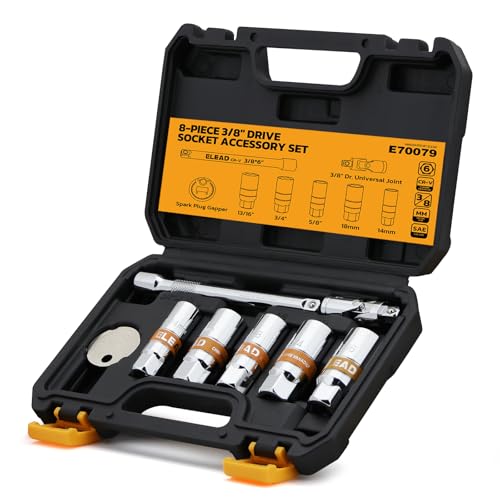
ELEAD 8-Piece 3/8" Drive Spark Plug Socket Set with Gapper
8-piece spark plug socket set with 5/8", 3/4", 13/16", 14mm, and 18mm sockets, plus a 6-inch extension bar, universal joint, and spark plug gap gauge.
- Covers every common spark plug size (small engine through automotive)
- Includes the gap gauge — most kits sell those separately
- 6-inch extension reaches plugs buried in tight engine spaces
- Universal joint helps with awkward angles on side-valve engines
- Multiple sizes is overkill if you only ever work on one engine

DEWALT 20V MAX Cordless Angle Grinder (DCG413B)
20V MAX cordless brushless 4-1/2 inch angle grinder with paddle switch and electronic kickback brake. The tool I use to sharpen my mower blade.
- Brushless motor — no brush replacement maintenance
- Kickback brake stops the disc in 2 seconds when it senses a bind
- Same battery platform as DeWalt drill, pruner, chainsaw — share packs
- Way faster than hand-filing a blade with a 10-inch file
- Tool only — needs 20V MAX battery (sold separately)
- Overkill if you only sharpen one blade per season
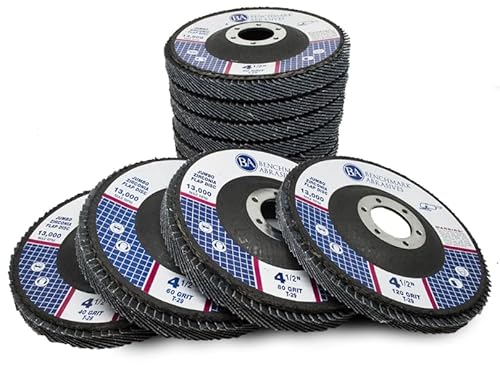
Benchmark Abrasives 4.5" Zirconia Flap Discs (10-Pack, Mixed Grit)
10-pack of 4-1/2 inch zirconia Type 29 flap discs in mixed grits. Fits standard 4-1/2 inch angle grinders. What I put on the DeWalt to sharpen the blade.
- Zirconia material cuts faster and lasts longer than aluminum oxide
- Mixed grit pack covers grinding (40-grit) through finishing (120-grit)
- 10-pack is enough for years of mower blade sharpening + other shop work
- Standard 4-1/2 inch / 7/8 inch arbor — fits any standard angle grinder
- Mixed-grit pack means you have to sort them — label the boxes
- 10 discs is more than you'll use sharpening one mower blade
Prices shown were retrieved from Amazon on Oct 8, 2026, 2:37 PM UTC. Product prices and availability are accurate as of the date/time indicated and are subject to change. Any price and availability information displayed on Amazon at the time of purchase will apply to the purchase of this product.