If you’ve ever ripped your hands mid-WOD and had to spend the next week doing everything with torn calluses, you already know why grips matter. I’ve been doing CrossFit for years — pull-ups, butterfly pull-ups, bar muscle-ups, toes to bar, all of it — and I’ve landed on a setup that works.
Here’s my honest take on grips, chalk, and tape, including some tricks I’ve learned that you won’t find in most gear reviews.
Quick answer: Victory Grips X2 3-Finger Full Coverage are the best CrossFit grips I’ve used — they lasted years of heavy use. For Amazon options, Bear KompleX 3-Hole or PICSIL Azor are solid. The real trick: flip your grips over the bar instead of using the finger holes for most WODs.
My Setup: Victory Grips X2 3-Finger Full Coverage
I use the Victory Grips X2 3-Finger Full Coverage (victorygrips.com). They’re not sold on Amazon, and honestly, they’re worth ordering direct.
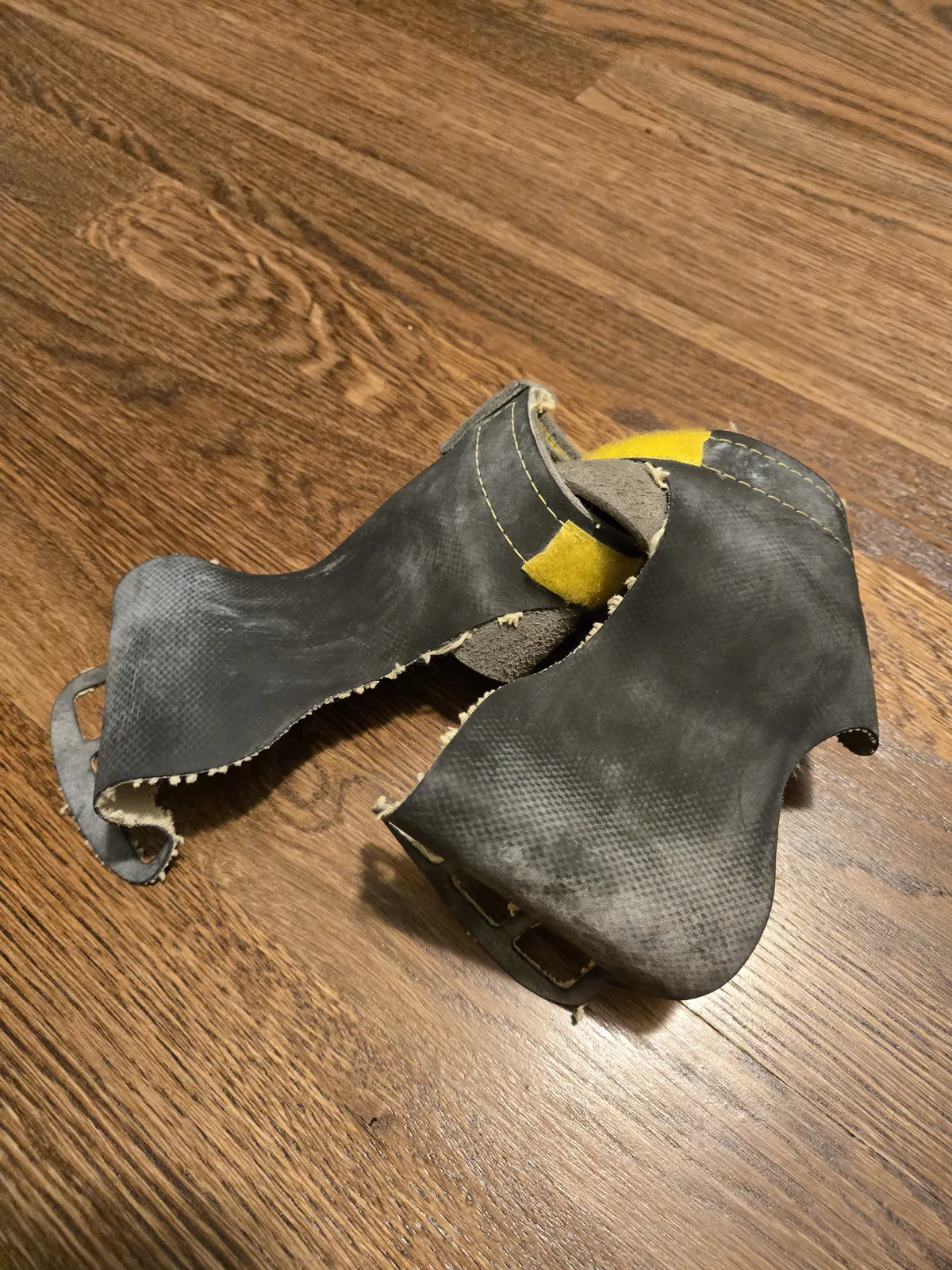
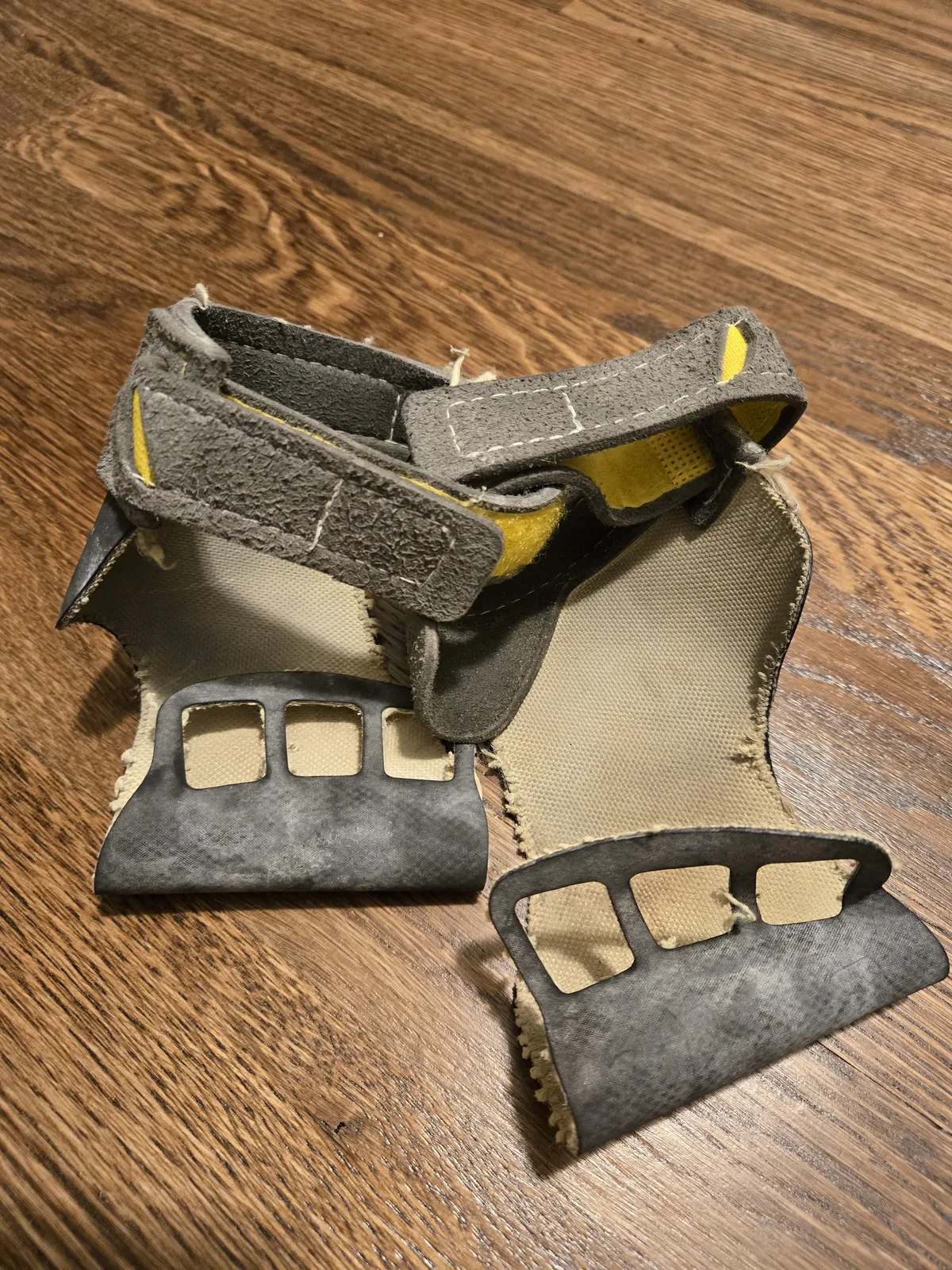
Look at how worn these are. That’s not a complaint — that’s the point. I used these for years before they got to this state. Every other grip I tried before Victory either tore apart, lost its grip surface, or fell apart at the stitching within months. These just kept going.
The X2 material has a slightly tacky feel that grabs the bar without being sticky enough to cause problems during transitions. The 3-finger design gives you enough coverage for pull-ups and muscle-ups while keeping your index finger free for barbell work.
Why Victory Grips specifically:
- The material lasts significantly longer than leather grips
- Thin enough that you can still feel the bar
- The wrist strap is secure without cutting off circulation
- They don’t stretch out and get sloppy over time like leather does
The Grip Technique Most People Get Wrong
Here’s something I rarely see discussed: I flip my grips over the bar instead of putting my fingers through the holes for most WODs.
This sounds counterintuitive, but there are three reasons I do it:
1. Better clinch. When you fold the grip material over the top of the bar and grab through it, it wraps around the bar and creates a tighter connection. Your hand conforms to the bar with the grip material sandwiched between, and it actually feels more secure than the traditional finger-holes method.
2. Less bulk. With the grip folded over instead of doubled up under your palm, the total thickness between your hand and the bar is thinner. This means less grip fatigue during high-rep sets. When you’re doing 30 pull-ups in a WOD, every bit of thickness taxes your forearms.
3. Faster transitions. If the WOD has a barbell movement — cleans, snatches, deadlifts — you don’t want to be pulling your fingers out of grip holes between movements. With the grips flipped over the bar, you just let go and the grips fall to the back of your hand. Grab the barbell, do your reps, walk back to the rig, flip the grips over the bar again. No fumbling.
There were rare workouts where I used the finger holes — usually something with only gymnastics movements where I wanted maximum security and didn’t need to transition to anything else. But 90% of the time, flipped over the bar was the move.
Pro tip: Keep the wrist straps loose enough that you can easily slide the grips to the back of your hand for barbell work. Tight enough that they don’t fly off, loose enough that you can rotate them out of the way in seconds.
Chalk: The Grip Multiplier
Grips alone aren’t enough. Chalk is what takes your grip from “holding on” to “locked in.” Here are the options worth buying.
Loose Chalk (The Standard)
For gym use, regular chalk blocks are still king. The FrictionLabs Gorilla Grip Loose Chalk Check price on Amazon is premium stuff — less dusty than cheap chalk, better texture, and it actually lasts on your hands longer between sets. It’s pricier than generic gym chalk, but you use less of it.
If you want the budget option, basic GSC Gym Chalk blocks Check price on Amazon get the job done. These are the classic white chalk blocks you see in every CrossFit box. Snap a block in half, chalk up, go.
Liquid Chalk (For Gyms That Don’t Allow Loose Chalk)
Some commercial gyms ban loose chalk because of the mess. Liquid chalk is the workaround. Spider Chalk Liquid Chalk Check price on Amazon is a solid option — apply it, let it dry for 10 seconds, and you’ve got a chalk layer that doesn’t leave dust everywhere. Not quite as effective as loose chalk in my experience, but way better than nothing.
FrictionLabs Secret Stuff Check price on Amazon is the premium liquid chalk option. It’s thicker and lasts longer on your hands than most liquid chalks. If you’re going to rely on liquid chalk regularly, this is the one to get.
The Chalk + Water Trick
Here’s something that made a noticeable difference for me: chalk up your grips, then add a light spray of water. Just a mist — not soaking wet. The combination of chalk and a tiny bit of moisture creates better adhesion between the grip material and the bar than dry chalk alone. It sounds weird, but try it once and you’ll feel the difference immediately. This works especially well with the Victory Grips X2 material.
Tape: Protecting the Spots Grips Don’t Cover
Grips protect your palms, but they don’t protect your thumbs. And if you’re doing bar muscle-ups regularly, you know exactly where the tear happens — right below the thumb knuckle, on that fold of skin between your thumb and index finger. Bar muscle-ups put enormous pressure on that spot during the transition over the bar.
Goat Tape Scary Sticky
The Goat Tape Scary Sticky Check price on Amazon is the best thumb tape I’ve found for this. It’s rigid enough to actually protect the skin, sticky enough to stay put through sweat and chalk, and thin enough that it doesn’t interfere with your grip.
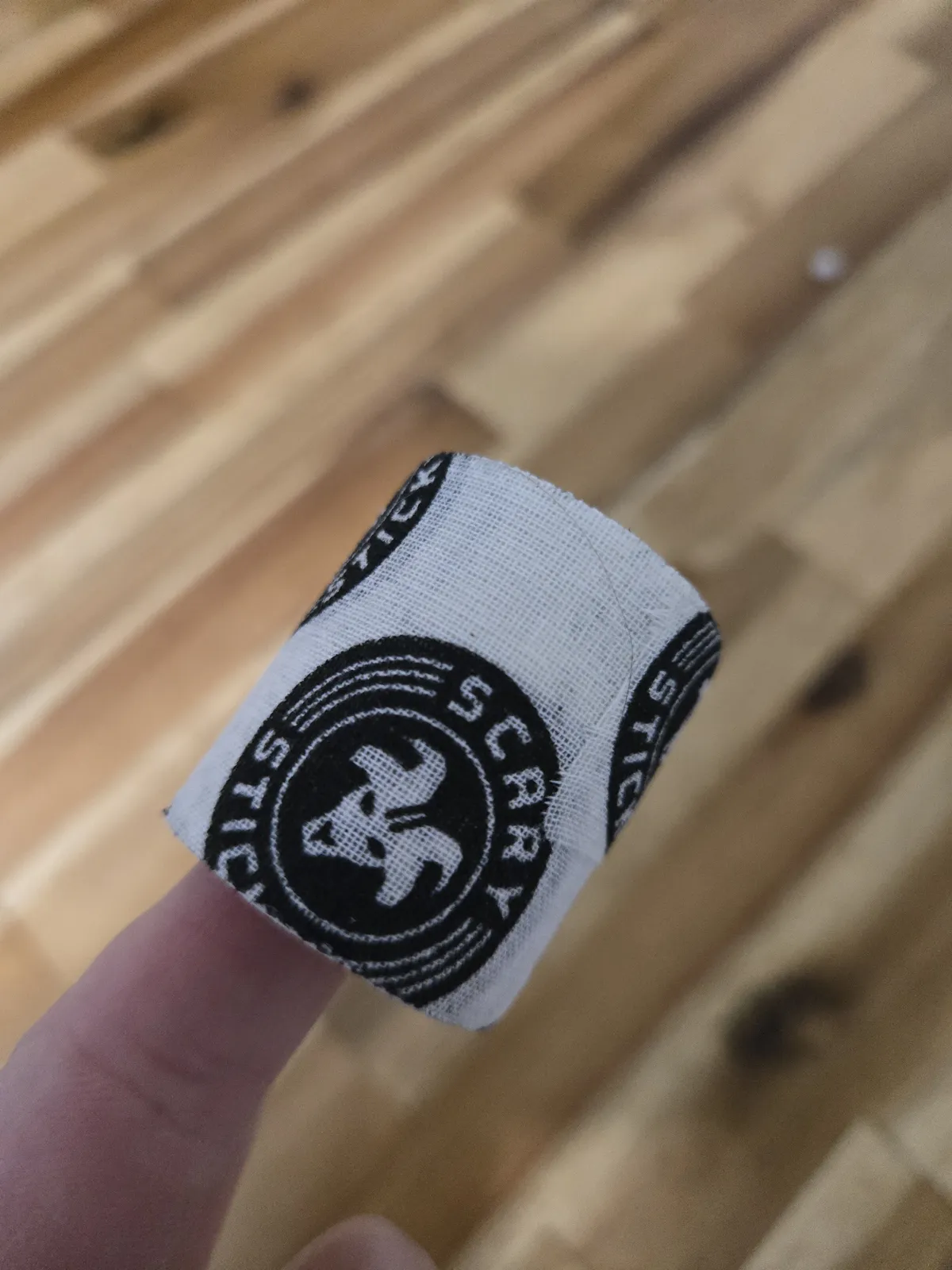
My method: I tear a roll of Goat Tape in half down the middle lengthwise to make thinner strips. A full-width strip is more tape than you need for thumb protection, and the thinner strips conform better to the contour of your thumb. One half-width wrap below the knuckle covers that muscle-up tear line perfectly. A single roll lasts twice as long this way too.
WOD Nation Tape (For Knuckles)
If you need tape directly on your knuckles or finger joints, the WOD Nation Finger Tape Check price on Amazon is softer and stretchier than Goat Tape. That flexibility matters on knuckles because rigid tape on a joint restricts movement and starts peeling off as soon as you start gripping. WOD Nation stays put on moving joints better because it stretches with your fingers.
I use Goat Tape for thumbs (rigid, doesn’t move) and WOD Nation for knuckles when needed (stretchy, conforms to the joint). Different tools for different spots.
Callus Management: The Part Nobody Talks About
All the grips, chalk, and tape in the world won’t save you if you’re not managing your calluses. Here’s the thing — calluses are good. They’re your hands adapting to the bar. But raised, built-up calluses are rip magnets. That ridge of hard skin sticking up from your palm gives the bar something to grab onto, fold over, and tear right off.
The first time you run water over a fresh rip, you’ll understand exactly how motivated you are to never let it happen again.
I’ve seen people go full workshop mode with a Dremel on their hands, which works but feels a little aggressive. I just use a basic electric callus remover Check price on Amazon — one of those rechargeable rotating ones with a coarse roller head. It’s cheap and it’s meant for feet, but it works perfectly on hand calluses. Run it over your palms after a shower when the skin is soft, and shave down any callus that’s raised above the surrounding skin. You’re not trying to remove the callus entirely — you want the toughened skin, just flush with the surface of your palm so there’s no edge for the bar to catch.
Do this once or twice a week and you’ll stop ripping. It takes about 30 seconds per hand. Cheapest injury prevention in CrossFit.
The Nuclear Option: Tape on the Bar
If your gym allows it and competition rules permit, wrapping Goat Tape around the pull-up bar itself is the single best grip enhancement I’ve ever used. It’s incomparable. The tape creates a slightly tacky surface that grips chalk and grip material better than bare steel ever will.
One wrap of Goat Tape around the bar where your hands go, chalk on top of that, grips flipped over — that combination is an absurd amount of grip security. You feel like you’re welded to the bar. I’ve used this in training and it’s legitimately a different experience.
Obviously check your gym’s rules and comp rules before doing this. Most gyms are fine with it as long as you remove the tape after your workout. In competition it varies.
Wrist Wraps That Actually Work With Grips
If your WOD has overhead movements — overhead squats, snatches, jerks — you might want wrist support. The problem is that most wrist wraps are too bulky to fit under grips, so you end up choosing one or the other.
The fix is thin cloth wrist wraps like these WOD Nation Wrist Wraps Check price on Amazon. They’re thin enough to wear under your grips without adding bulk, but you can cinch them as tight as you want for overhead support. Thick velcro wraps won’t work — they’re too wide and stiff, and your grip won’t sit right over them. Cloth wraps lay flat, conform to your wrist, and disappear under the grip.
Starting no-gi? Our beginner BJJ gear guide covers everything from rash guards to the soap that keeps your skin healthy.
Starting no-gi? Our beginner BJJ gear guide covers everything from rash guards to the soap that keeps your skin healthy.
Grip Tips for Specific Movements
Beyond gear, how you manage your grip during movements makes a huge difference in how long you can hold on.
Toes to Bar
On the backswing, let your grip go slightly loose for a split second. You don’t need a death grip through the entire kip cycle. As your body swings back and your toes come away from the bar, relax your fingers just enough to give your forearms a micro-rest. Then re-engage as you swing forward and bring your toes up. This sounds like a small thing, but over a set of 15-20 toes to bar, those micro-rests add up and delay forearm burnout significantly.
Bar Muscle-Ups
At the top of a bar muscle-up, when you’re in the support position above the bar, shift your weight onto your palms and open your fingers. You’re essentially resting on the heels of your hands for a second. Your grip doesn’t need to be engaged at all during the press-out — your body weight is stacked over the bar. Take that free second to let your grip recover before the next rep. This is especially important in sets of 3+ muscle-ups.
Butterfly Pull-Ups
The kipping cycle in butterfly pull-ups creates constant grip demand because you never fully hang at the bottom — you’re always in motion. Focus on gripping hardest at the bottom of the pull and the moment of chin-over-bar. Through the descent phase, you can loosen slightly. The rhythm of grip-relax-grip-relax matches the kip cycle and keeps your forearms from blowing up early.
General High-Rep Bar Work
If the WOD calls for large unbroken sets on the bar — 20+ pull-ups, big sets of toes to bar — chalk up more than you think you need. Re-chalk between movements, not just at the start. And if you feel your grip starting to go, it’s almost always better to drop, shake your hands for 3 seconds, and get back on than to white-knuckle through reps with degrading grip. Short breaks preserve grip; fighting through destroys it.
Amazon Grips Worth Considering
Not everyone wants to order Victory Grips direct, and there are solid options on Amazon if you want the convenience.
Bear KompleX 3-Hole Leather Grips
The Bear KompleX 3-Hole Leather Grips Check price on Amazon are the official hand grip of the CrossFit Games, which gives them some credibility. They’re genuine leather, which means they’ll need a break-in period — new leather grips are stiff and can feel slippery until the surface roughens up from use. Once broken in, leather grips have a great feel on the bar. They’re priced in line with most quality grips. The downside versus synthetic grips like Victory is that leather stretches over time and doesn’t last as long.
PICSIL Azor Grips
The PICSIL Azor Grips Check price on Amazon take a different approach with a patented synthetic fabric that’s only 1.8mm thick. They’re waterproof and washable, which is a genuine advantage — most grips get pretty nasty after a few months of sweat and chalk buildup. They’re the most affordable quality option. The thinness is both a pro (great bar feel) and a con (less padding on high-rep days).
If you also train BJJ, hand and grip health crosses over — our BJJ injury prevention guide covers shoulder and joint prehab that benefits any grappling or gymnastics work.
Product Comparison
| Product | Type | Rating | Best For |
|---|---|---|---|
| Victory Grips X2 3-FC | Synthetic grip | ★★★★★ | All-around CrossFit, durability |
| Bear KompleX 3-Hole | Leather grip | ★★★★ | Classic feel, broken-in comfort |
| PICSIL Azor | Synthetic grip | ★★★★ | Thin bar feel, easy to clean |
| Goat Tape Scary Sticky | Rigid thumb tape | ★★★★½ | Muscle-up thumb protection |
| WOD Nation Finger Tape | Stretchy tape | ★★★★ | Knuckle/joint protection |
| FrictionLabs Gorilla Grip | Loose chalk | ★★★★½ | Best loose chalk quality |
| FrictionLabs Secret Stuff | Liquid chalk | ★★★★½ | No-mess gym option |
| Spider Chalk Liquid | Liquid chalk | ★★★★ | Budget liquid chalk |
| WOD Nation Wrist Wraps | Cloth wrist wrap | ★★★★ | Overhead support under grips |
| Electric Callus Remover | Callus care | ★★★★ | Shaving down raised calluses |
Frequently Asked Questions
How do I stop ripping my hands during CrossFit?
Three things: quality grips (Victory Grips X2 or Bear KompleX), proper chalk application, and callus management. Use an electric callus remover or pumice stone after showers to shave down any callus that’s raised above the surrounding skin — it’s those ridges that give the bar something to grab and tear. You want the toughened skin, just level with your palm. Do this once or twice a week and rips basically stop.
Should I use leather or synthetic CrossFit grips?
Synthetic (like Victory Grips X2 or PICSIL Azor) last significantly longer, don’t need a break-in period, and maintain consistent grip. Leather (like Bear KompleX) has a classic feel once broken in but stretches over time and wears out faster. I’ve used both and prefer synthetic for longevity.
Can you do barbell work with CrossFit grips on?
Yes — flip the grips over the bar so the material wraps around it, then slide them to the back of your hand for barbell movements. This avoids the fumbling of pulling fingers in and out of grip holes between movements. Keep the wrist straps loose enough to rotate the grips quickly.
Is liquid chalk as good as regular chalk?
Not quite, but it’s close enough for gyms that ban loose chalk. FrictionLabs Secret Stuff is the best liquid chalk I’ve used — thicker and longer-lasting than cheaper options. For maximum grip, loose chalk is still king. Try the chalk + light water mist trick on your grips for even better adhesion.
Bottom Line
My everyday setup is Victory Grips + Goat Tape on the thumbs + chalk with a light water mist. That combination has held up through years of pull-ups, butterfly pull-ups, bar muscle-ups, and toes to bar with zero hand tears.
If you only buy one thing, get a pair of quality 3-finger grips — Victory, Bear KompleX, or PICSIL. Any of them will save your hands. Grips are the single biggest upgrade you can make if you’re regularly doing gymnastics movements in WODs.
If you’re tearing your thumbs on muscle-ups, Goat Tape is the fix. Tear the roll in half lengthwise, one wrap below the knuckle, done.
If your grip is failing before your muscles do, add chalk. And try the chalk + water mist trick on your grips — it’s a game changer that costs nothing extra.
The difference between fighting the bar and feeling locked onto it is usually just the right combination of grips, chalk, and tape. Once you dial it in, you stop thinking about your hands entirely and just focus on the movement.
Products Mentioned in This Article

FrictionLabs Gorilla Grip Loose Chalk
Premium loose chalk that is less dusty and lasts longer on your hands than generic gym chalk.
- Less dusty than cheap chalk with better texture
- Lasts longer on your hands between sets
- You use less per application so it lasts longer overall
- Pricier than generic gym chalk blocks
- Still makes a mess — not allowed in some commercial gyms

GSC Gym Chalk Blocks
Classic white chalk blocks found in every CrossFit box — affordable and gets the job done.
- Cheapest chalk option available
- Easy to use — snap a block in half and chalk up
- Dustier and less refined than premium chalk
- Doesn't last as long on your hands as FrictionLabs
- Banned at many commercial gyms due to mess

Spider Chalk Liquid Chalk
Solid liquid chalk option for gyms that ban loose chalk — apply, let dry, and grip without the dust.
- No-mess alternative to loose chalk
- Dries in about 10 seconds for quick application
- Good budget liquid chalk option
- Not quite as effective as loose chalk
- Needs reapplication more frequently than premium liquid chalks
FrictionLabs Secret Stuff Liquid Chalk
Premium liquid chalk that is thicker and longer-lasting than most competitors — the best no-mess option.
- Thicker formula lasts longer on your hands than other liquid chalks
- Best liquid chalk for regular use in chalk-restricted gyms
- No mess and easy to apply
- More expensive than regular liquid chalk options
- Still not quite as effective as loose chalk for maximum grip

Goat Tape Scary Sticky
Rigid athletic tape that protects thumbs from tearing during bar muscle-ups and high-rep bar work.
- Rigid enough to actually protect skin during muscle-up transitions
- Sticky enough to stay put through sweat and chalk
- Can be torn in half lengthwise for thinner strips that last twice as long
- Also works wrapped around the pull-up bar for incredible grip enhancement
- Full-width strips are more tape than needed for thumb protection
- Too rigid for knuckle and finger joint protection
WOD Nation Finger Tape
Soft, stretchy tape designed for knuckle and finger joint protection during bar work.
- Flexible enough to stretch with finger and knuckle movement
- Stays put on moving joints better than rigid tape
- Good value per roll
- Not rigid enough for thumb protection during muscle-ups
- Less protective than Goat Tape for high-friction areas
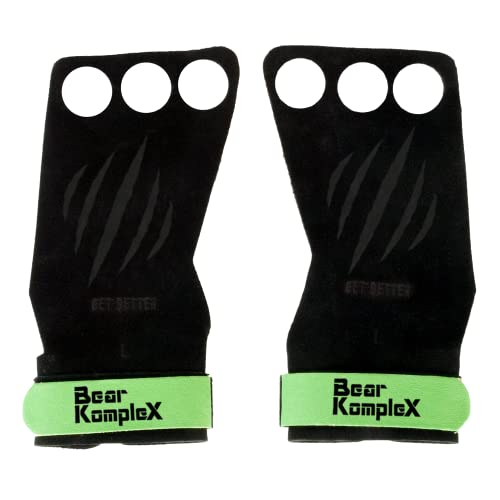
Bear KompleX 3-Hole Leather Grips
Official CrossFit Games leather grips with a classic feel once broken in.
- Official hand grip of the CrossFit Games
- Great feel on the bar once broken in
- Genuine leather construction
- Requires a break-in period — stiff and slippery when new
- Leather stretches over time and doesn't last as long as synthetic grips
- More expensive than synthetic alternatives

PICSIL Azor Grips
Ultra-thin 1.8mm synthetic grips that are waterproof and washable for easy maintenance.
- Only 1.8mm thick for excellent bar feel
- Waterproof and washable — stays cleaner than other grips
- Most affordable quality grip option
- Thinness means less padding on high-rep days
- Less protection than thicker grip options
WOD Nation Wrist Wraps
Thin cloth wrist wraps that fit under CrossFit grips without adding bulk for overhead support.
- Thin enough to wear under grips without interfering
- Can be cinched tight for overhead support
- Lay flat and conform to your wrist unlike bulky velcro wraps
- Less support than thicker, stiffer wrist wraps
- Only beneficial if your WODs include overhead movements

Electric Callus Remover
Rechargeable rotating callus remover that shaves down raised calluses to prevent hand tears.
- Cheapest injury prevention tool in CrossFit
- Takes about 30 seconds per hand after showers
- Effectively eliminates the raised callus ridges that cause rips
- Designed for feet, so it looks a little silly using it on hands
- Requires consistent use once or twice per week to stay effective
Prices shown were retrieved from Amazon on Oct 8, 2026, 2:37 PM UTC. Product prices and availability are accurate as of the date/time indicated and are subject to change. Any price and availability information displayed on Amazon at the time of purchase will apply to the purchase of this product.